
Sky Guide March 2026

‘The autumn equinox occurs when the Sun crosses from the southern to the northern part of the sky. It can take place on 20 or 21 March; this year it’s on Saturday 21 at 1:46 pm.’
Moon Phases
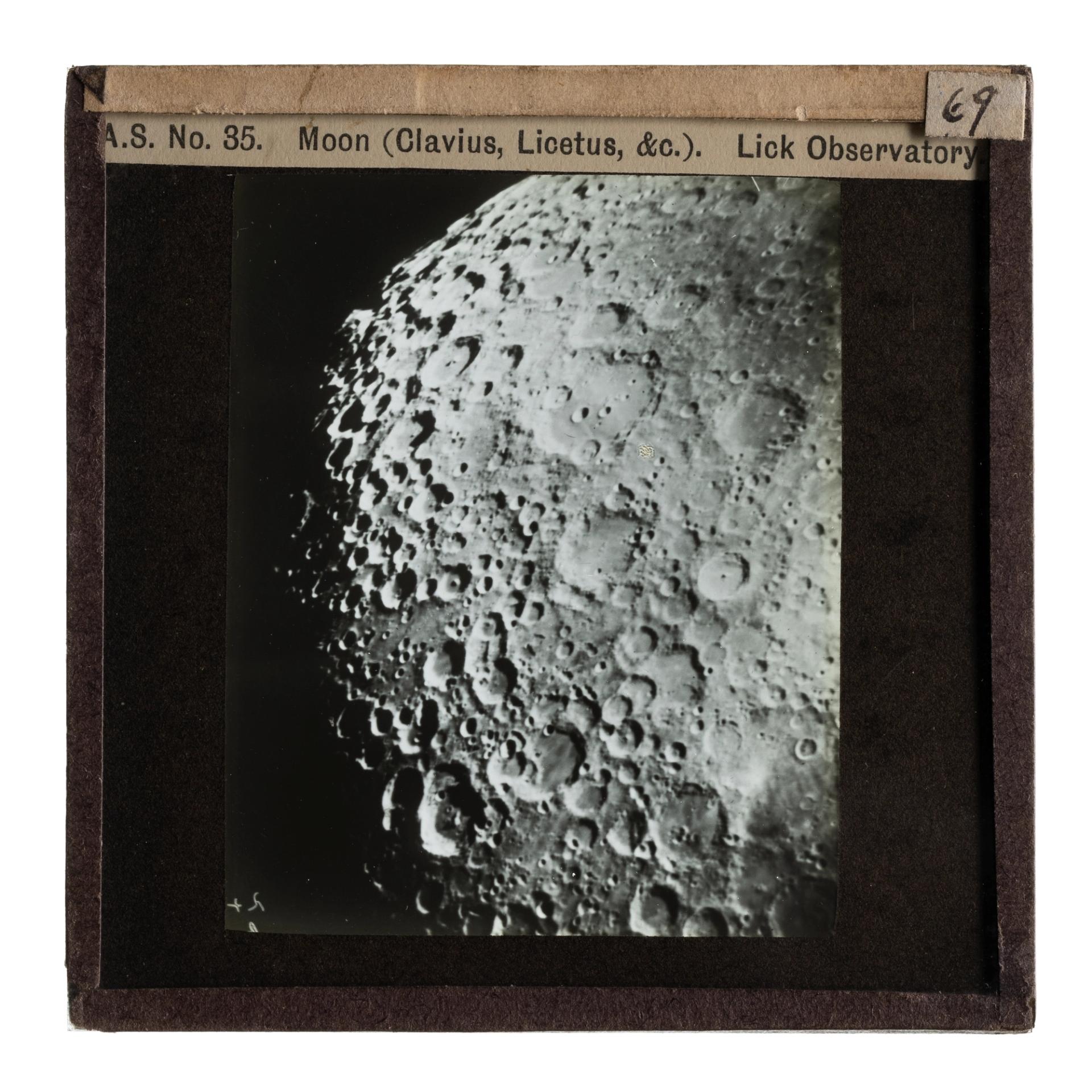
Full Moon Tuesday 3 March 10:38 pm AEDT
Last quarter Wednesday 11 March 8:38 pm AEDT
New Moon Thursday 19 March 12:23 pm AEDT
Autumn equinox Saturday 21 March 1:46 pm AEDT
First quarter Thursday 26 March 6:18 am AEDT
Planets
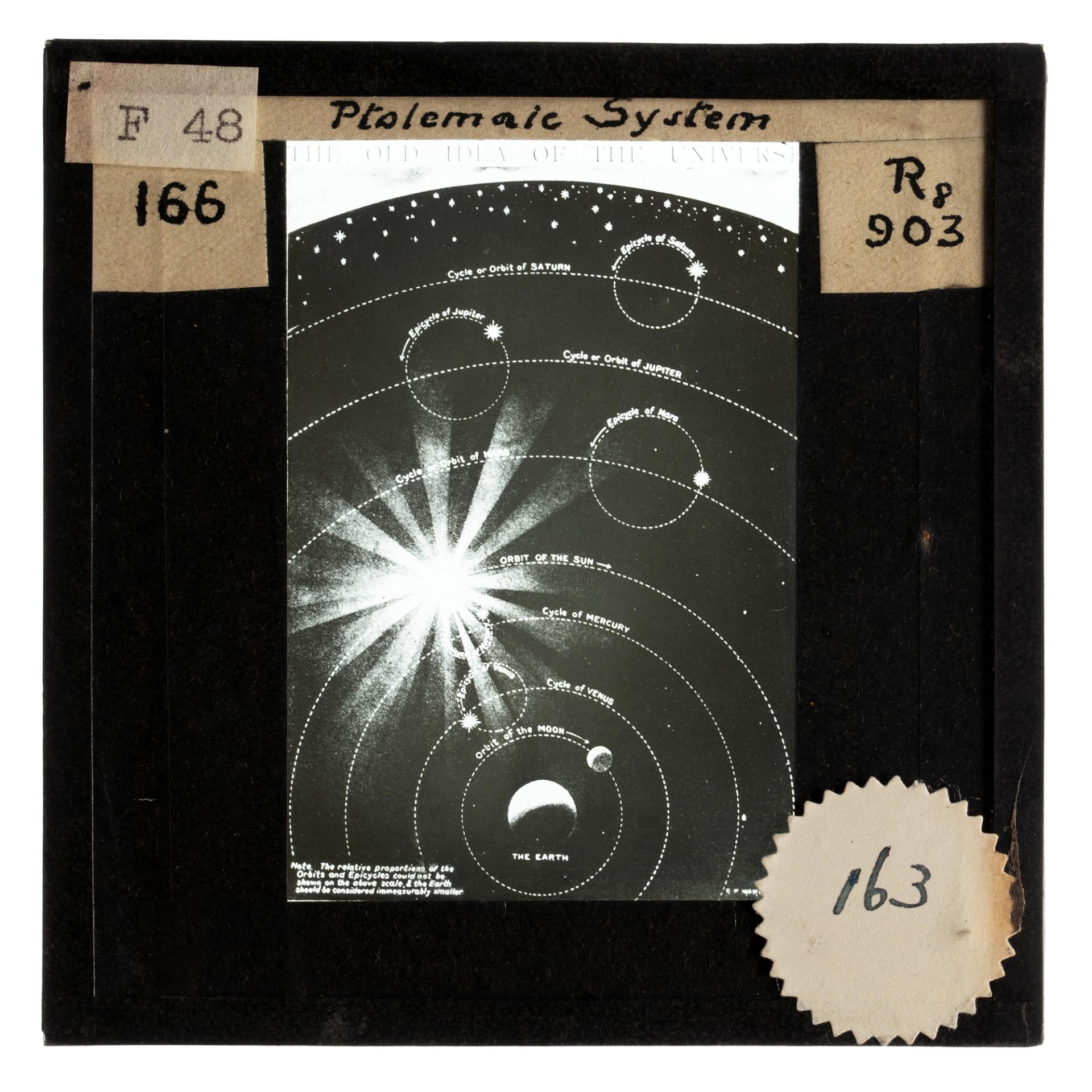
EVENING
Saturn is lost into the twilight but Venus and Jupiter continue to light the evening sky.
Venus is low in the west. It starts the month in Aquarius, moves into Pisces in a day or two, has a brief excursion into the non-zodiacal constellation of Cetus (the Whale) in the middle of the month and moves into Aries at the end. Venus passes just two moon-widths below Saturn on 8 March; binoculars are needed to see the ringed planet. On 21 March, a very thin crescent Moon is to the right, or north, of Venus.
Jupiter is in the north in Gemini. On 26 March, the first-quarter Moon is below and to the left, or west, of Jupiter.
Saturn is low in the west in Pisces at the beginning of the month but fades into the twilight in a day or two.
MORNING
Mercury appears low in the east in Aquarius in the middle of the month. On 15–18 March, it passes close to Mars.
Mars is very low in the east in Aquarius, having appeared at the beginning of the month. On 18 March, a very thin crescent Moon is below and to the left, or north, of Mars.
Constellations
Constellations are groups of stars that represent mythological figures, fanciful beasts or old scientific instruments. Some have been used for millennia as a tool to share significant cultural stories and to track the passage of the weeks and months. Today they also help astronomers mark out portions of the sky and locate astronomical objects. Those listed below have been selected for their visibility in the evening up to 2 hours after sunset as seen from the southern hemisphere.
The summer constellation Orion is high in the north-west. Above and to the right or east is Sirius, the brightest star in the sky. Procyon is below Sirius and farther below we find the two bright stars of Gemini, the Twins. Pollux is the star above, while Castor is closer to the horizon. Castor is fascinating, as telescopes show it to be a triple star, with two bright components and a much fainter one. However, each of these three is also double so, in fact, Castor consists of six stars!
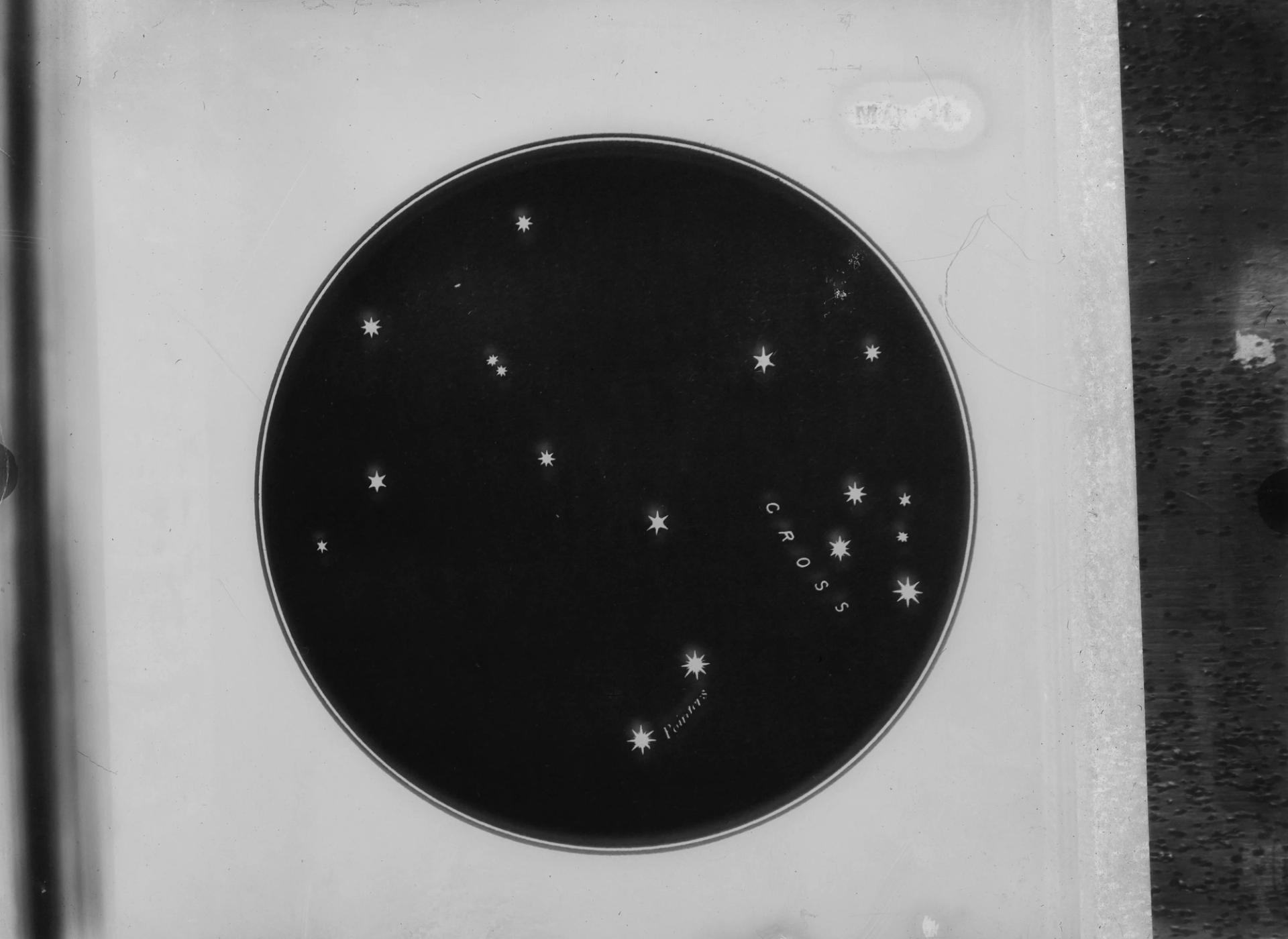
The Southern Cross or Crux is lying on its side in the south-east, with the two pointer stars below. If we extend an imaginary line through the two topmost stars of the Cross to the right or west, we reach the bright star Canopus, high up and almost due south. Canopus is the second-brightest star in the sky after Sirius and is the brightest star in the constellation Carina, the Keel.
Extending another imaginary line towards the right or west, this time through the main axis of the Cross, we reach the star Achernar, the brightest star in the constellation Eridanus, the River. This is a very hot star with a fast spin that distorts it from a spherical shape to a flattened one, with a width around its equator thicker than around its poles. It has a cooler companion star that circles it every 12 years.
Extending our imaginary line through the main axis of the Cross in the opposite direction, towards the east, we reach Spica, the brightest star in the constellation Virgo, the Maiden. Spica actually consists of two hot stars circling around each other every four days.
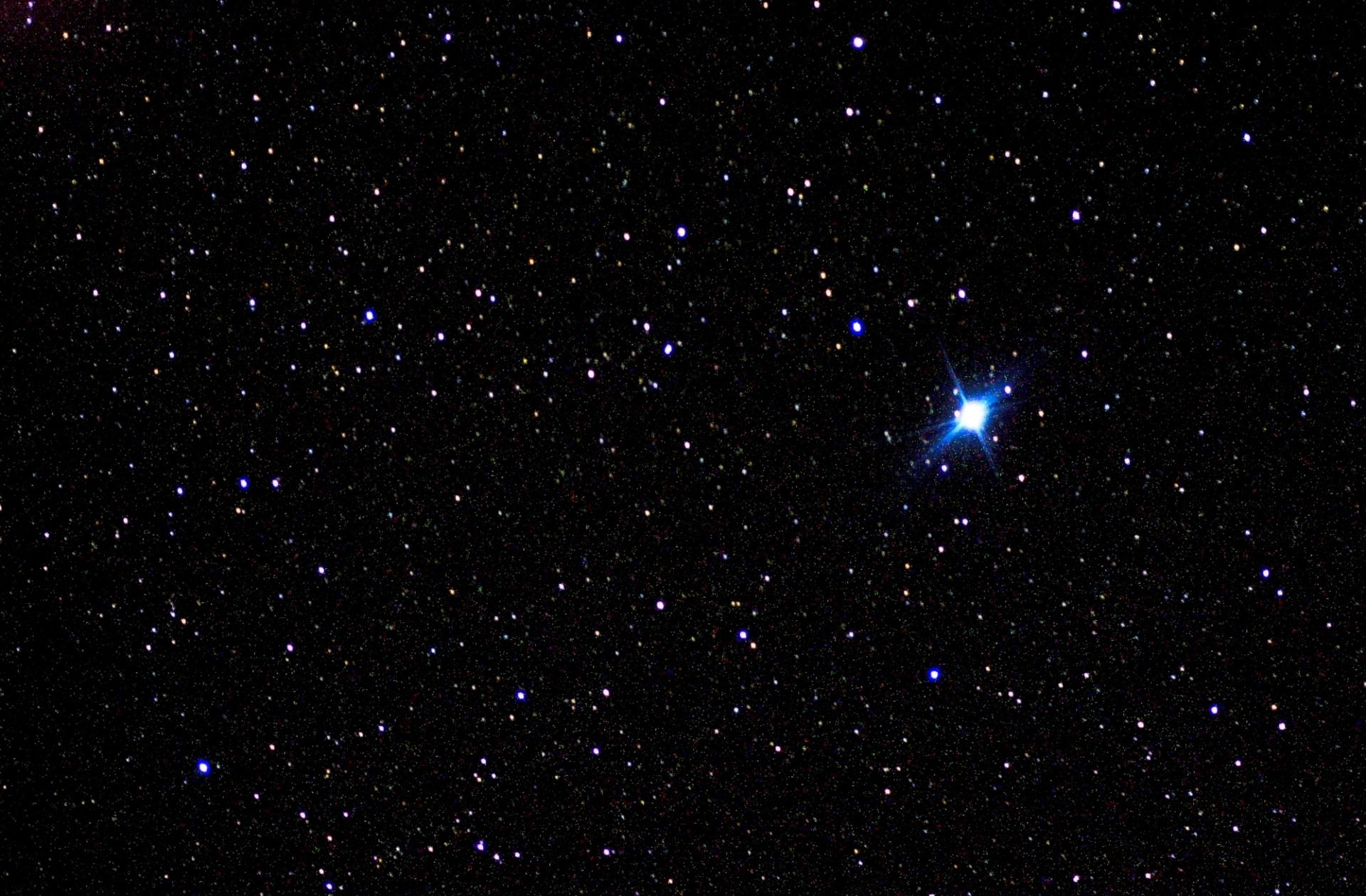
Canis Major the Greater Dog is the companion to Orion the hunter. The brightest star in the constellation, Sirius (also known as the Dog Star), is also the brightest in the night sky as it is close to us – only 8.7 light years away or about 82 million million kilometres and 25 times brighter than the Sun. In about 64,000 years it will be seen as the southern polar star due to the Earth’s wobbling axis of rotation and the star’s proper motion.
Canis Minor the Lesser Dog is an obscure and small constellation usually ignored in the search for its dominant companion, Canis Major, the Greater Dog. To find its one bright star, face north in March – April and look for Sirius in Canis Major. Roughly one hand span (with your hand at arm’s length) below Sirius is the bright star Procyon. And Procyon is just about all there is to the Lesser Dog! Like many constellations it looks nothing like its name. The star’s name comes from the Greek Prokyon meaning ‘before the dog’ and indeed it does rise before bright Sirius and Canis Major from the latitudes of ancient Greece. Canis Minor and Canis Major together are Orion’s hunting dogs.
Carina the keel and the nearby constellations of Vela (the sails) and Puppis (the stern) were part of the huge constellation Argo Navis, which in Greek mythology carried Jason and the Argonauts in search of Aries the Ram’s Golden Fleece. In 1756, Nicolas Louis de Lacaille published his catalogue of the southern stars showing Argo Navis divided into the four constellations we see today. Canopus, the second brightest star in the night sky, can be found in Carina and is a white supergiant star about 313 light years away. It is best seen from February to April high in the south.
Crux or the Southern Cross is the smallest of all 88 western constellations and consists of four bright stars. Along with the nearby pointers of Alpha and Beta Centauri, Crux can be used to find south. Draw an imaginary line from the top of the cross shape though the bottom and across the sky. Midway between the pointers draw a line perpendicular to the line that joins them. Where these two longer lines intersect is close to the southern celestial pole. From this point drop a vertical down to the horizon to locate south. This technique works at any time of the night, any time of the year. The superb open cluster NGC 4755 (Jewel Box) appears very close to the second brightest star, Beta Crucis.
Eridanus is one of Ptolemy’s original 48 constellations and represents a river, which begins near the constellation of Orion and ends at the brilliant blue-white star Achernar, the ninth brightest in the night sky, about 144 light years away. Achernar spins so quickly it is the least spherical star known in the Milky Way Galaxy.
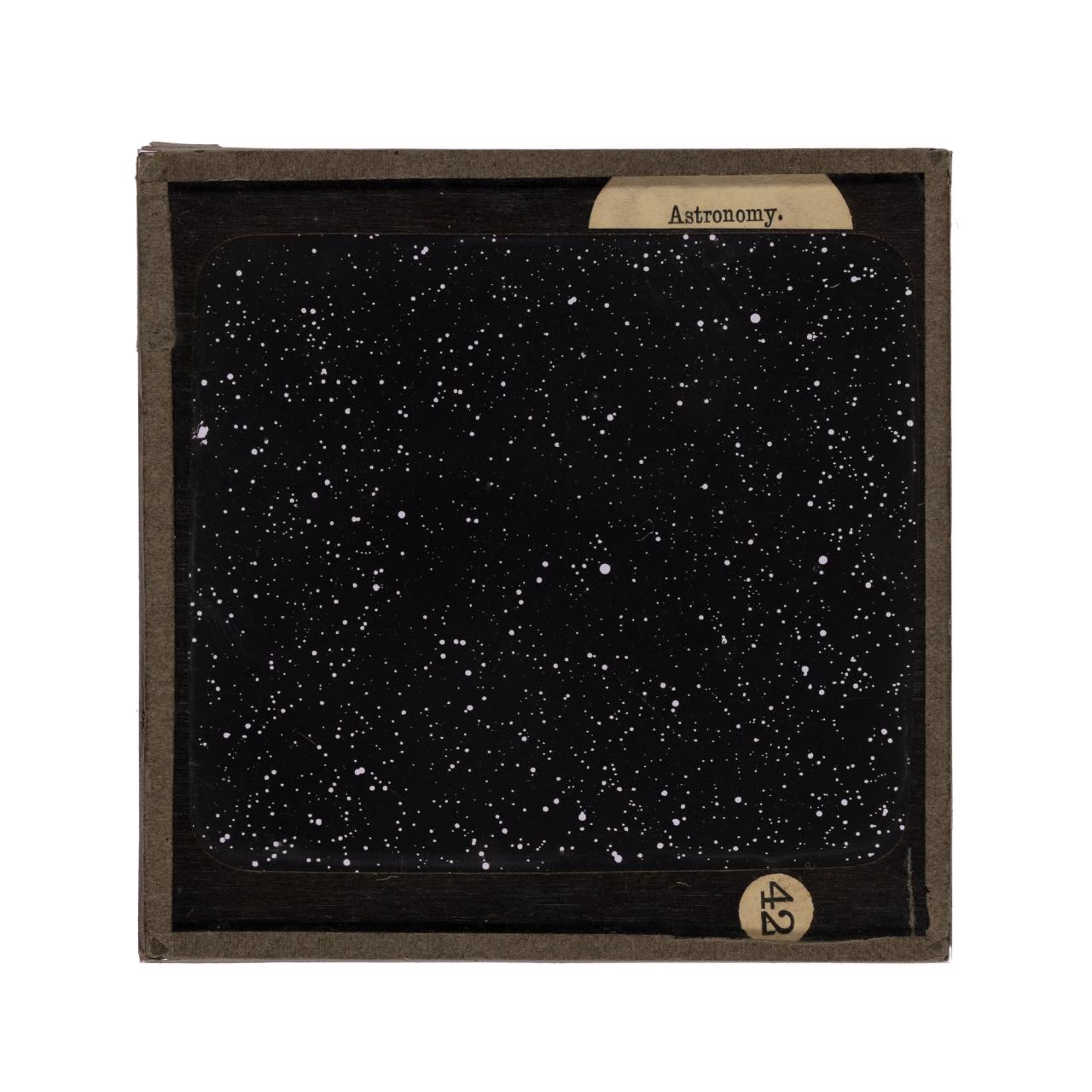
Gemini the twins with its two bright stars, Caster and Pollux, sits low in the northern sky between Taurus and Cancer and lacks any bright objects of note. It is best known for the Geminid meteor shower that peaks in the early hours of 13–15 December each year, and for hosting both Uranus and Pluto when they were discovered in 1781 and 1930 respectively.
Leo the lion looks more like an upside-down question mark when viewed in the Southern Hemisphere. Its brightest star Regulus (Little King) is a system of four tightly bound stars at 79 light years. It was once referred to as one of the four Royal Stars, or guardians of the heavens, because of its proximity to the point in the sky that marked the northern Summer Solstice as seen by Persian astronomers approximately 5000 years ago. Precession of the equinoxes has now moved this point to Cancer the crab. It is host to numerous bright galaxies that can be seen through a modest telescope including the Leo Triplet of galaxies M65, M66 and NGC 3628.
Orion the hunter is one of the original 48 as mapped by Ptolemy and strides across the celestial equator, making it easy to see from both hemispheres. Its likeness to a male figure was probably obvious to the earliest humans. Orion’s brightest star Betelgeuse is one of the few stars to show an intense red colour due to its age and size. The three stars of Orion’s belt at his waist separate his head and shoulders on the right from his sword and knees on the left. The well-known saucepan asterism (a pattern of stars that is not a constellation) consists of a base (Orion’s belt) and a handle (Orion’s sword) plus one additional star at the rim. With binoculars you will see a small hazy glow in the middle of the saucepan’s handle: this is the Orion Nebula, a star birth cloud at a distance of about 1350 light years. The mythology of Orion is complex and often contradictory, though he usually represents a tall, strong and handsome hunter.
Taurus the bull is possibly the oldest Western constellation and one of Ptolemy’s original 48. It has the bright red dying star of Aldebaran and the stunning open cluster known as M45 or the Pleiades, a group of very young stars about 445 light years away. Below the horns is the remnant of a star that exploded as a supernova in 1054. It is now called M1 or the Crab Nebula. For the best view you'll need a large telescope and clear northerly view. Its brightest star Aldebaran is 65 light years from the Sun and is 44 times wider but only a little more massive (+16%). It has exhausted its core supply of hydrogen fuel and is now ‘burning’ hydrogen in a shell around a helium core.
Virgo the maiden is the second largest of all constellations. Virgo rises in the east in April and sets after sunset by mid-August. It can be most easily found by locating the constellation’s brightest star, Spica. The rest of the figure is composed of relatively faint stars and looks a little like a maiden. It is one of the two constellations in which the ecliptic and celestial equator cross – the other being Pisces. This one marks the current position of the September equinox, the beginning of our Spring in the Southern Hemisphere. It is home to a cluster of galaxies at a distance of around 60 million light years —the largest being M87 with a central black hole at least 7 billion times the mass of the Sun. Virgo’s one bright star, Spica, is the 16th brightest in the night sky and about 250 light years away.
Deep sky
The Carina Nebula (NGC 3372) is more than four times larger than the more famous Orion Nebula (M42) seen in summer. Its distance of around 7500 light years disguises its immense size of around 500 light years in diameter. On a moonless night it is a stunning view through binoculars or a telescope as well as being visible to the naked eye. It contains some of the youngest star clusters in the Milky Way as well as a star already coming to an explosive death. The star Eta Carinae is 100-150 times the mass of the Sun and is a dying cataclysmic variable, which is expected to explode as a supernova anytime within the next million years. A supernova precursor eruption in the 1840s temporarily elevated it to the second brightest star in the night sky.
NGC 3293 and NGC 3532 are two stunning open clusters in Carina and both excellent targets for binocular and telescope viewing. NGC 3532 was the first target of the Hubble Space Telescope in 1990. It contains around 150 stars thought to be 300 million years old at a distance of 1300 light years. NGC 3293 is much younger with stars between 6 and 20 million years but around 9000 light years away.
The Crab Nebula (M1) is a remnant of a star that ended its life as a supernova visible from Earth on July 4, 1054AD. It was observed by Chinese astronomers and recorded in Native American rock carvings. At the centre of this remnant is a pulsar which currently emits at a rate of 30 pulses per second though this rate will slow by half in the next 1000 years. The Crab Nebula lies about 6500 light years away.
The Ghost of Jupiter (NGC 3242) is a planetary nebula in the largest of all constellations: Hydra the snake. It is the remains of a dying star that has shed its outer layers. In a telescope its apparent size is similar to the planet Jupiter but in reality it is larger than our Solar System. Our Sun is destined to look like this at the end of its life billions of years in the future.
The Jewel Box (NGC 4755) is an open star cluster, approximately 10 million years old. It is close to Beta Crucis (Mimosa), the second-brightest star in Crux (Southern Cross). In binoculars and small telescopes it appears as an ‘A’ shape. It is about 20 light years across and contains around 100 stars. One of these is the red super giant DU Crucis which is around 500 times the diameter of the Sun. The Jewel Box is one of the youngest open clusters in our skies with an estimated age of about 14 million years. It lies at a distance of about 6400 light years.
The Large and Small Magellanic Clouds (LMC/SMC) are the satellite galaxies of our own Milky Way. The Large Magellanic Cloud (LMC) is in the constellation of Dorado and is approximately 163,000 light years away. It consists of around 30 billion stars and hosts one of the largest nebulae detected, the Tarantula nebula. The Small Magellanic Cloud (SMC) is in Tucana and is approximately 200,000 light years away. It has around 3 billion stars. The LMC will merge with our galaxy in around 2.4 billion years.
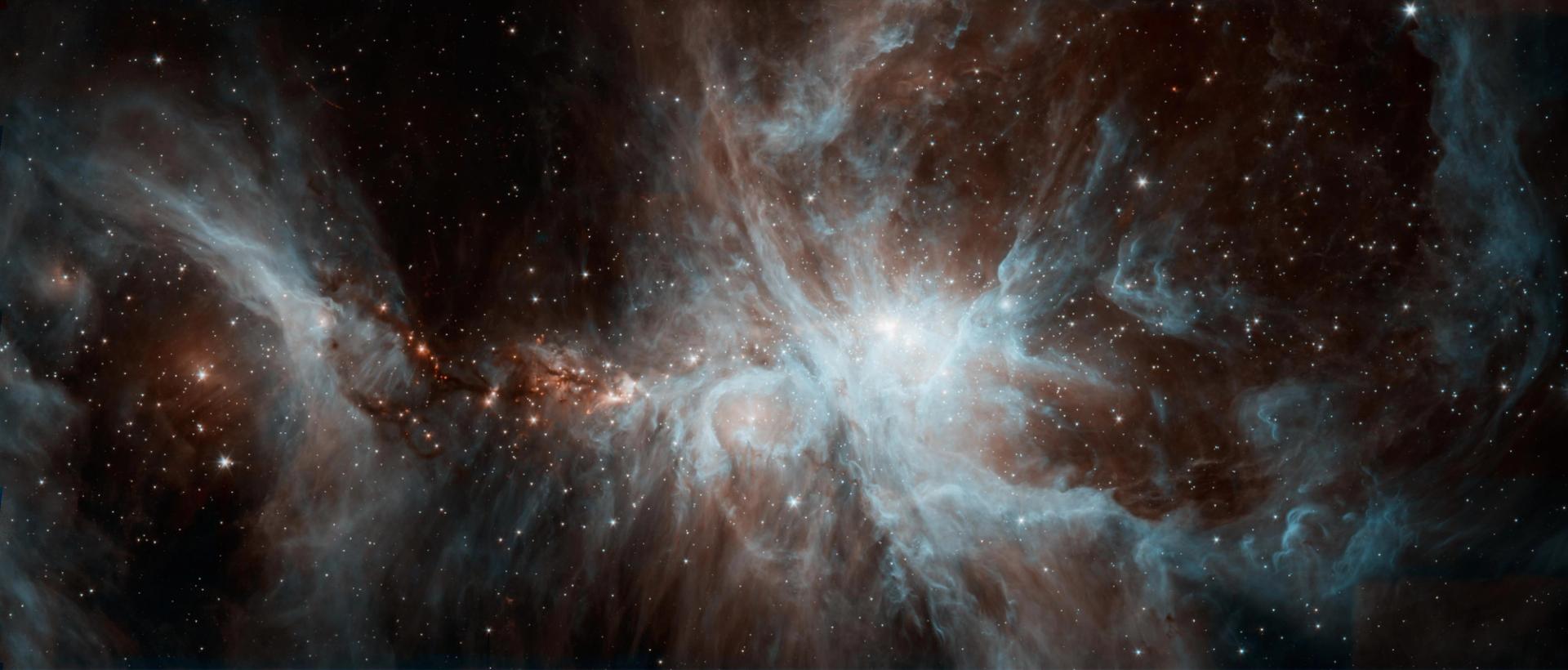
The Orion Nebula (M42) is often called the Great Nebula in Orion and is approximately 1344 light years away. The massive star making cloud is 24 light years across with enough mass to form around 2000 stars like the Sun. Its size, distance and brightness (it is the brightest nebula as seen from Earth), make it one of the most studied objects in the night sky. It is easily found as the middle star-like object in the sword of Orion, or the handle of the saucepan as seen from the south. Along with the Moon, M42 is typically one of the first objects to be looked at through a telescope as it shows excellent fine structure including the birth of stars in the innermost part known as the Trapezium Cluster.
Omega Centauri (NGC 5139) is the brightest and largest of approximately 150 globular clusters orbiting the Milky Way. It is so bright it was labelled as a star on early sky charts by Ptolemy and is one of the few objects in the sky that carries both a star designation and an object catalogue designation. Omega Centauri shines with the luminosity of a million suns and is relatively close to us, only 15,800 light years away. It contains approximately 10 million stars and some theories suggest it could be the remnant core of a galaxy that is merging with the Milky Way.
The Tarantula Nebula (NGC 2070) is a large hydrogen gas cloud approximately 1000 light years in diameter and part of the LMC at about 160,000 light years. The name ‘Tarantula’ comes from the spider-like appearance of the nebula in telescopes and photographs. At the centre of the nebula is the open cluster R136, which contains approximately 500,000 stars, including some of the hottest and most massive supergiant stars known. In 1987 the first naked eye supernova (SN1987A) since the invention of the telescope occurred in this part of the sky.
Special Events

Autumn Equinox
The Autumn equinox, when the Sun crosses from the southern to the northern sky, occurs on Saturday 21 March at 1:46 pm. On this day, the Sun rises and sets due east and west. The length of day and night are almost equal but not quite.
Total eclipse of the Moon
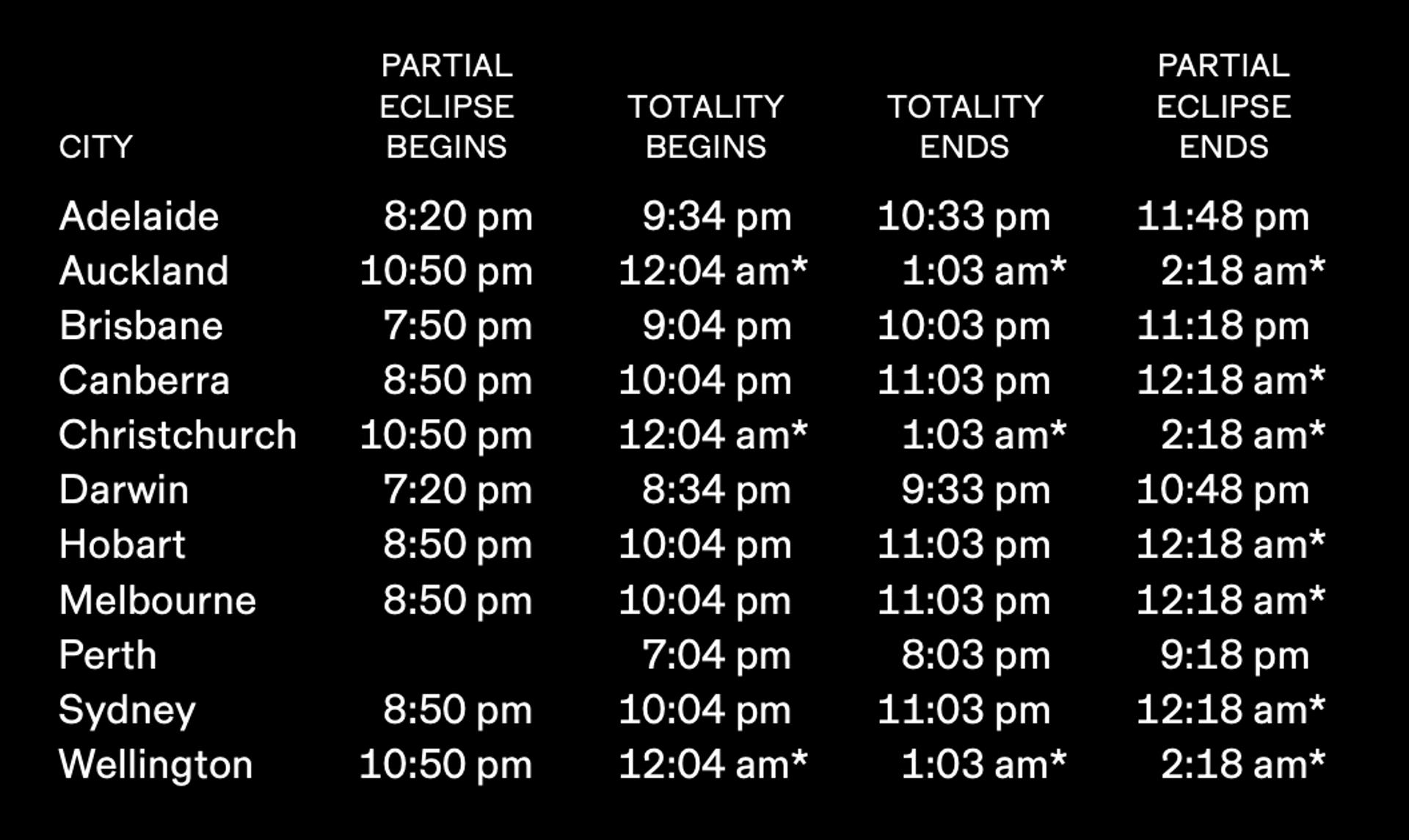
A total eclipse of the Moon takes place on the evening of Tuesday 3 March and extends into the early hours of the following morning from most cities. The Moon often takes on a reddish colour during totality, as it reflects sunsets and sunrises from around the globe of Earth. Unlike eclipses of the Sun, eclipses of the Moon are completely safe to watch and are easy to photograph. The last total eclipse of the Moon visible from both Australia and Aotearoa New Zealand was last year on 8 September, while the next one is on the morning of 1 January 2029.
Circumstances for the eclipse are listed in the table in local time. From Perth, the Moon is already partially eclipsed when it rises at 6:43 pm. Asterisks (*) indicate that the listed time is for 4 March.

Past Months

Shop



Sydney Observatory
Open for pre-booked tours, located on Gadigal land, a national place of connection and scientific research. The site is undergoing heritage conservation works.