
Sky Guide August 2025
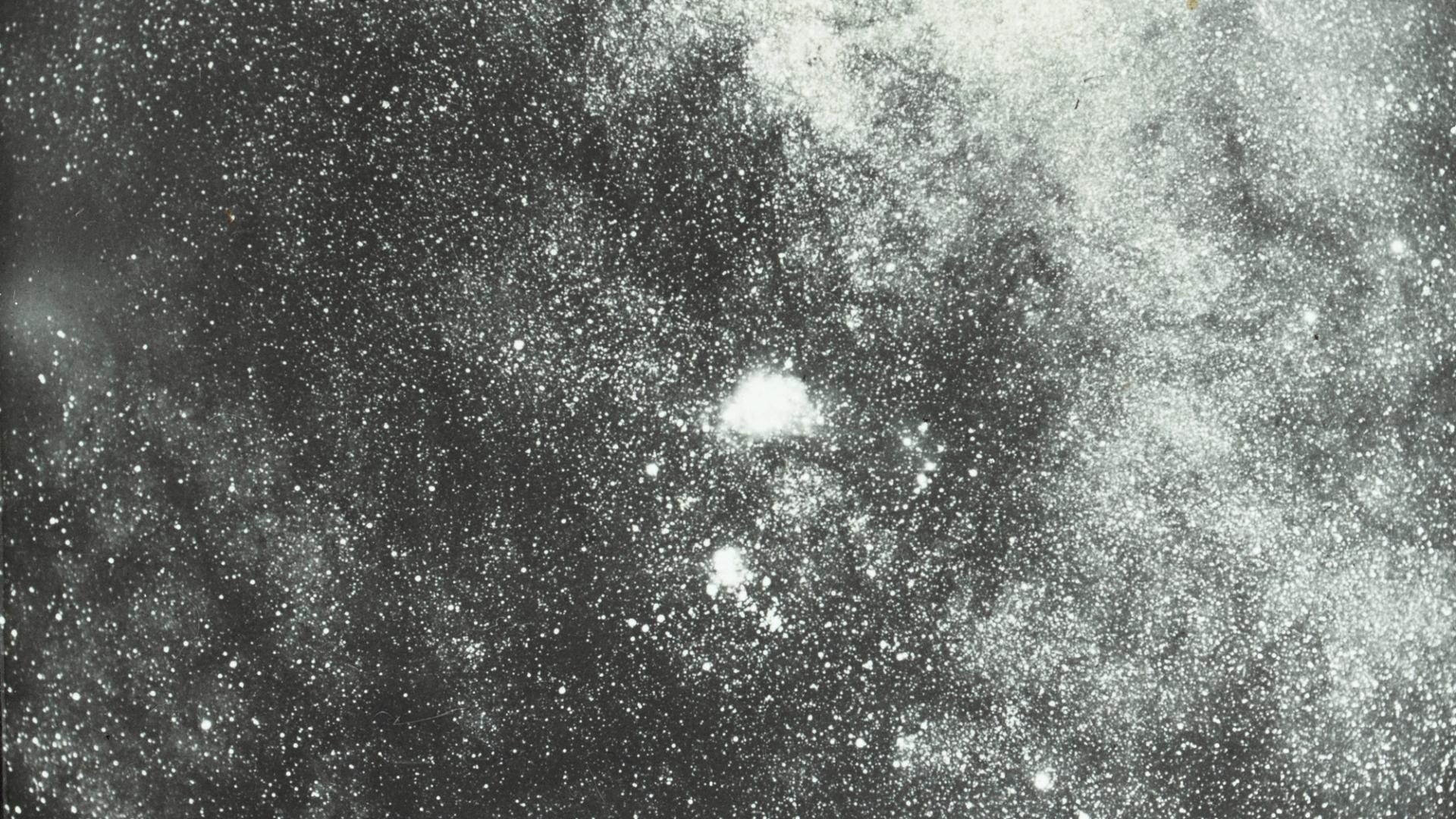
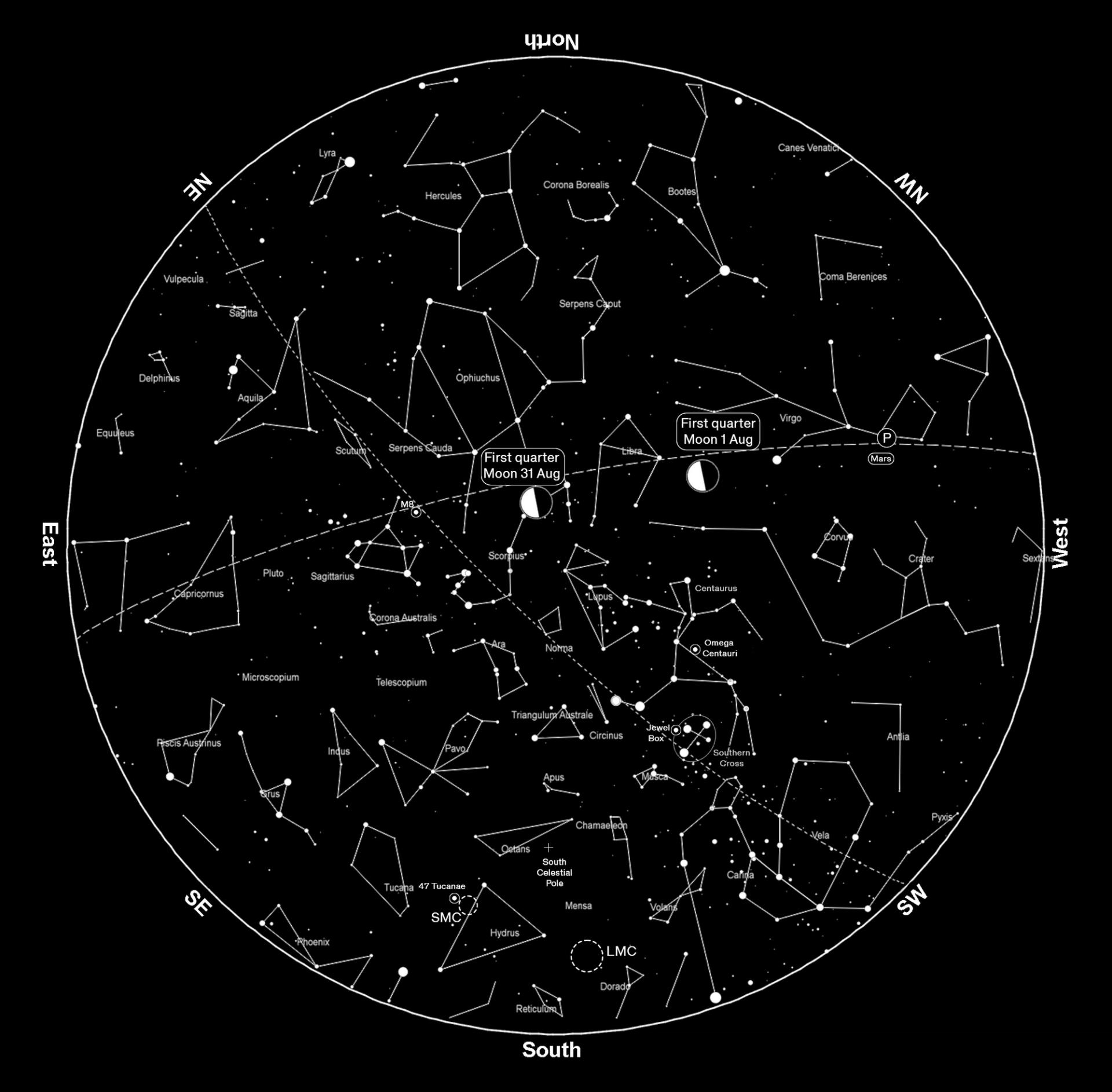
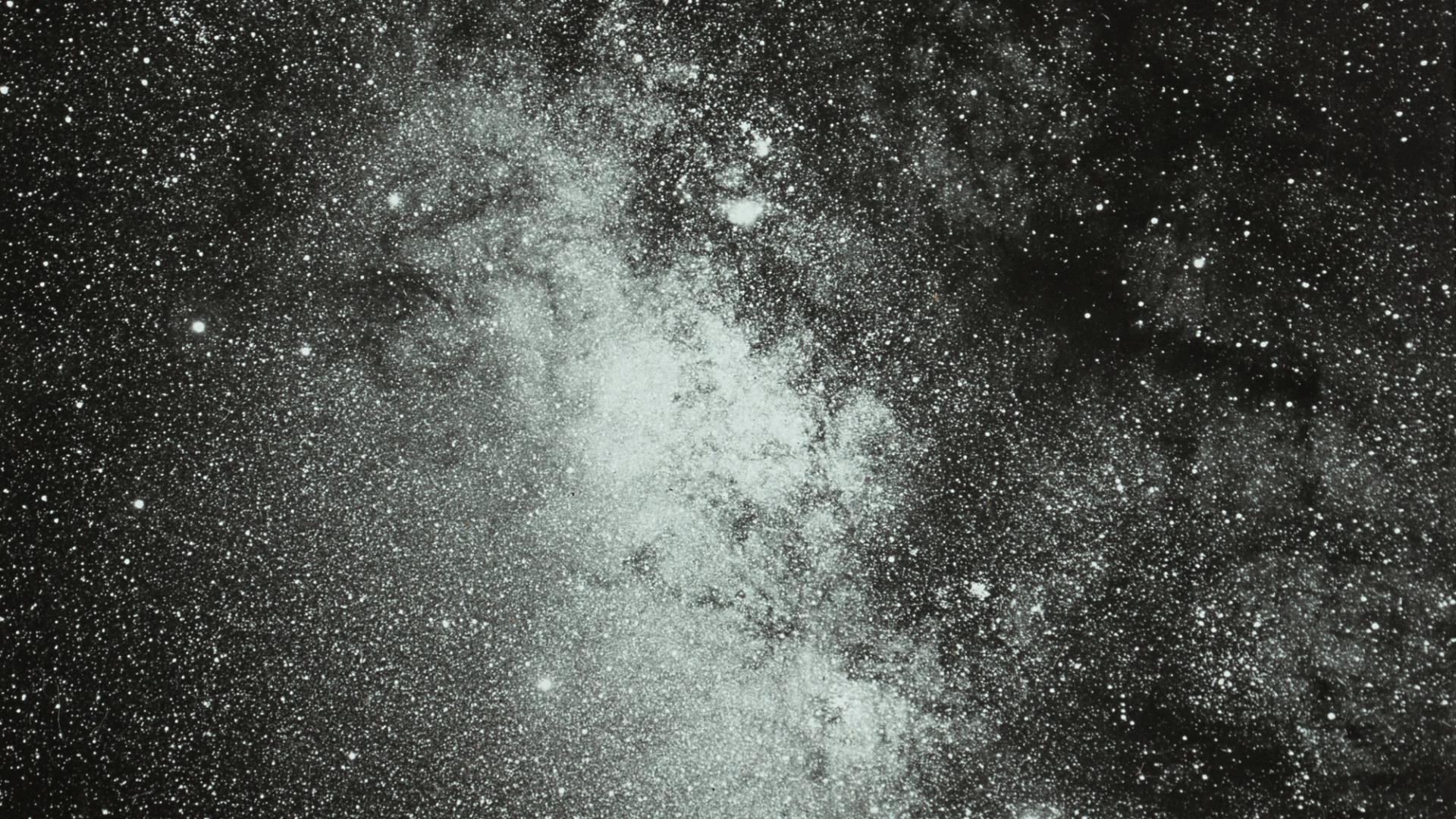
‘In August the centre and brightest region of our galaxy, the Milky Way is high overhead between the tail of Scorpius and Sagittarius the archer. The Southern Cross, now descending into the southwest with its bright nearby pointers, lights the way to find south. To the north, the bright stars Arcturus and Vega show distinct red and blue hues among the majority of fainter white stars. ’
Moon Phases
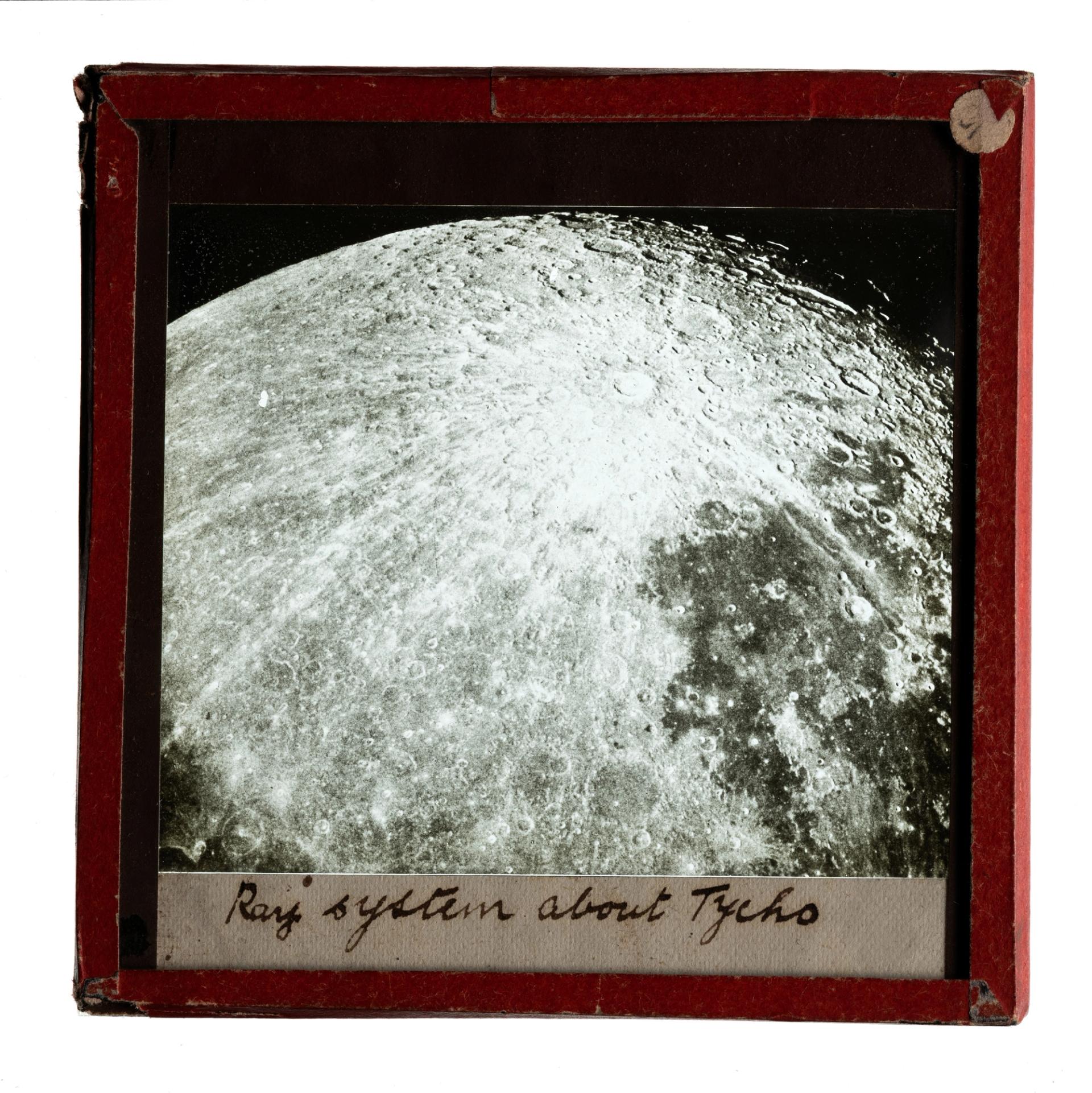
First quarter – Friday 1 August 10:41 pm AEST
Full Moon – Saturday 9 August 5:55 pm AEST
Last quarter – Saturday 16 August 3:12 pm AEST
New Moon – Saturday 23 August 4:06 pm AEST
First quarter – Sunday 31 August 4:25 pm AEST
Planets
EVENING
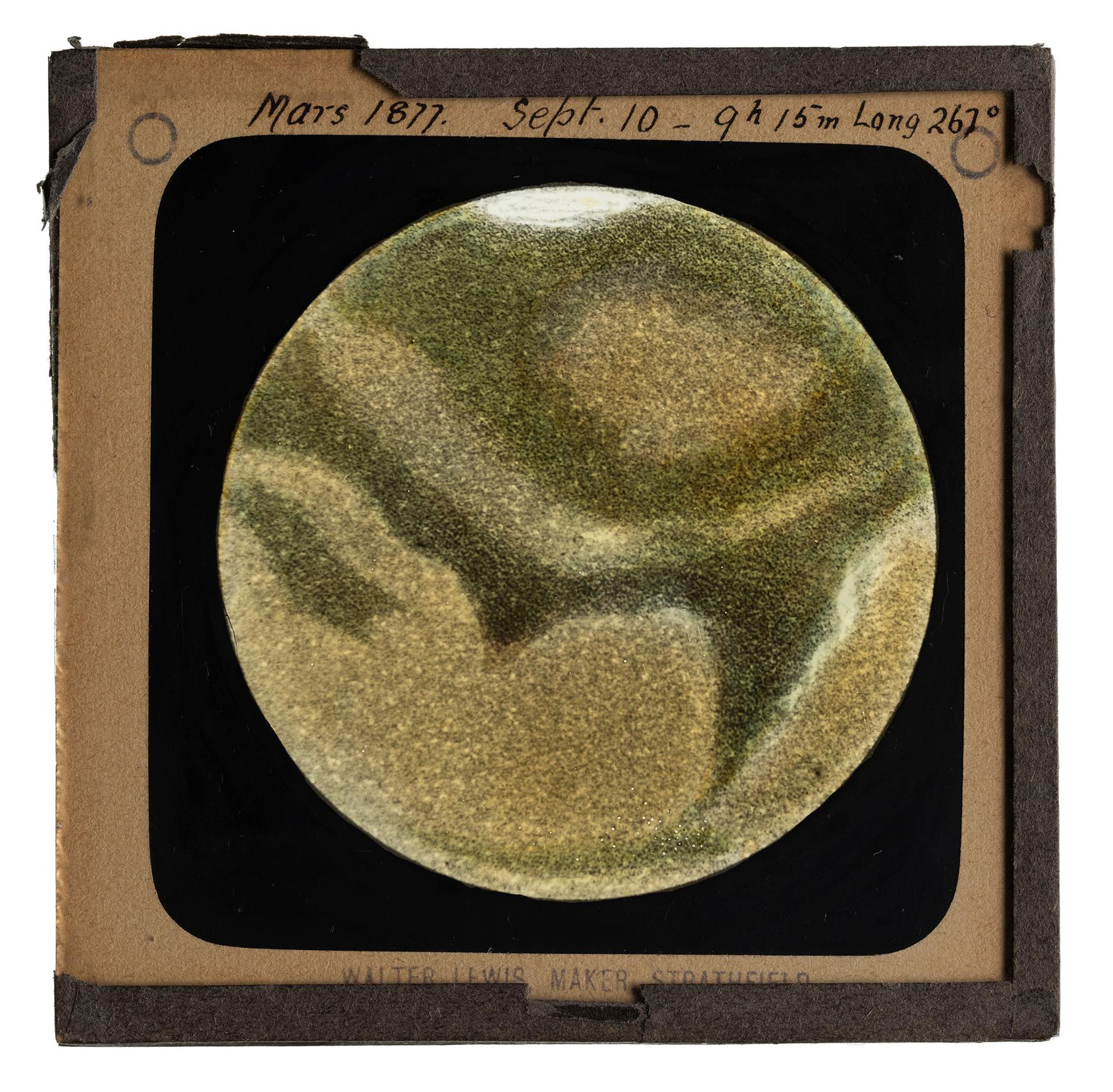
Mars is the only evening planet.
Mars is in the west in Virgo. On 26 August, the crescent Moon is below and to the left or south of Mars, while the next evening it is directly above the planet.
MORNING
Venus is in the north-east. At the start of the month, it moves into Gemini and at the start of the last week of the month, into Cancer. On 12 and 13 August, Venus passes the bright planet Jupiter at a separation of about two moon-widths. On 21 August, a very thin crescent Moon is directly below Venus.
Jupiter is in the north-east in Gemini. On 20 August, the crescent Moon is below and to the left or north of Jupiter.
Saturn is in the north-west in Pisces. On 13 August, the gibbous Moon is below and to the right or north of Saturn.
Constellations
Constellations are groups of stars that represent mythological figures, fanciful beasts or old scientific instruments. Some have been used for millennia as a tool to share significant cultural stories and to track the passage of the weeks and months. Today they also help astronomers mark out portions of the sky and locate astronomical objects. Those listed below have been selected for their visibility in the evening up to two hours after sunset as seen from the southern hemisphere.
Centaurus the half man half horse represents the scholarly Chiron, tutor of many of the Greek gods and heroes including Heracles, Achilles and Jason. Its two brightest stars of Alpha Centauri — the closest star system to the Sun and Beta Centauri — make up the front legs of the centaur. When used with Crux, they help find south. It also contains the most spectacular globular cluster of all, Omega Centauri (NGC 5139). Centaurus was one of the original 48 constellations as mapped by Ptolemy and originally included Crux before the latter was identified separately in the 17th century CE.
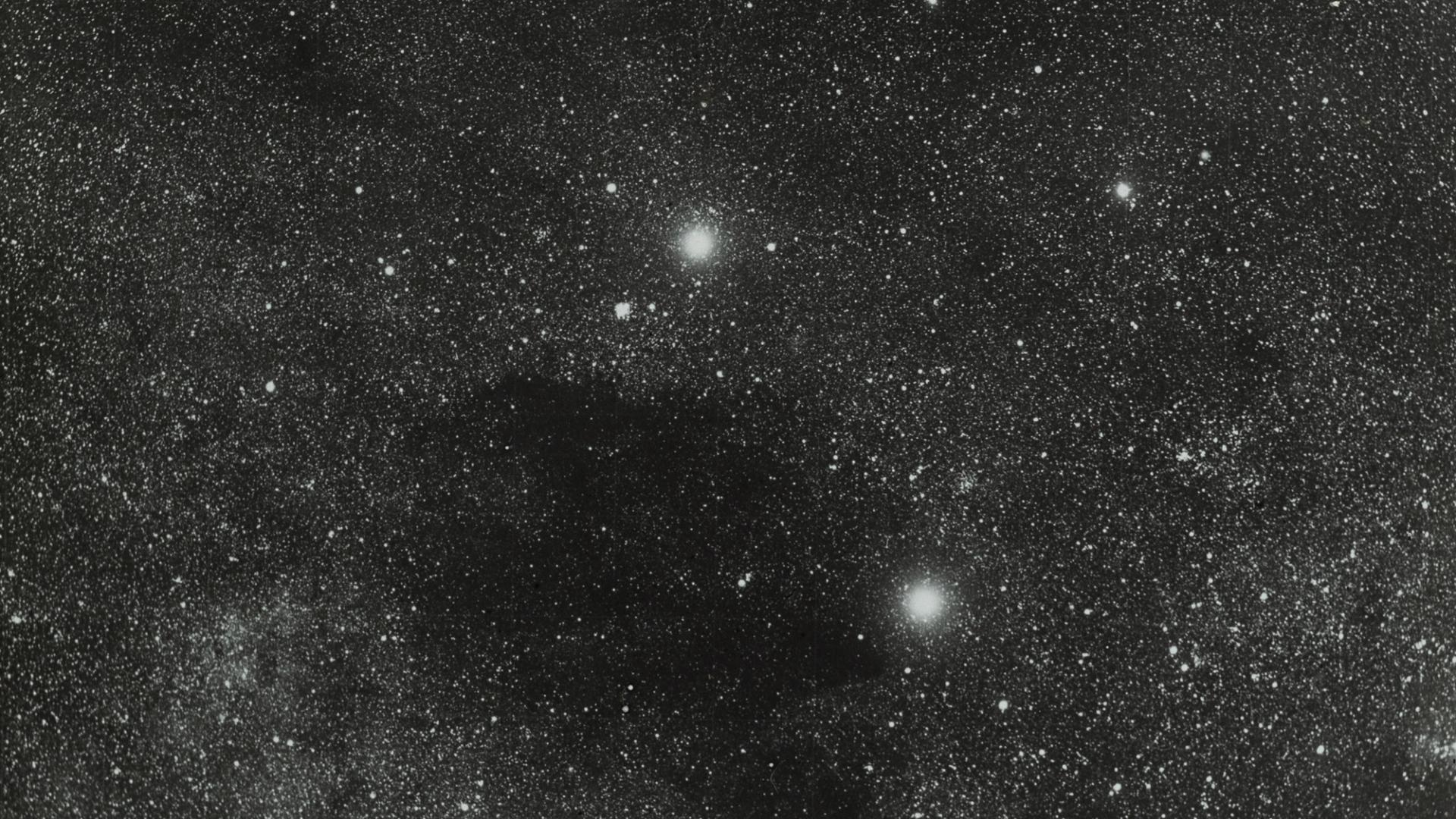
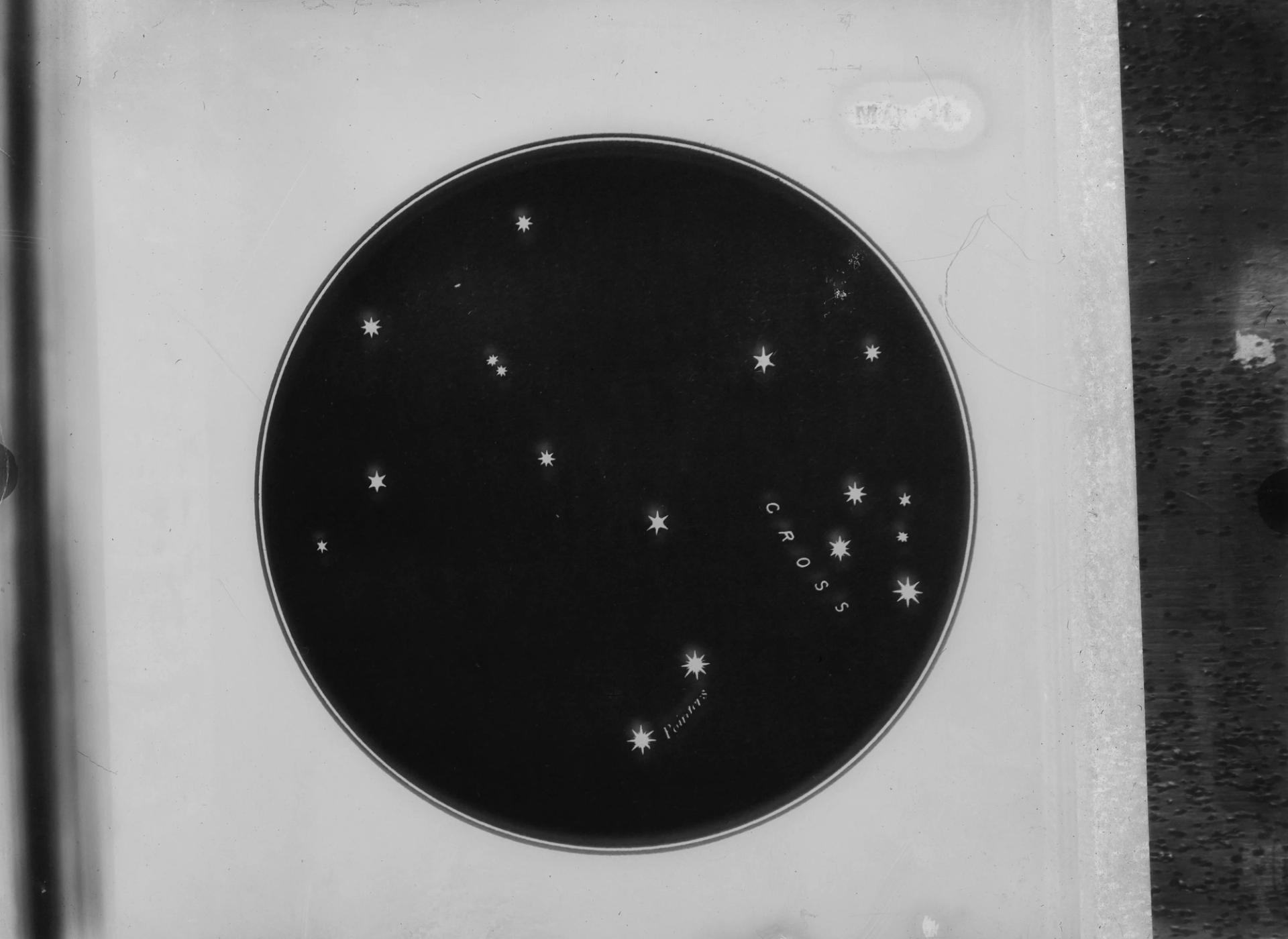
Crux or the Southern Cross is the smallest of all 88 western constellations and consists of four bright stars. Along with the nearby pointers of Alpha and Beta Centauri, Crux can be used to find south. Draw an imaginary line from the top of the cross shape though the bottom and across the sky. Midway between the pointers draw a line perpendicular to the line that joins them. Where these two longer lines intersect is close to the southern celestial pole. From this point drop a vertical down to the horizon to locate south. This technique works at any time of the night, any time of the year. The superb open cluster NGC 4755 (Jewel Box) appears very close to the second brightest star, Beta Crucis.
Libra has been recognised historically as a set of balance scales, the scales of justice, or a part of Scorpius (the scorpion’s claws). However, the Romans returned it to the separate set of scales we are familiar with today. The former association of Libra and Scorpius is reflected in the names of the two brightest stars in Libra: Zubenelgenubi and Zubeneschamali, meaning ‘the southern claw’ and ‘the northern claw’ respectively. Libra is host to the star Gliese 581, the first star identified with an Earth-like exoplanet.
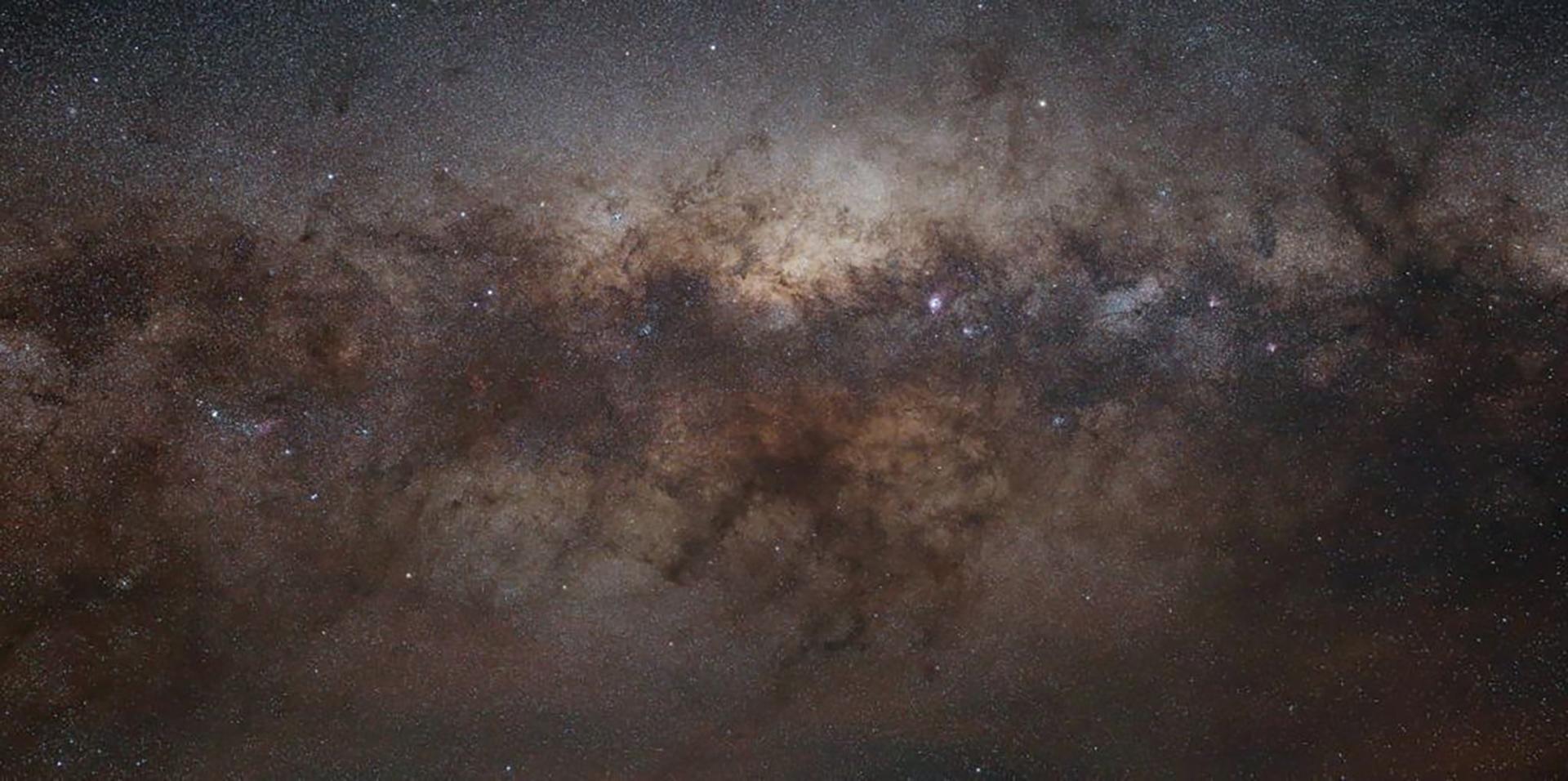
Sagittarius the archer is located just behind the sting of Scorpius. In Greek mythology the archer is a centaur pointing his arrow towards the heart of Scorpius, though from the Southern Hemisphere this constellation looks more like a teapot. Sagittarius is home, as we see it, to the centre of our galaxy, the Milky Way with a monstrous black hole about four million times the mass of the Sun and 26,000 light years away. Called ‘Sagittarius A *’ (pronounced as Sagittarius-A-Star), images taken in 2017 and released in May 2022 from NASA’s Event Horizon Telescope (EHT) show matter swirling around it at close to the speed of light. The event horizon is about the same distance from the singularity as Mercury is from our Sun.
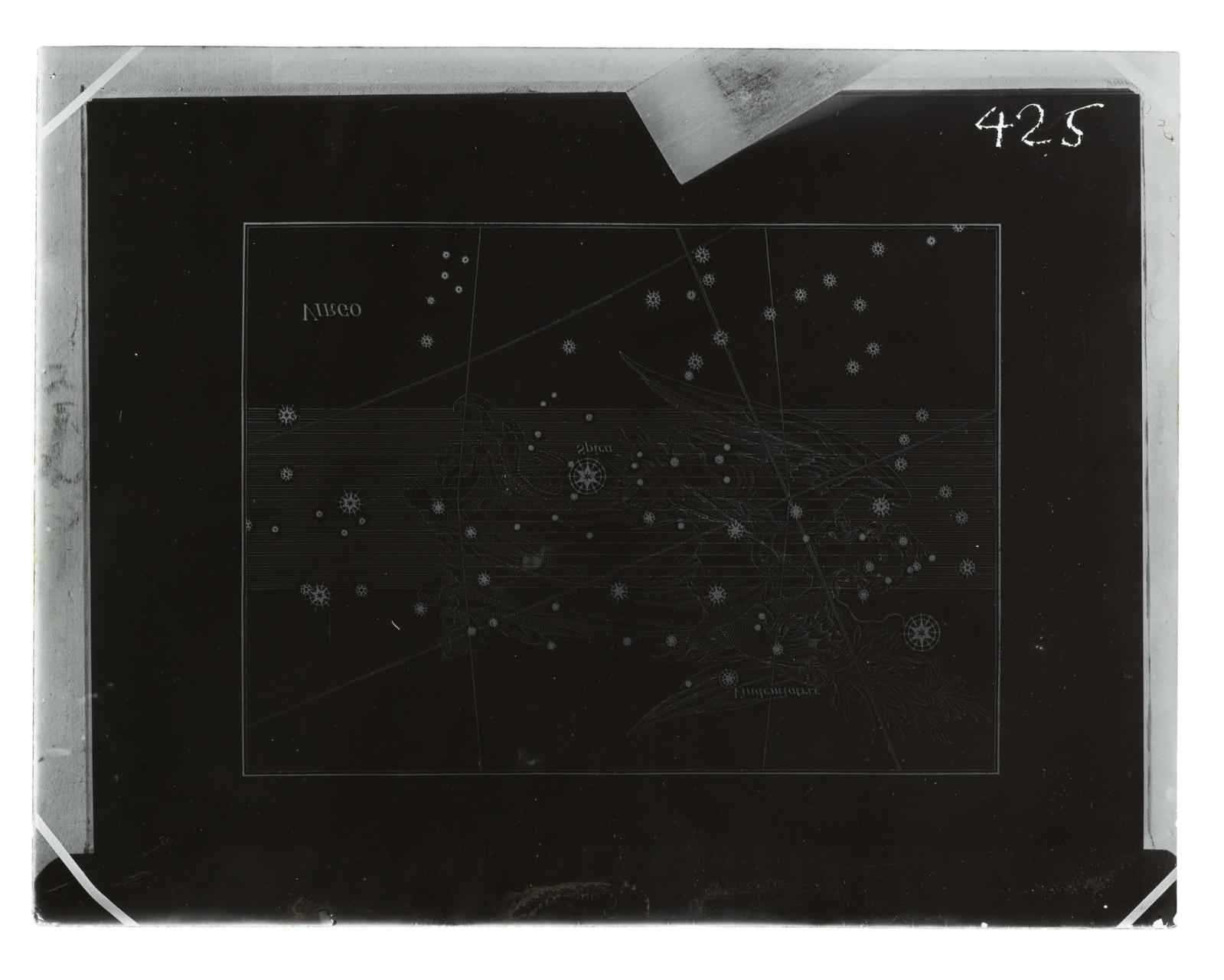
Scorpius the scorpion is one of the easiest constellations to pick out as it is one of the few that does look like what it’s supposed to represent. It sits in the brightest parts of the Milky Way, with the red supergiant star Antares (meaning ‘Rival of Mars’) marking its heart. From the heart, three stars mark the head and claws, while moving the other way we see the body, hooked tail and sting. The scorpion plays a role in many myths; however, it is best known in Greek mythology for its pursuit of Orion through the night sky. Scorpius dominates the sky from June to August when it sits high overhead. It contains the globular cluster M4, the first in which individual stars were resolved, approximately 6000 light years away. It also has two open clusters M6 the Butterfly cluster, which is 100 million years old, and M7 the Ptolemy cluster at just 200 million years old.
Deep sky
The Jewel Box (NGC 4755) is an open star cluster, approximately 10 million years old. It is close to Beta Crucis (Mimosa), the second-brightest star in Crux (Southern Cross). In binoculars and small telescopes it appears as an ‘A’ shape. It is about 20 light years across and contains around 100 stars. One of these is the red super giant DU Crucis which is around 500 times the diameter of the Sun. The Jewel Box is one of the youngest open clusters in our skies with an estimated age of about 14 million years. It lies at a distance of about 6400 light years.
M8 The Lagoon Nebula in Sagittarius is a huge star- forming cloud that is just visible to the unaided eye from a dark location. It is about 5000 light years away and 130 light years across. M8 contains a hot young cluster of baby stars (NGC 6530) within, and their powerful UV light makes the cloud glow.
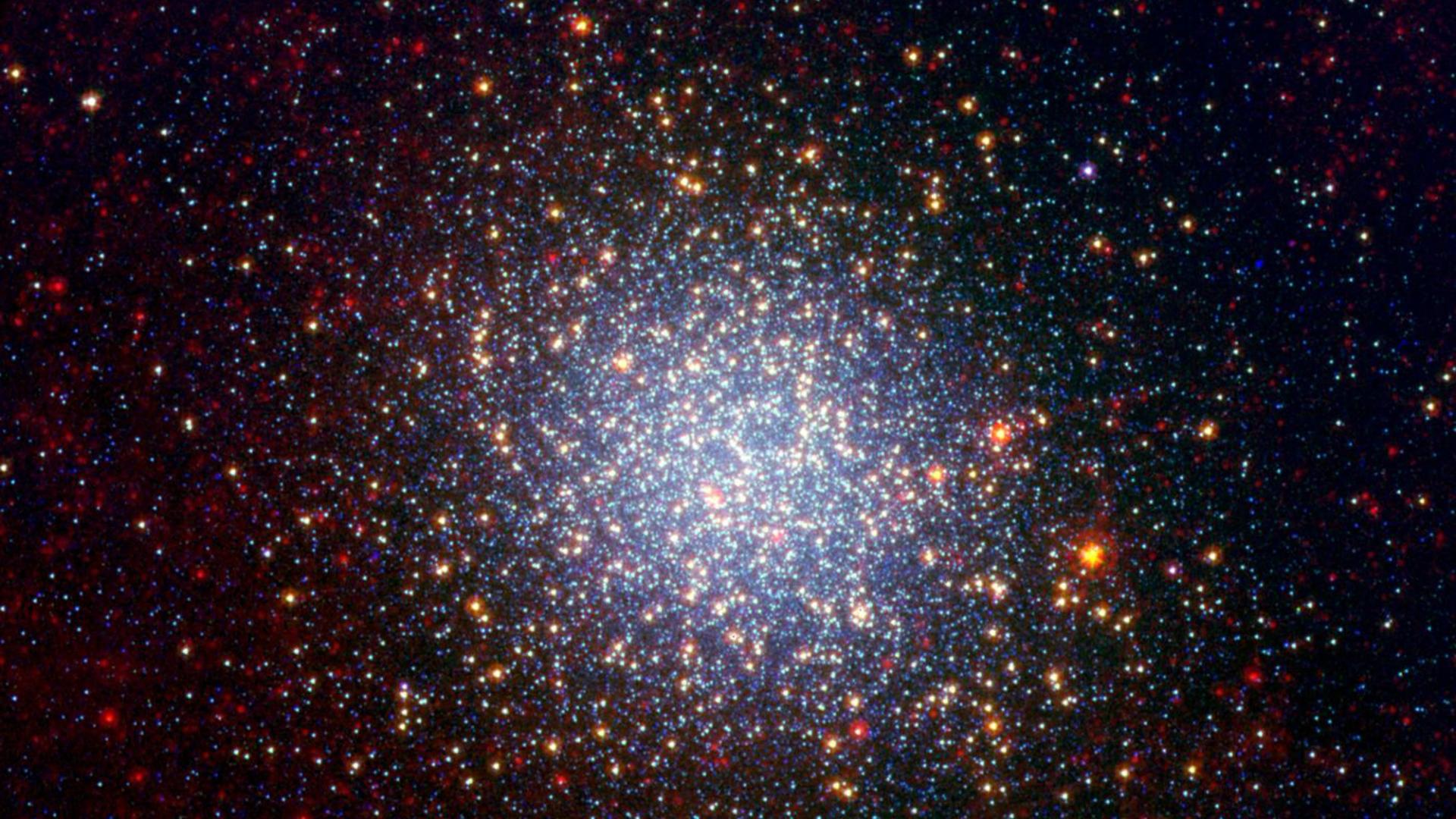
Omega Centauri (NGC 5139) is the brightest and largest of approximately 150 globular clusters orbiting the Milky Way. It is so bright it was labelled as a star on early sky charts by Ptolemy and is one of the few objects in the sky that carries both a star designation and an object catalogue designation. Omega Centauri shines with the luminosity of a million suns and is relatively close to us, only 15,800 light years away. It contains approximately 10 million stars and some theories suggest it could be the remnant core of a galaxy that is merging with the Milky Way.
47 Tucanae (NGC 104) is a globular cluster second only to Omega Centauri. It sits beside but is unrelated to the SMC in the constellation Tucana. It can be easily seen away from city lights with the unaided eye due to its very dense star core. 47 Tucanae is approximately 15,000 light years from us.
Past Months


Shop
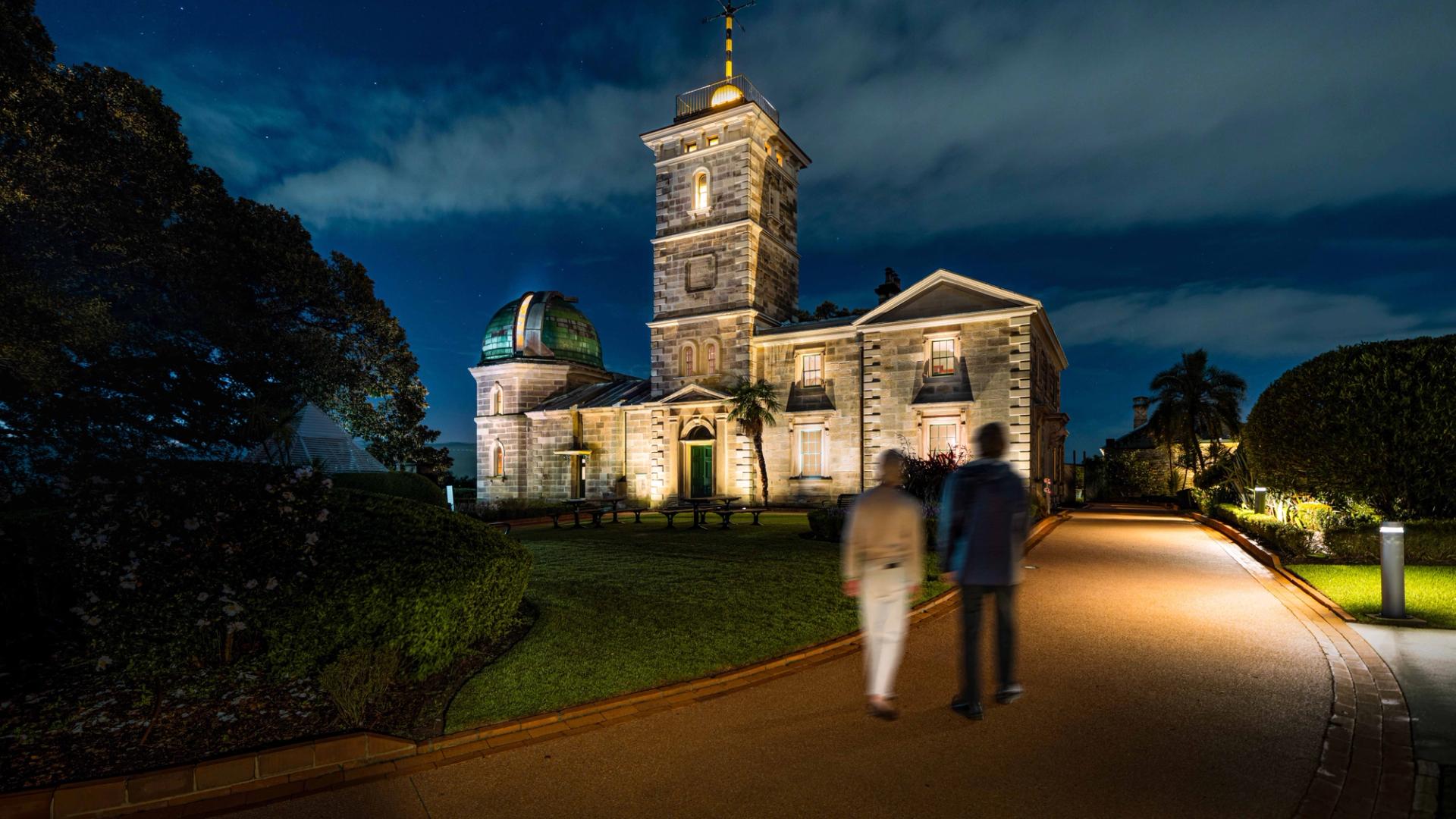
Sydney Observatory
Open for pre-booked tours, located on Gadigal land, a national place of connection and scientific research. The site is undergoing heritage conservation works.