Milk

Culinary archive podcast Season 2
Join food journalist Lee Tran Lam to explore Australia’s foodways. Leading Australian food producers, creatives and innovators reveal the complex stories behind ingredients found in contemporary kitchens across Australia – Milk, Eel, Honey, Mushrooms, Wine and Seaweed.
Milk
Australia's dairy industry began with a few cows brought in on the First Fleet in 1788, which escaped for a while and were later depicted in Dharawal cave drawings. Today, increased awareness of the environmental impact of cattle methane emissions is driving a shift toward more sustainable dietary choices, while Australia’s multicultural diet has led to the emergence of coconut lychee gelato, vegan cheese and ghee with native ingredients.
‘I remember tasting a Spanish sheep's cheese. It had the smell of a freshly cracked sewer, which wasn't unpleasant. It's a smell that you get with a good Pinot noir.’
Transcript
Lee Tran Lam Powerhouse acknowledges the Traditional Custodians of the ancestral homelands upon which our museums are situated. We pay respects to Elders, past and present, and recognise their continuous connection to Country. This episode was recorded on Gadigal and Wangal Country.
My name is Lee Tran Lam and you're listening to season two of the Culinary Archive Podcast, a series from the Powerhouse Museum.
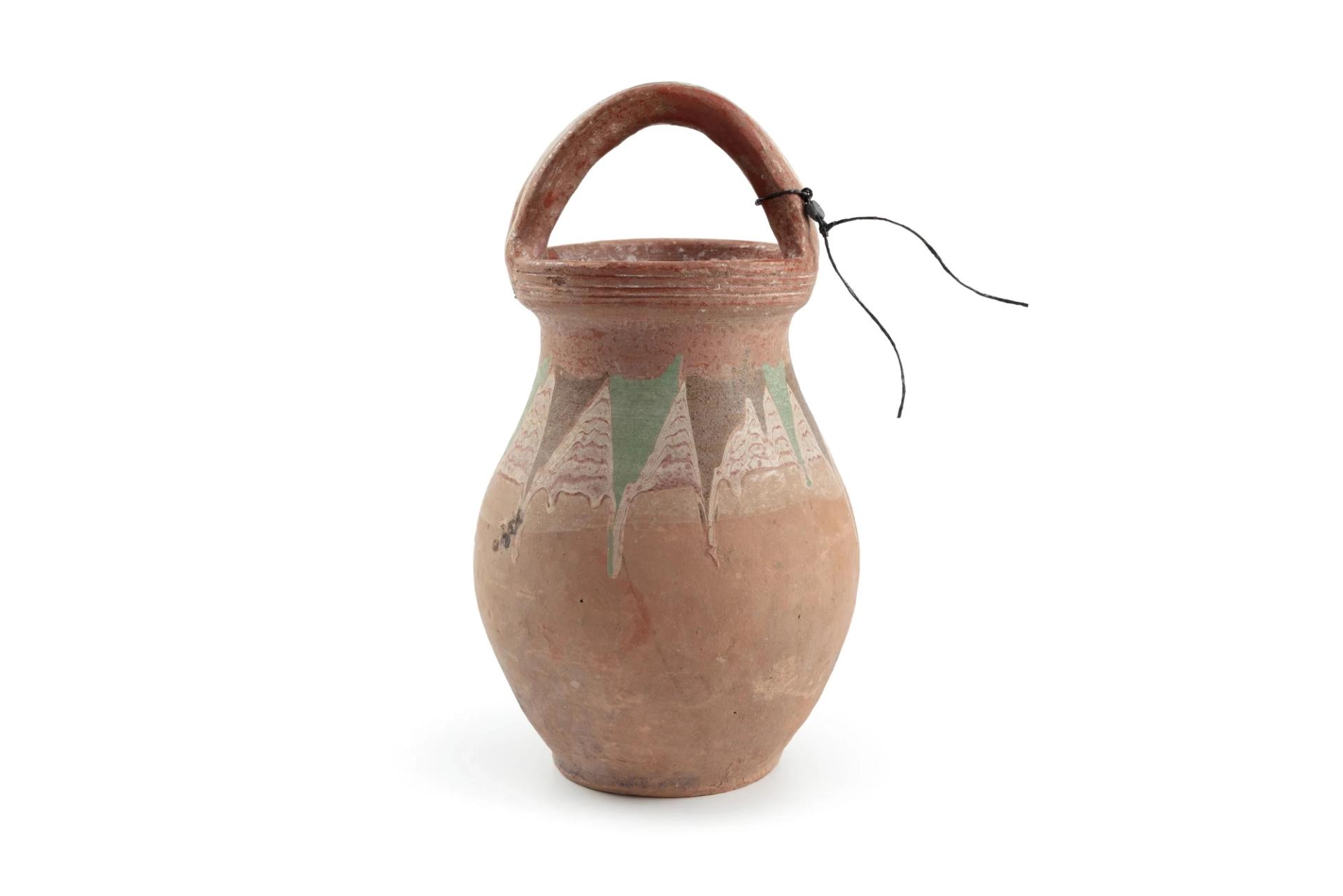
Located in Sydney, Powerhouse is the largest museum group in Australia. It sits at the intersection of the arts, design, science and technology with over half a million objects in its collection including a century old cheese grater (opens in new tab) that's also a kerosene lamp; a 1920s Turkish yoghurt jar (opens in new tab); and a parmesan cellar (opens in new tab) designed by Marc Newson in 2001. The collection charts our evolving connection to food.
The museum's Culinary Archive is the first nationwide project to collect the vital histories of people in the food industry, such as chefs, producers, writers and restaurant owners who've helped shape Australia's taste and appetites. Today, we're talking about Milk.
Mike Butler I remember tasting a Spanish sheep's cheese. It had the smell of a freshly cracked sewer, which wasn't unpleasant. It's a smell that you get with a good Pinot noir.
Ahana Dutt So many people who came, they're like, ‘What do you mean? You're an Indian restaurant? Why don't you have butter chicken?’ And we would be like, ‘You're eating it. It's on the table.’
Donato Toce How cool would it be to have our own dairy and milk the cows and make the gelato with our milk? And then we realised that there's actually no romance to it. It's just a lot of hard work.
LTL Australia's dairy industry didn't start with reindeers, whales or donkeys, even though all those animals can produce milk. It began with a few cows on the First Fleet in 1788. These sneaky animals escaped soon after arrival, fleeing 90 kilometres west of Sydney, where they were depicted in cave drawings by the Dharawal people. The cows were found several years later and today a multicultural society, ever changing diets and a hunger for sustainability has led to us scooping out coconut lychee gelato, slicing up vegan cheese and reaching for ghee seasoned with native ingredients.
MB G'day, my name is Mike Butler. I'm an Aboriginal Irish Queenslander. For the past 25 years I've been professionally involved with food: tasting it and prodding it and writing about it and reviewing it. I've been a cheese and dairy judge since around 2005.
Dairy Board Australia advertisement (1960) [Sung] ... cheese, every day for breakfast ...
MB So I grew up in the 70s. You only had two types of cheese. One was vintage cheddar and the other one was plain cheddar.
Dairy Board Australia advertisement (1960) There are so many ways to enjoy cheese and so many kinds to enjoy. Try versatile cheddar. Delicious to eat, perfect for cooking. [Sung] Make the most of cheese.
MB It was a very monocultural cuisine landscape. I was a kid in country Queensland. Country Queensland has got a lot of German immigrants. Grandma would go into town, she'd get cheese from the German providores, and it was completely different. It was mild and it was nutty, like a Swiss sort of cheese. It was so different from cheddar cheese. To me as a little kid, that was exotic.
LTL Heading to the shops for your dairy fix is kind of a new thing. Historian Mark Kurlansky writes [in Milk! A 10,000-Year Food Fracas, Bloomsbury, 2018] that ‘from London to Havana until the 20th century, milk deliveries were sometimes made by leading a cow from door to door’. Ahana Dutt has experienced something similar to this. The chef, who has worked at acclaimed Sydney restaurants Firedoor and Raja, is originally from Kolkata, India, where summers were savoured with the cool yoghurt tang of lassi.
AD When I was growing up there used to be this guy who used to go from house to house with his goat and milk the goat, and you get fresh milk like that. I remember the smell of it. It was very potent, that savoury almost pungent kind of barnyard-y smell.
LTL An animal being milked right on your doorstep is a pretty direct way to get your dairy dose, but here's someone whose access to milk was even closer.
DT Hi, my name is Donato Toce, I am the head cow milker and sugar hauler at Gelato Messina (opens in new tab). I was born in Italy on a sheep farm. It's a region called Basilicata. We grew up with a lot of products made with sheep's milk and goat's milk. I was four when I came to Australia. Every time I've gone over, one of the best food memories I have is eating fresh ricotta that's still warm from the cheesemaker in the town, and they give it to you in a wicker basket that they use to set it. It's not the plastic baskets that we get here. And you buy it in that basket, then you return that basket.

LTL Now, Mike didn't live directly on a farm, but milk was very close by.
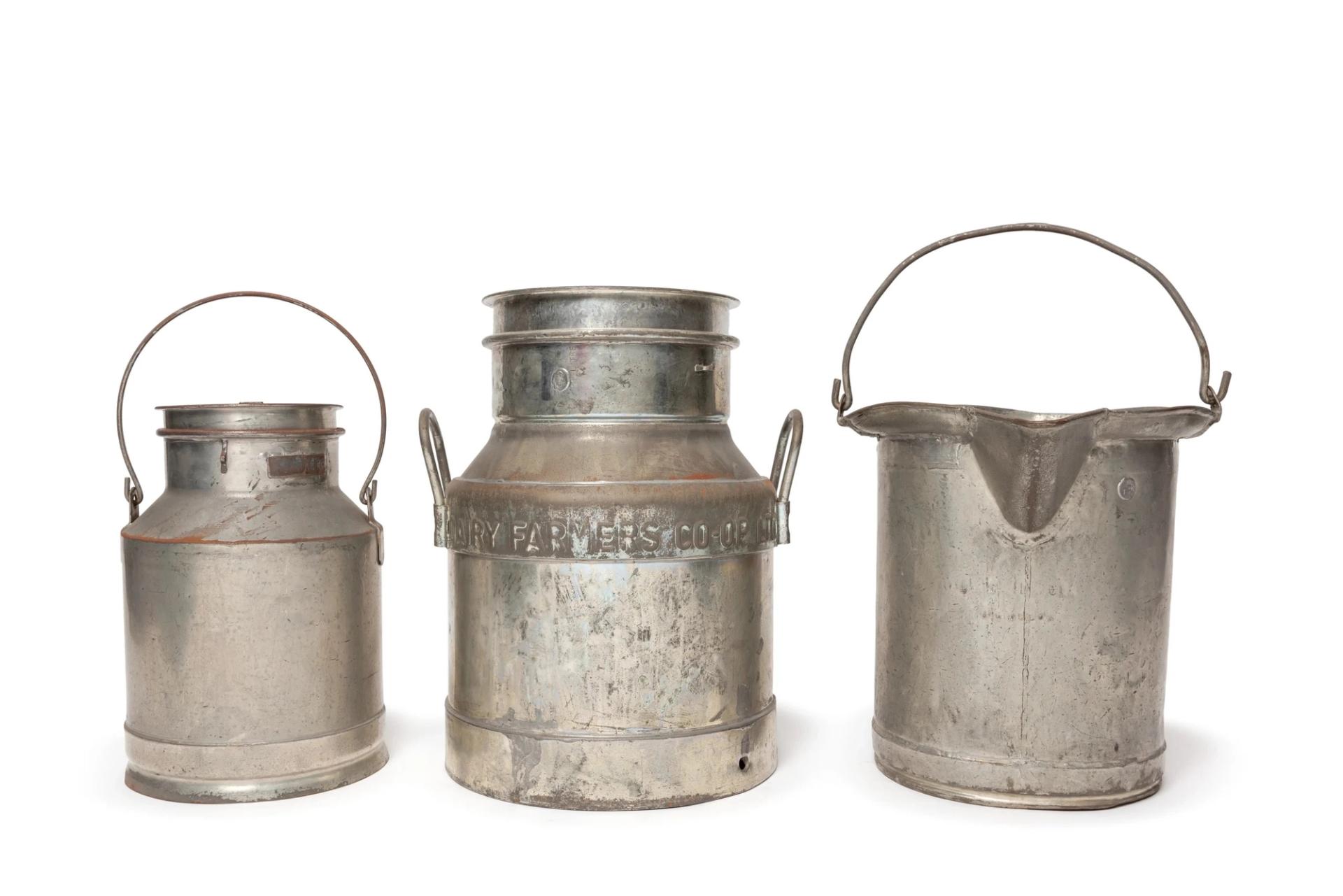
MB I remember around 20 years ago I was living in an old terrace in Ultimo, not far away from the Dairy Farmers depot. Every morning I'd get woken up at 4am by the milk trucks. I cursed them for that.
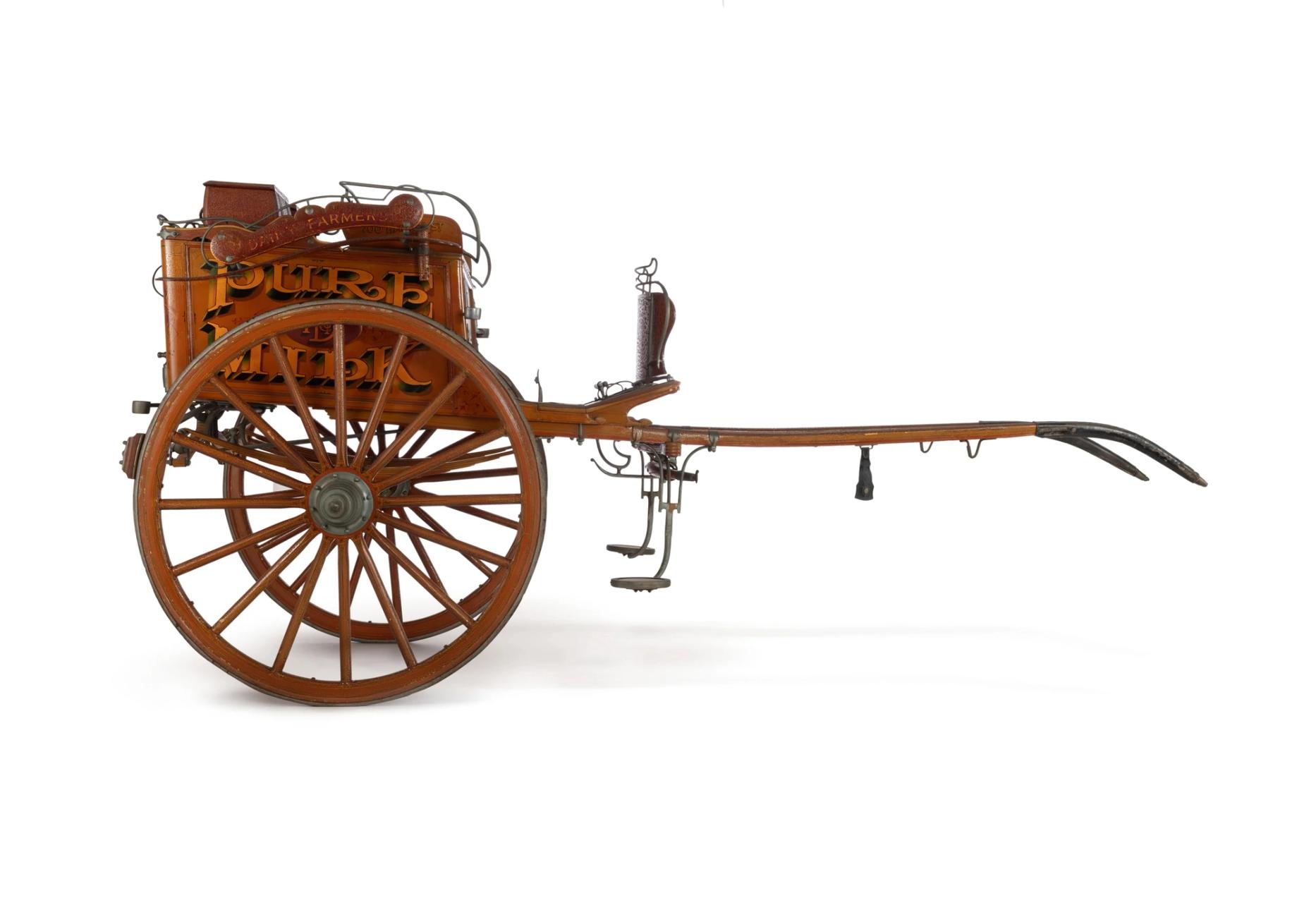
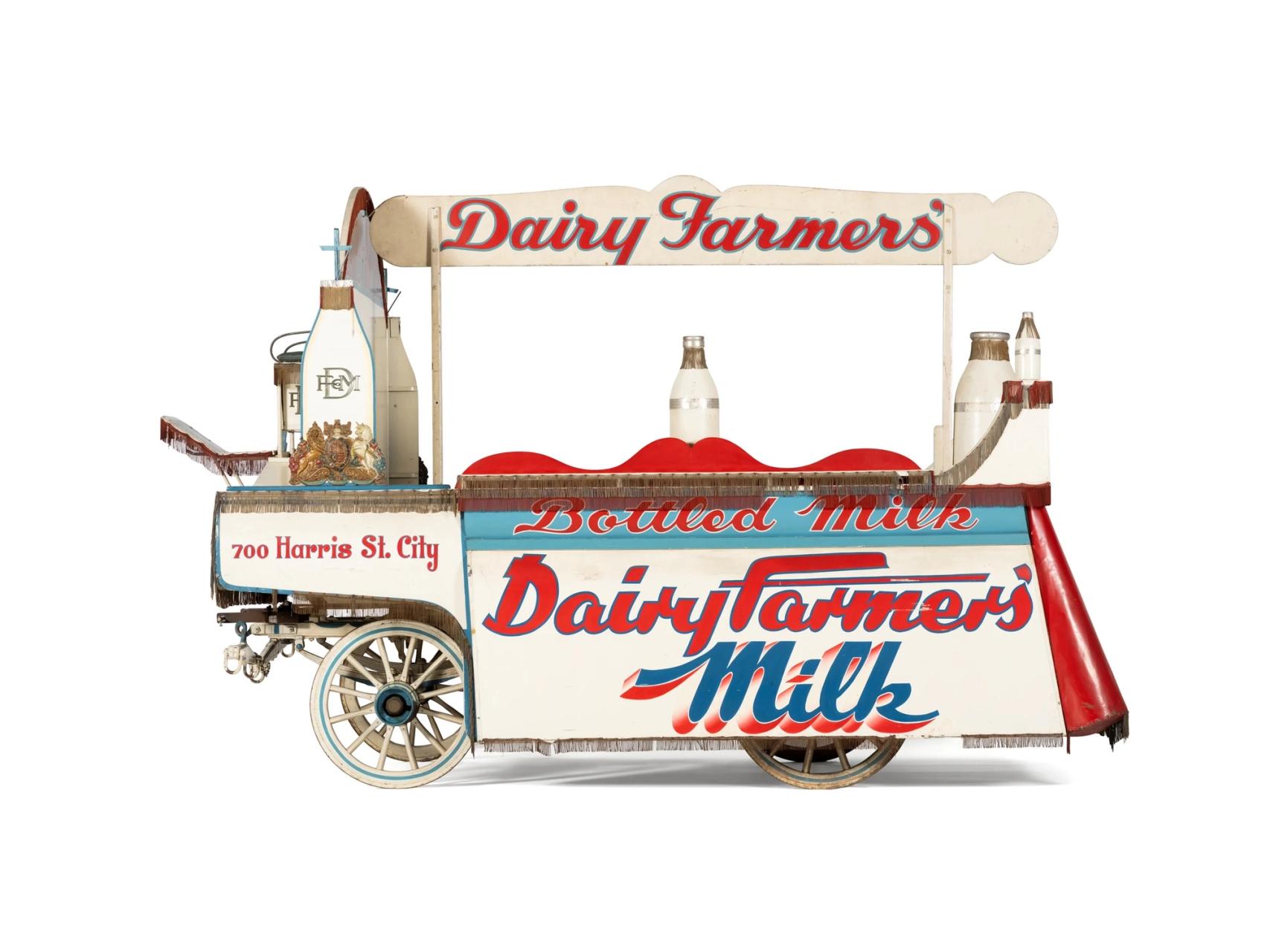
LTL Those noisy milk trucks were headed to the Dairy Farmers depot on Harris Street. That depot is now the Frank Gehry-designed UTS Building, not far from Powerhouse Ultimo. In the museum's collection, you’ll find a horse drawn Dairy Farmers milk delivery cart (opens in new tab) that’s over 100 years old. The beautiful design — all old school curves and signage — is something of a literal show pony.
This cart wasn't used for actual milk deliveries, but polished up just for Sydney's Royal Easter Show, where the Dairy Farmers cart hauled in 100 prizes by the 1950s. As milk van deliveries took over, Dairy Farmers could no longer sell its wooden designs, so it tragically set 120 milk carts and wagons alight. Let's head to Sydney's Royal Easter Show, where Mike was a cheese judge for quite a few years.
MB Let me take you on a little journey into a judging room. All the judges for the past four days have refrained from drinking tea, coffee and sugar, and turning this part of your being into the best it possibly can be for tasting purposes. You smell it, and then you put a little bit of cheese into your mouth and mix it up into a slurry. Then what you do is you breathe in, like that, and then you breathe out through your nose — because your taste buds are different to your nose. So, after doing that, you spit out the cheese.
When I was doing my cheese judging course the only thing that I refused to do was to spit this stuff out, because I said, ‘Look, I really like cheese. I don't have a problem swallowing all of this cheese.’ And I remember the first day we probably had about 100 cheeses. And I tell you, I’d never had dreams like that before. The next day, I smelt of cheese, I became cheese.
‘The funny thing about being a cheese judge is you do it for free. You do it for love. You do it for the duty and respect to the food. It's an honour. But the whole process of cheese judging is about being mean to cheese.’
LTL At Gelato Messina, Donato isn't mean to cheese, but his chefs certainly do interesting things with curds and whey.
DT One of the biggest sellers we have is Basque in Your Glory, which is a Basque cheesecake flavour. So, we literally make Basque cheesecakes and smash them through gelato. We do a flavour called Fat Clemenza, which is a cannoli gelato. So, we do ricotta in that one. Parmesan gelato that we make for the Creative Department, we actually get the rinds of the parmesan and we put that in the milk and we heat the milk up and we let it steep for hours just so it infuses the milk with more parmesan.
LTL We all have opinions on rating parmesan or ricotta, but how does a professional cheese judge decide what's good?
MB The whole of the judging system is about knocking points off. You're finding faults. You're looking for flavours that shouldn't be there. Things like catty, which is sort of a cat-urine-y kind of smell, that sulfur-y smell or ammonia-y smells aren’t wanted, but in other cheeses they'reactually wanted. This is one of the amazing things about cheeses is, it's rotten product that’s done artfully with bacteria, with mould, in collaboration with nature.
For instance, the smell you want to get from a fresh ricotta, you want to get the smell of scrambled egg. Or if you have a nice parmesan, you want it to smell of fruit that's on the turn. But I tell you what, I smelled some pretty big smells coming out of cheeses. Washed rinds that have got this amazing schoolkids’ sports room locker funk. You can almost see it sort of rising off these cheeses. I remember tasting a Spanish sheep's cheese. It had the smell of a freshly cracked sewer, which wasn't unpleasant. It's a smell that you get with a good Pinot noir.
There's some flaws in cheese that I think absolutely elevate the cheese. One example is when you get a cheese that's got a grain in it — sometimes you get cheddars that you rub it up against the top of your tongue and then it disappears. That's a calcium salt and for me that texture sort of elevates a cheddar. But when you're judging, you’ve got to mark it down for that, which is one of the limitations of the judging system.
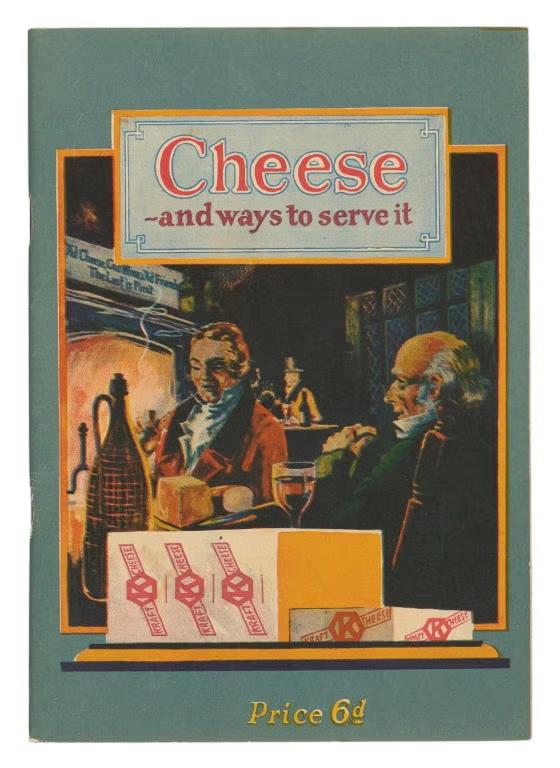
LTL In 1962, French President Charles de Gaulle famously asked, ‘How can you govern a country which has 246 varieties of cheese?’. And that's an undercount. France made way more cheese then, and today it produces more than a thousand types. We tend to connect cheeses to France and its neighbouring countries. Think of Camembert from Normandy, cheddar from England and Gruyere from Switzerland.
MB There's a lot of variety in cheeses in Europe, but it's certainly not limited to that. In Egypt, they make this beautiful thing called labneh. It's like a yoghurt, but it's so beautiful with honey. I remember I was working in India and Nepal, they've got big dairy traditions. Indian cheese is typically called paneer. Indian teas and beverages are much more milky than how we have our tea. I was sent across to China, and part of that was to have a look at their fledgling dairy industry. The amount of flavoured milks and milk-style products, not necessarily cheese, was just off the Richter scale.
LTL In Mark Kurlansky's Milk, the author writes, ‘Despite the dairy-obsessed Dutch, Swiss and Scandinavians, there is no cuisine that uses more dairy than Indian’. You see that in Australia, where Sydney-based Sharma's Kitchen has won awards for its mango lassi, ghee and paneer. While in the Huon Valley, Lyn Heywood has gained attention for combining the ghee of her heritage and flavouring it with native ingredients like Tasmanian pepper berry. Ghee is foundational to Indian cuisine and can be enjoyed in the simplest of ways.
AD Especially in my household to have just rice, ghee, salt and that's it. I mean, even now if my mum's having a meal, she'll always add a little bit of ghee on her rice. So everyone knows ghee as clarified butter, right? And when people said that, it would really irk me because I was like, ‘No, it's not butter — what do you mean?’. Because I had an aunt and she would make ghee at home. You boil the milk, let it cool and then it forms the skin. Collect the skin of the milk over a period of time and then cook that out and render it essentially to get the ghee. So for me, ghee is always dark and rich and nutty. But once I moved out of Kolkata, it was like a lighter yellow, more buttery, more like a golden colour. I mean, that's when I learned that there can be those two different classifications, because in most of India, they do make ghee by clarifying butter. That was a learning experience for me.
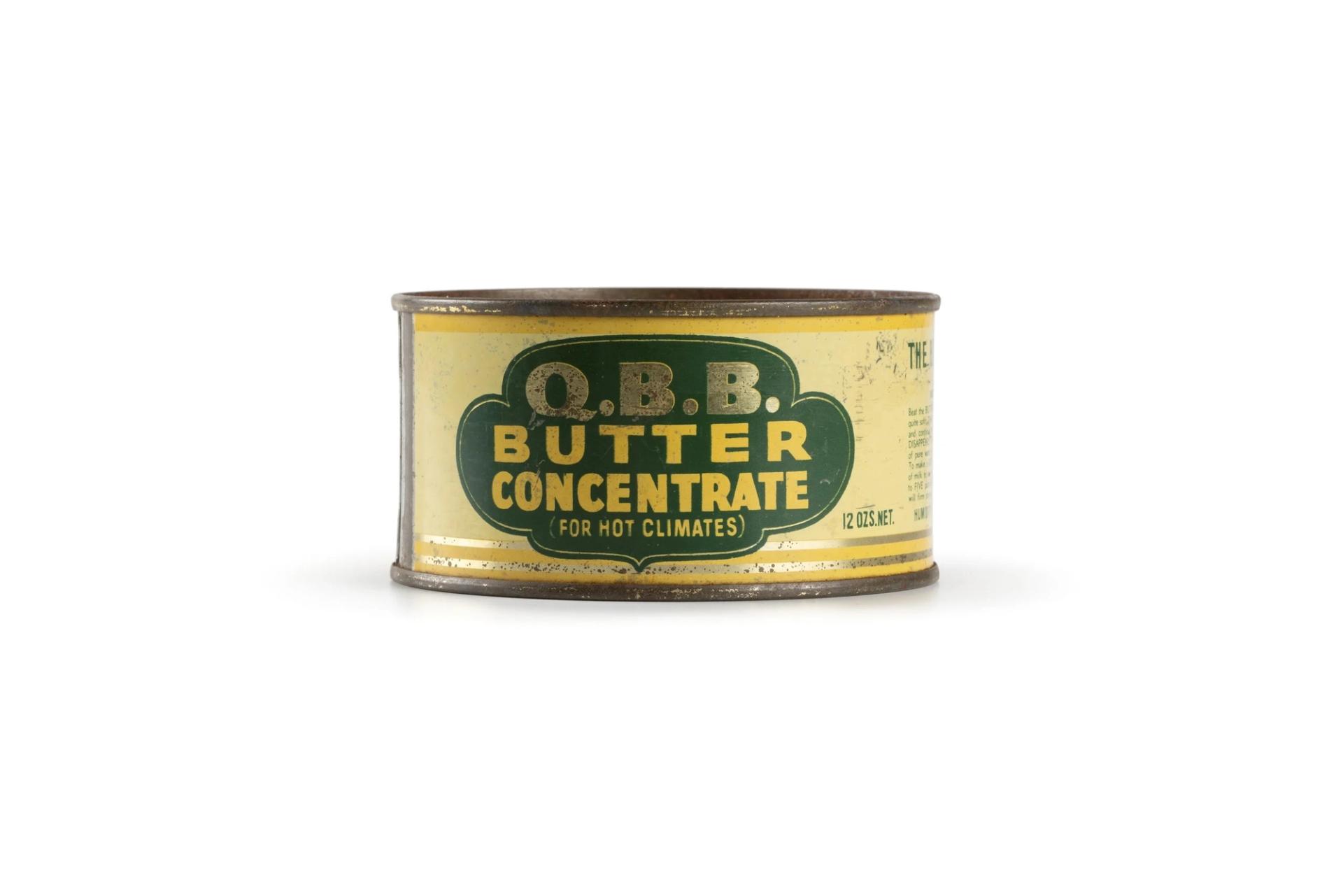
LTL There isn't ghee in the Powerhouse Collection, but there's something similar: 1940s butter concentrate (opens in new tab) for hot climates from the Queensland Butter Board. Like ghee, the water and lactose are removed from the butter, which means it can be kept for two whole years without refrigeration. It was so shelf stable it was supplied to Allied soldiers deployed in the tropics during World War II. Let's return to Ahana on the cultural significance of butter and ghee.
AD Dairy in general is such a big part of Hindu religion. This one particular god, Krishna, his lore is that when he was a child, he's always known as very cheeky and he would steal butter when his mother is churning butter. And that's very integral to his story. He's called ‘the butter thief’. I know a lot of the idols are bathed in ghee and milk or yoghurt. You can be worshiping a god, or you can have a fire ritual at home or outside. You have little dias, which are essentially like candles, but with a cotton wick. And you put ghee and that's the thing that makes it light.
LTL Tibetan Buddhist sculptures shaped from yak butter also signify how culturally important this ingredient is. Then there's the amazing story of Adolfo Kaminsky, who made a stunning discovery working in a French dairy: lactic acid could dissolve the ink on ID cards. This helped him forge papers that saved Jewish families from Nazi persecution. In Jewish culture, there are rules about consuming dairy products, which might have sparked the modern Jewish tradition of going to Chinese restaurants for Christmas. Whether avoiding or embracing it, there's no denying the cultural impact of dairy products, like dulce de leche, which sweetens desserts around the world.
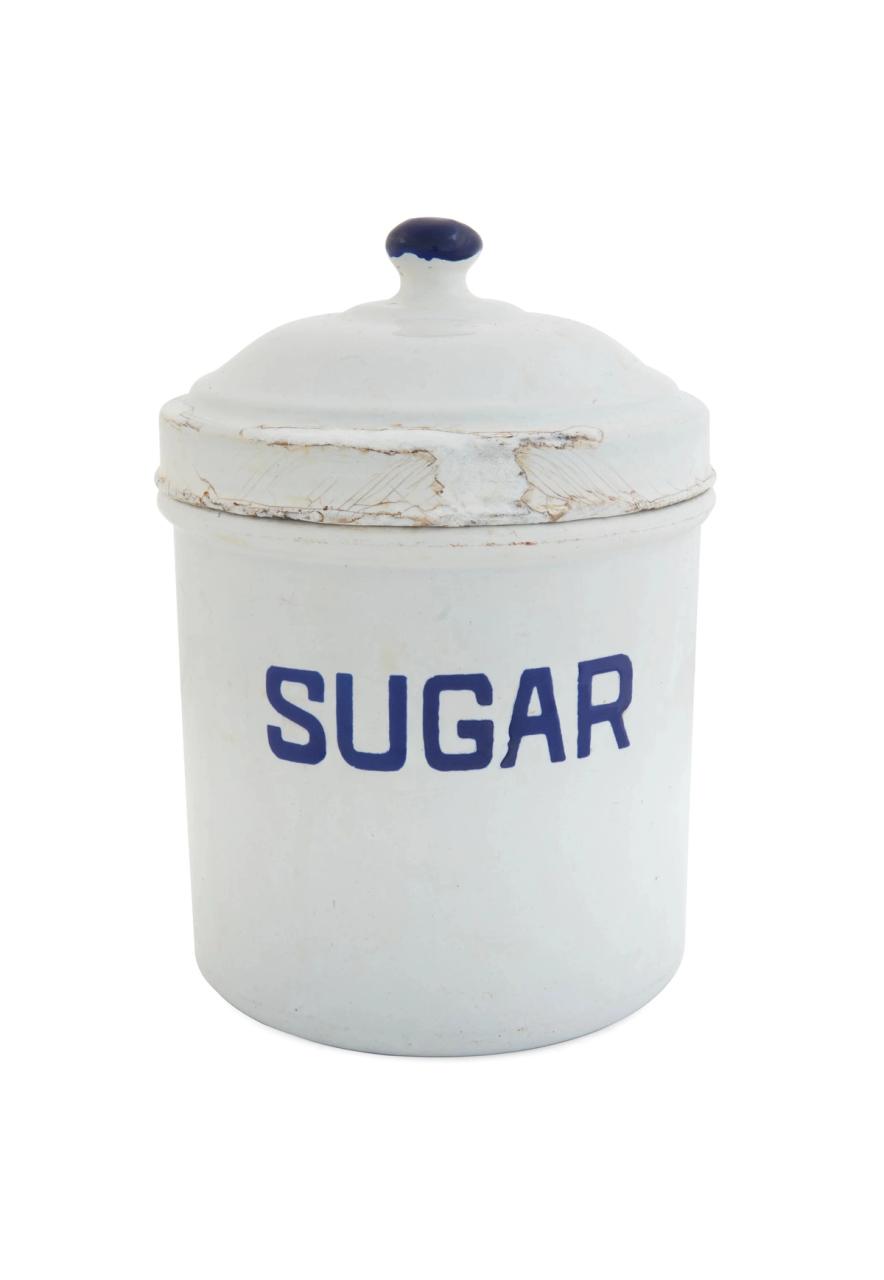
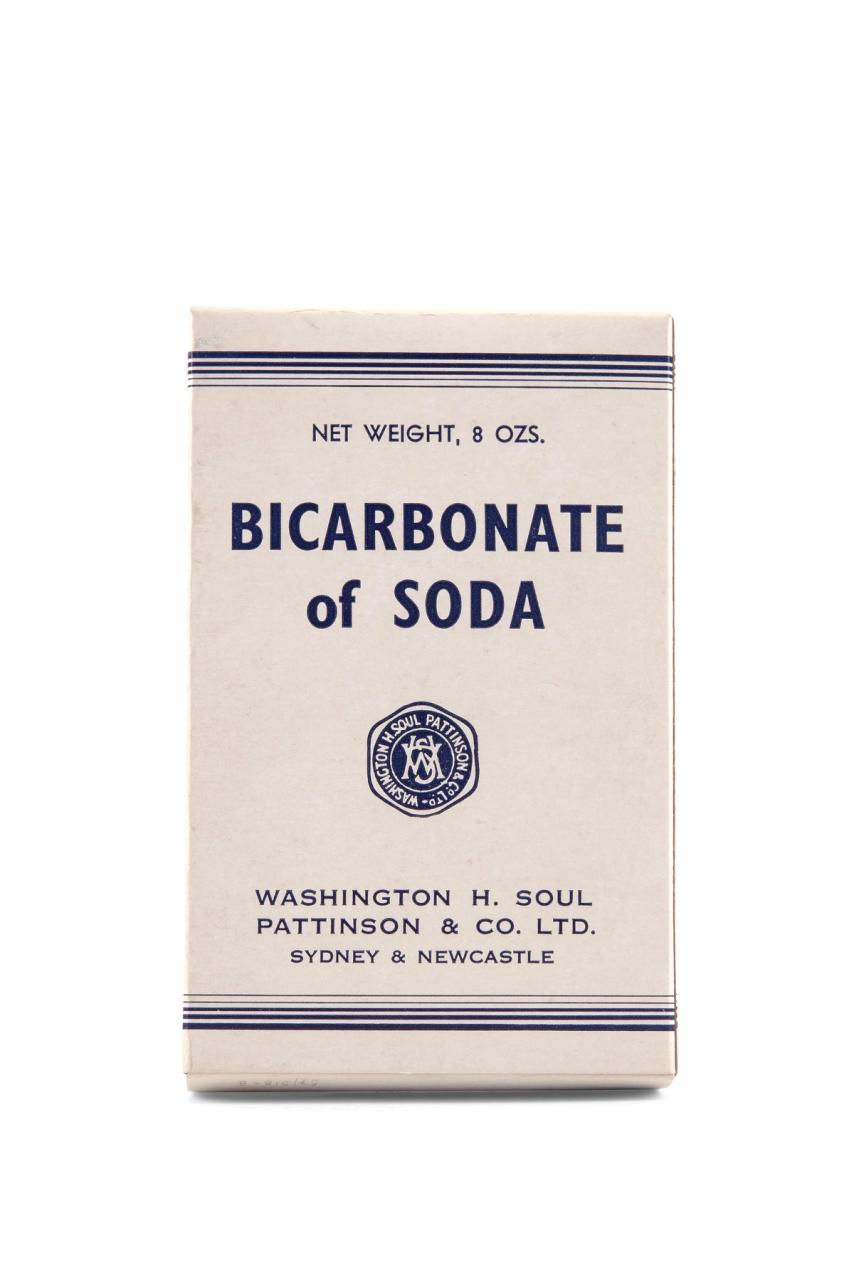
DT We've got South Americans here who actually grew up with dulce de leche. Our head of quality assurance worked in Argentina in a dulce de leche factory. The way we make it, it's basically three ingredients: milk, sugar and bicarb. Through that high soft heat, it evaporates all the water and caramelises all the proteins. And that's how you get dulce de leche. So, it's a really, really slow process. We start off with a 1000 kilo recipe and it whittles down to 300 kilos.
LTL Dulce de Leche is the second most-licked flavour at Gelato Messina's Australian stores, just after top seller Pistachio Praline.
LTL Another dish people feel passionately about is butter chicken. Remember the Melbourne tradie who copped a $1652 fine in 2020 for going beyond his COVID lockdown area limits to pick up a serve? There's also been the legal fight over which New Delhi restaurant invented butter chicken. Then there are the strong emotions people felt when Ahana presented her version at Raja: spatchcock makhani, vividly flavoured with fenugreek butter.
‘Initially, we put ‘spatchcock makhani’ and we didn't have the little description at the bottom and so many people who came, they were like, ‘What do you mean? You're an Indian restaurant, why don't you have butter chicken?’
AD And we would be like, ‘You're eating it. It's on the table. It's in front of you.’ People call it butter chicken, but murgh makhani is how you would say it in Hindi. We get the Dolce Nina from Burraduc Buffalo Dairy. It is a good parallel for paneer. Everyone expects a very traditional paneer dish, and I think this is a really good way of using a traditional sauce, but then highlighting a very local, amazing product. Especially when you roast it in the oven, it caramelises so beautifully on top and then just sets perfectly.
LTL When it comes to local ingredients, Mike believes native foods could really enhance our cheeses.
MB Well, I think it's inherently a good thing because it's coming from the land. Because bush tuckers are so intense, they do lend themselves to these sorts of additions. Tasmanian pepper berry, that's a fantastic addition to a cheddar.
LTL Adding things to dairy pays off. In the 16th century, Mughal elites stayed cool with kulfi, a frozen Indian dessert named after the Persian word for the cone it's served in.
AD My mum used to make kulfi at home, but in the earliest days when you wouldn't have refrigerated carts, there would be people who would have the tins of kulfi but in ice and salt. I remember like when you take it out of the metal cone, you're having your kulfi, but you get like the bits of salt as well. The most common flavours would be pistachio, almond or saffron, and we really wanted to do that in Raja as well. Milo made sense. It's very, very big in India, Milo. And it's such an Australian thing as well. So it felt like a very good meeting of the two worlds.
Milo advertisement (1980) Only Milo has that unique chocolate flavour. It's marvellous what a difference Milo makes.
LTL You can get Milo energy cubes in Nigeria, Milo nuggets in Colombia and Milo dinosaurs in Malaysia. But this chocolatey malt drink was invented in New South Wales by Thomas Mayne as a way for kids to get their serve of vitamins and minerals during the Great Depression. The drink was launched at the 1934 Sydney Royal Easter Show as Milo Tonic Food. You probably don't think of Milo as a health food today, but Thomas Mayne hoped the vitamins and minerals would dissolve as you stirred them through milk. When he saw his kids savouring the crunchy choc malt bits that floated on top, he realised you actually don't want Milo to fully melt into the milk. Ahana scooped those iconic cocoa malt crumbs into her kulfi at Raja.
AD Essentially, we’d just use condensed milk, evaporated milk and then mix Milo through it. You have to let it cool down, put it in the tins in the freezer. Then we make a praline with toasted hazelnut and then some malted milk powder. Crush it, coat it. That's it.
Maybe 90% of our sweets are dairy-based. So we do chana, which is essentially like an Indian ricotta. Rasgulla is one of the most popular Bengali sweets. You boil it in sugar syrup and it expands and becomes like a spongy ricotta doughnut.
The other thing with Bengali cooking ... we have different courses. You start with something bitter, or like a leafy green, and you have to end your meal with something dairy-based, something sweet.
We have this sandesh called ice cream sandesh. It's just like two layers and it's strawberry flavoured at the bottom and then just milk on top, bit of pistachio. And then during winter, you get a sandesh filled with liquid jaggery in the middle and it is just so decadent and rich, but it is just such a good way to end a meal.
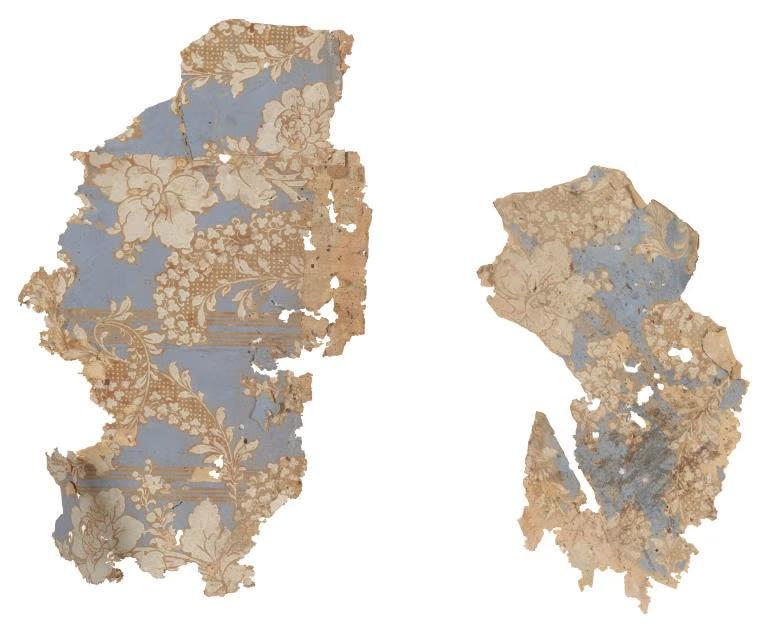
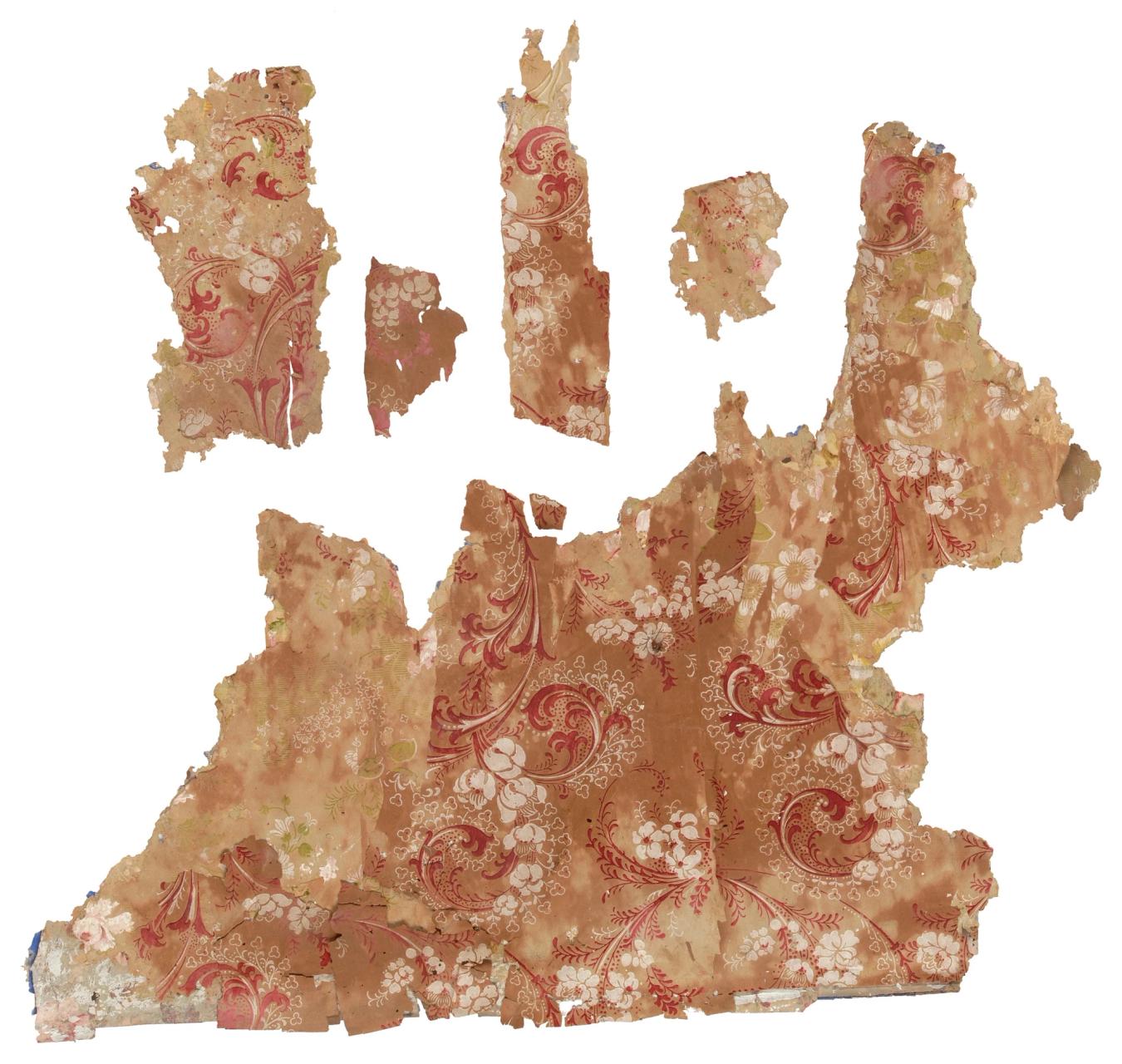
LTL Not too far from Powerhouse Parramatta is one of the oldest buildings in Australia, the World Heritage listed Dairy Cottage, built from 1796 onwards by former convict George Salter. He sold the site to Governor Lachlan Macquarie, who used Indian spices like nutmeg, chili and curry powder to flavour ricotta-like cheeses from the dairy. He also built a sunken milk room next door, 1.5 metres below ground, to keep everything chilled. A cottage was later built over this dairy room in the 1870s and forgotten about for more than a century. Workers rediscovered it in 1993 when they pried open the floor of the cottage.
You can still see that excavated milk room and its sandstone shelves today. You can also view remnants of the Parramatta Dairies wallpaper (opens in new tab) in the Powerhouse Collection. From the dairy in Parramatta Park, you can walk to Gelato Messina's nearest branch. Across its stores, Messina churns 1.6 million litres of gelato a year using only milk collected from its herds.
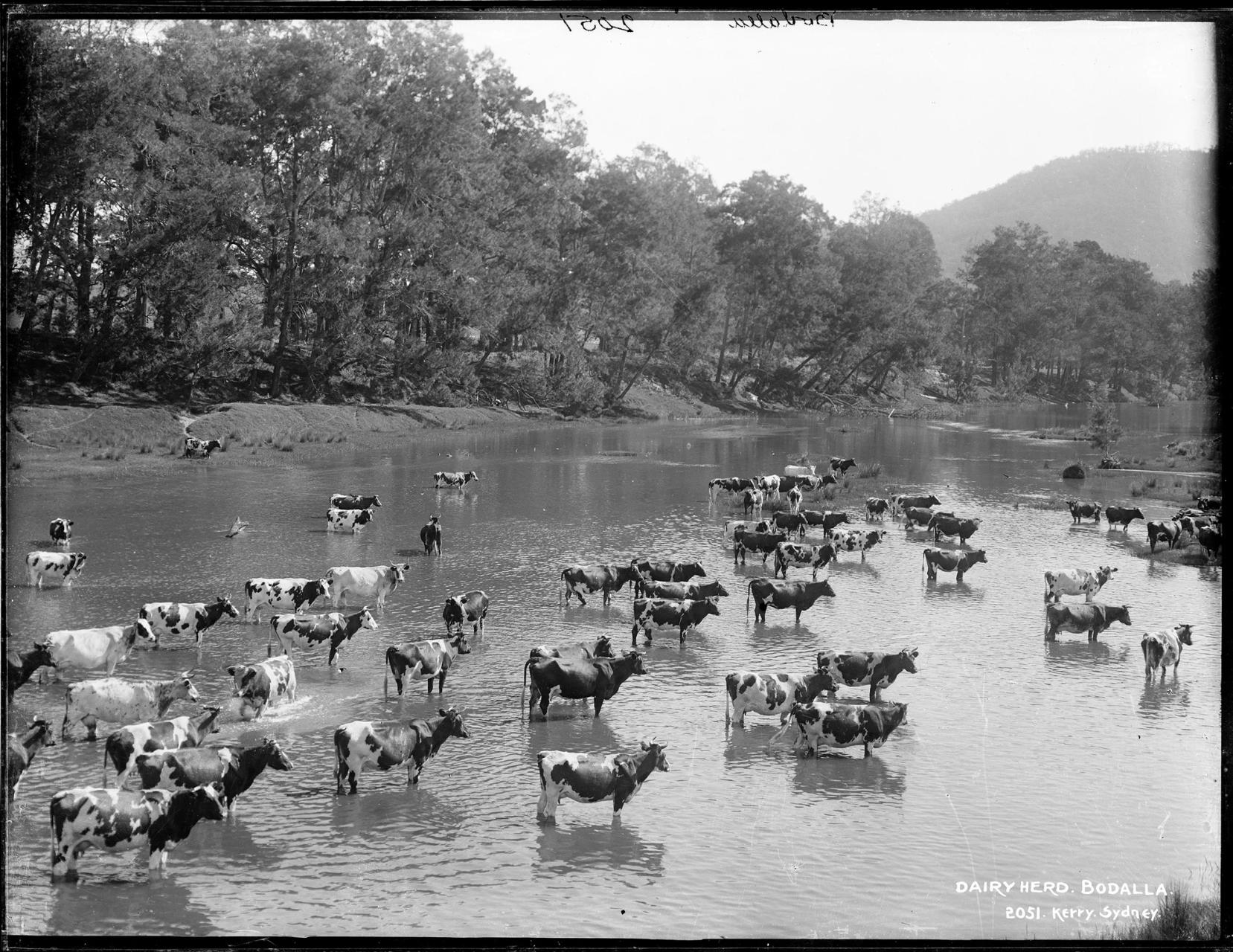
DT Buying the dairy farm was literally a romantic notion. How cool would it be to have our own dairy and milk the cows and make the gelato with our milk? There came an opportunity to do that, and we did it. And then we realised that there's actually no romance to it. It's just a lot of hard work. The farm is in central Victoria, in a town called Numurkah. It's about 90 kilometres north of Shepparton. It's the heart of central Victoria's dairy industry.
The cows are milked in the morning. Once the milk is done, we have an operator who comes in, pasteurises the milk, puts it in the cool room and then we get three deliveries up to Sydney a week.
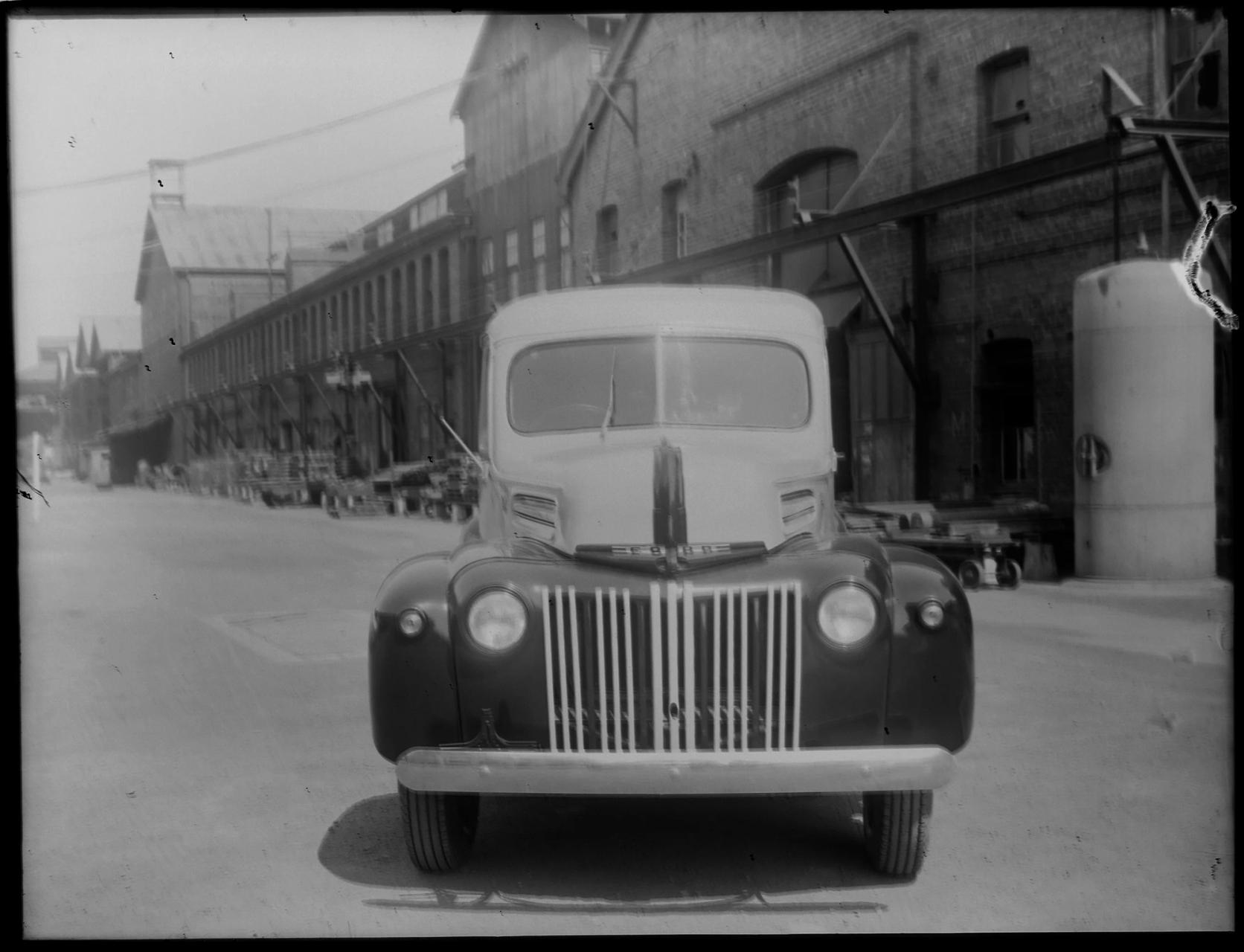
Half A Pint of Milk (1952), Tasmanian Archives And there goes the factory truck with a load of fresh milk for school. It takes a lot of work and a lot of people to fill our milk bottles, doesn't it?
DT We only milk once a day. We believe that it's actually less stress for the cow to get milked once a day. So what that does, it actually creates more fat, more protein. There are some farms out there that will actually milk three times a day, so we get less volume, but more solids.
LTL This creamy Jersey milk contrasts greatly to cut price stuff in supermarkets and the high intensity farming that's caused many problems within today's food system. Gelato Messina's approach, which keeps animal welfare in mind, might not be an obvious move from the playful company that started out with experimental gelato that tasted like roast turkey dinners or hot chips. They know how to have a good time but they also care deeply about sustainability and taking care of their cows.
‘When a calf is born, basically, we leave it with the mother. It still feeds. It's actually less work because we don't need to then feed the calf so, it's actually beautiful to see.’
DT When the cows come in, the matriarch of the herd will lead the cows in. They are only grass-fed, they are not fed any grain whatsoever. We have a no-till method on the farm. Basically, what we do is we plant over plant over plant over plant. We don't scorch the earth, we don't drop pesticides, we don't do anything like that. There's a whole heap of different grasses that are available in their diet and it’s beautiful and lush.
LTL The farm next door has Friesian cows but the Messina team opted for Jerseys for good reason.
DT Jersey cows are the best for gelato.
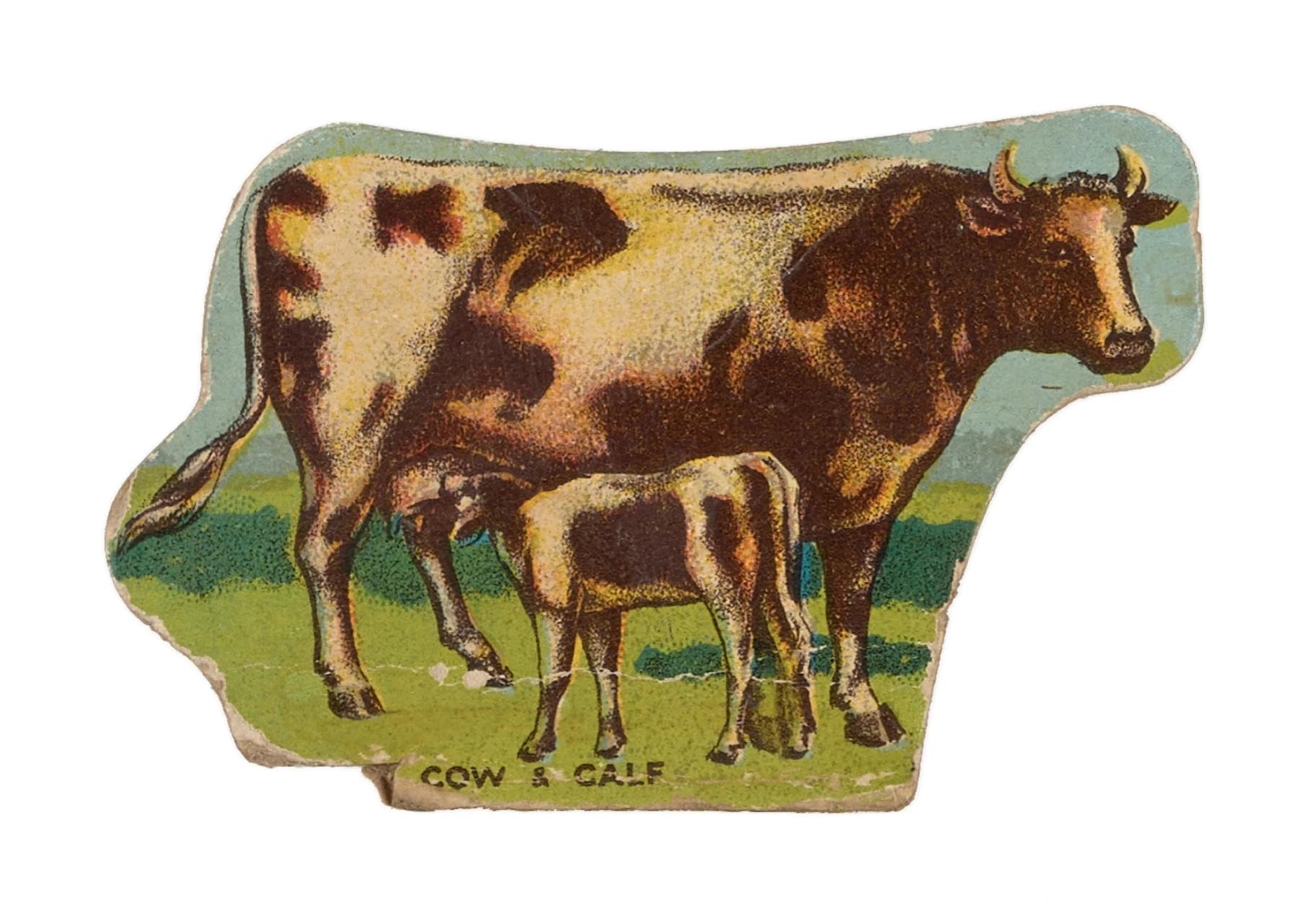
Half A Pint Of Milk (1952), Tasmanian Archives The Jersey breed came originally from the Channel Islands off the coast of France. Jerseys are small cows, but their milk is very rich and creamy.
DT It's higher in fat, higher in protein. When you look at our milk, it's not brilliant white. It's actually a yellow or a creamy colour. And that's because of the grass and because of the cow itself. I'm lactose intolerant, but I can have our gelato and I can have lattes, which is a new thing for me.
LTL As babies, we easily digest milk, but two thirds of the world become lactose intolerant as adults. Although most people of Asian or African descent have trouble digesting dairy, societies with dairy dependent cultures like Maasai cattle herders or Tibetans who thrive on yak butter, have actually maintained the ability to consume milk.
DT Because we don't sell our milk to dairies there's no reason for us just to keep putting cows on and cows on and cows on. We only milk what we need to milk. We produce about 14,000 litres of milk each week, and that's what it takes for us to make our gelato, our dulce de leche and our yoghurt for all our products in stores.
Peters Ice Cream advertisement (1986) [Sung] Peters is Australian for ice cream. Peters Natural is enriched with the goodness of cream, whole milk, raw sugar, real fruit, all natural ingredients. [Sung] Peters is Australian for ice cream.
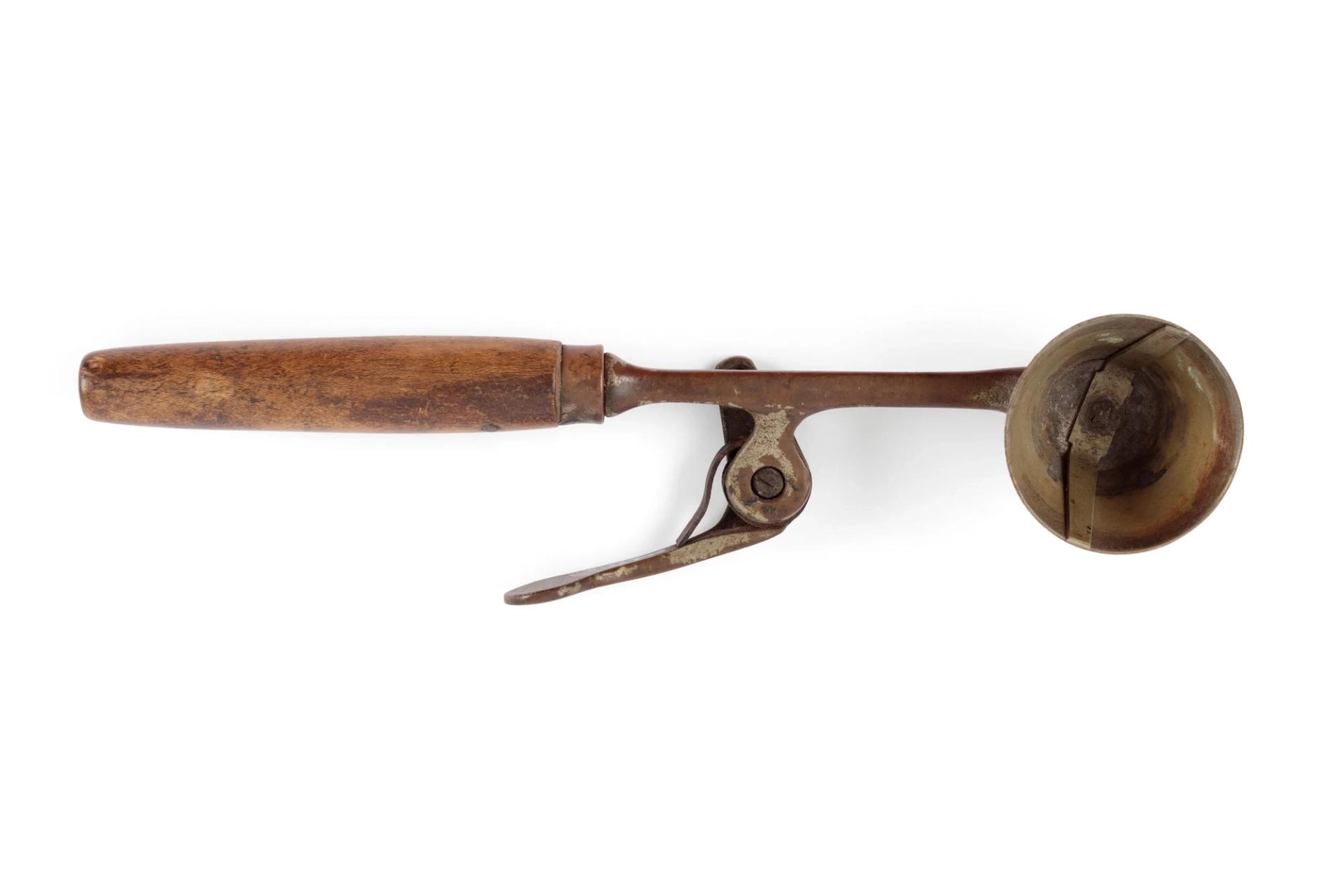
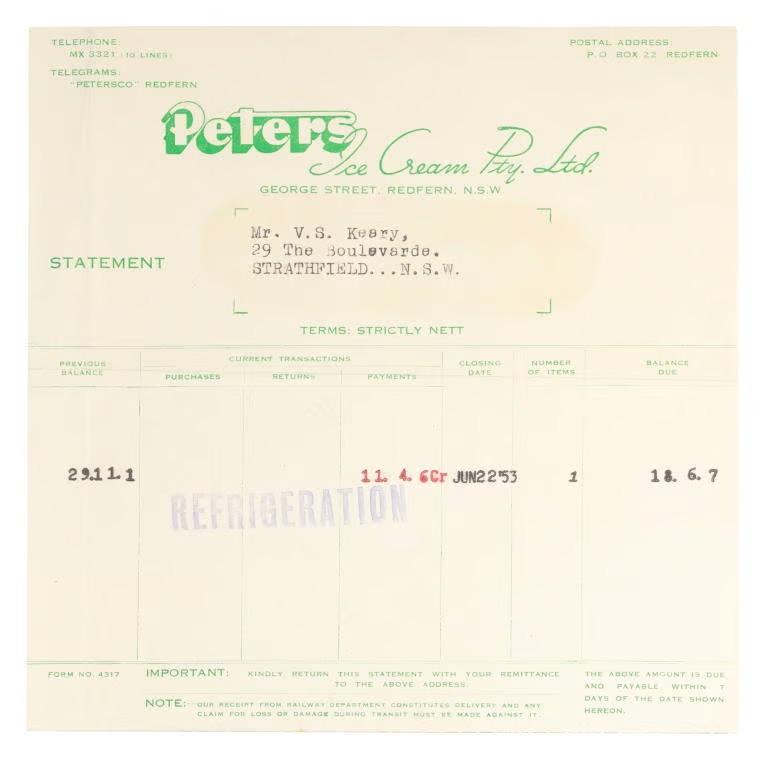
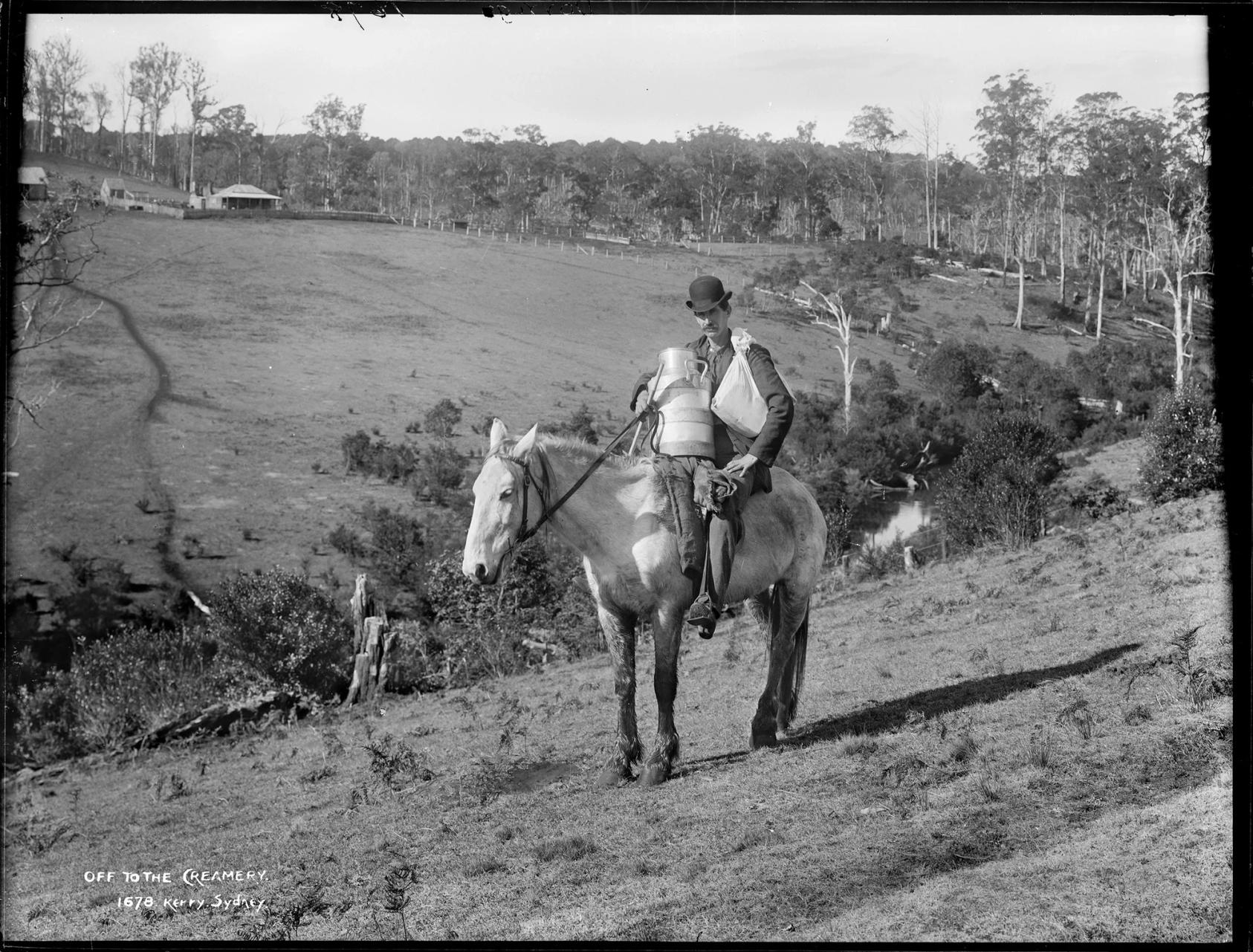
LTL Locally, things have come a long way since frozen desserts were sold by horse and cart, and Peters, featured in the Powerhouse Collection, claimed its ice cream was ‘the health food of a nation’. Things have also come a long way since the Powerhouse ‘Founding a Dairy Farm (opens in new tab)’ photo series from the 1800s. So how does Gelato Messina's farm compare to this era?
DT I would say that the farm is exactly the same. I don't think there's much difference. Where the difference lies is in the pasteurisation shed. So, for us, everything is automated. It basically takes two people to milk 200 cows. Everything runs on compressed air, so it suctions and it's automated milking. The little tags that they have with a number on it and generally the name of the farm, that's actually microchipped. So, when we do herd tests, basically we wave a wand over them and it gives you the cow's identification, when it was born, how much milk it produces, all of that. What we do have now is radio controlled collars. It shows where they are, how much they're milking. We've got cooling tanks now that cool the milk instantly. I don't think they would have had that in the 1880s.
LTL And a focus on doing things sustainably, rather than working cows to the max also shapes their approach.
DT When you've got a dairy farm that's milking its cows three times a day, it's intense. But it's not just intense on the environment, it's intense on the animals.
LTL Methane from cows is a significant contributor of greenhouse gas emissions, which has led to promising experiments locally and abroad with feeding cattle seaweed to reduce their carbon footprint. Could seaweed feed potentially affect the taste of milk in a good way?
AD If you take an egg or something as simple as that, what you feed the chicken you can see a direct change even in like the colour of the yolk and stuff. So, I think 100%, what you're feeding the animals makes a difference in the milk.
LTL BBC's Crowd Science (opens in new tab) noted, if we drank soy milk instead of dairy, we would free up a landmass the size of Australia and reduce greenhouse gas emissions dramatically. For cultural, religious and environmental reasons, we've seen a spike in dairy alternatives. Our lattes are flavoured with soy, oat and nut milks, and it's possible to make milk from pea protein, sugar cane and many other sources. We could also see increasing demand for camel milk. We have the largest number of wild camels in the world after all, brought here by Muslim cameleers, who built many outback towns in the 19th century.
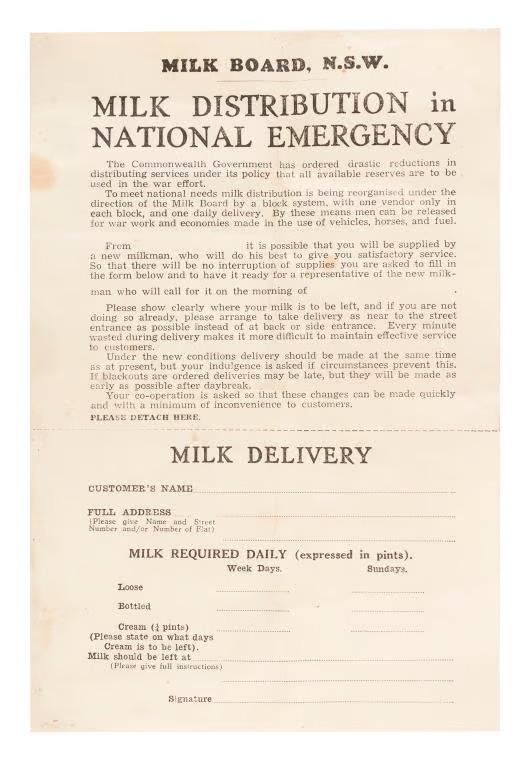
In the Powerhouse Collection there's a ‘Milk Distribution in National Emergency (opens in new tab)’ leaflet from World War II, which tells you how crucial the drink was to people's diets back then. But does dairy still matter today? And what is its future?
MB A lot of dairy people don't like non-dairy cheeses because they see it as a threat. I say there's room for us all. I ate my first vegan cheese maybe 10, 15 years or so ago, and it wasn't bad. But the vegan cheeses I eat now are far better. The bar has definitely been raised. Now, as a cheese judge I find it very hard to criticise this new sector of cheese that isn't made from dairy. The wonderful thing about cheese is it's an everyman good. Everybody can have it as an everyday thing, but also at the same time it's arguably one of the finest foods.
LTL So butter can have holy significance, but it can also be tinned, carried through the tropics for two years and still feed a literal army. Today we’re seeing dairy farms using older practices in an effort to put the environment and animal welfare first. And while dairy trucks rattling by your bedroom window at 4am might not be ideal, without their precious cargo we wouldn’t be able to enjoy our favourite cheeses — even if some have the scent of a sewer. Unlike Peters Ice Cream, we're not going to pretend that frozen treats are health food, but they’re definitely sweet and worth savouring.
AD When I was working at Firedoor, we used to have a stracciatella ice cream, which blew my mind that you could make ice cream from a cheese, essentially.
DT My favourite cheese is pecorino. Over parmesan, I'll take pecorino any day. And especially in pastas, it just sort of gives it like a real kick that is just next level.
LTL This episode was inspired by items from the Powerhouse Collection (opens in new tab), such as a horse-drawn Dairy Farmers cart (opens in new tab); photos of Peters Ice Cream vans (opens in new tab) from the 40s; and 1850s wallpaper (opens in new tab) from the Parramatta Dairy.
Thanks to