Vārchive

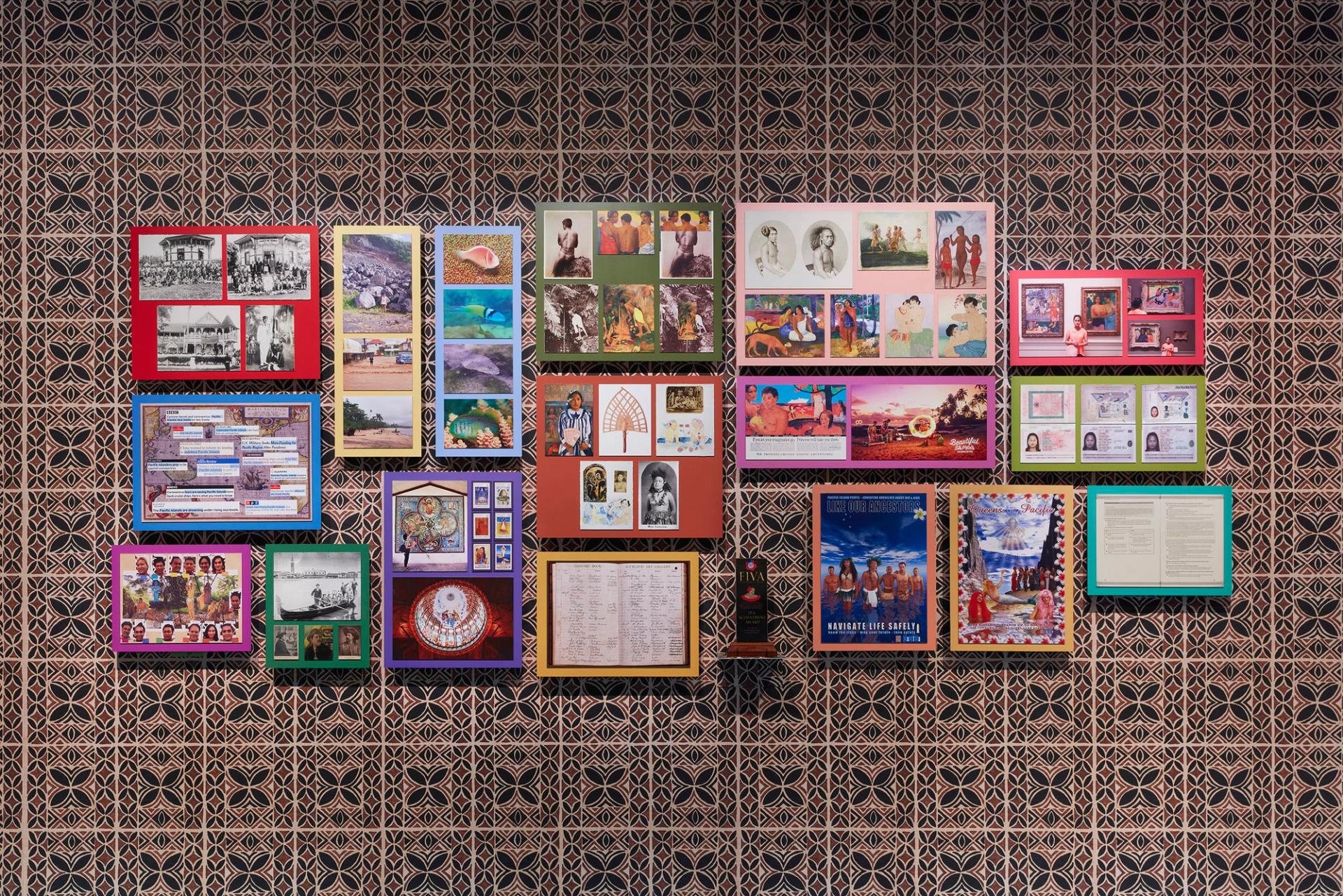
Powerhouse Indigenous Collections professionals explore the Paradise Camp Vārchive’s dual role as artwork and archival practice that could catalyse a transformative shift within the heritage sector by highlighting the imperative for Indigenous interventions within colonial collections to foster truth-telling.
Listen to or read provocations by Professor Francesca Tarocco and excerpts of responses from Tammi Gissell, Madeline Poll and Nathan Mudyi Sentance as they contemplate the need to redefine heritage by encompassing Indigenous communities and sites as archives and memory holders which are increasingly threatened by climate change.
Gissell, Poll and Sentance also explored these topics in an essay published in Lagoonscapes, The Venice Journal of Environmental Humanities (opens in new tab) (20 December 2023).
Professor Francesca Tarocco
‘What would it mean to collectively imagine the material traces and stories that water bears, and the local act of placemaking it engenders?’
Professor Francesca Tarocco As we begin to recover from the Covid pandemic and look to the future as indeed Paradise Camp asks us to do, I think we have started to explore some really important questions.
How can we come together, embrace change and build greater resilience? Which aspects of traditional practice have not served us well as people, professionals and institutions? And how can we rebuild more sustainably, more equitably? What is the role of museums and research centres in bridging divides, bringing communities together and building empathy, understanding and belonging?
I have listened very carefully to our discussions and your ideas, and I know our work on these challenges and many others will not end when our meeting concludes. And what are we proposing to do then?
It seems to me that the task of reconceptualising planetary change for the human imagination calls on a wide range of knowledges and practices. Shared problems, places and scales form the basis for collaborative work, which I think is very important now. And shifting the framework to be more consciously inclusive and diverse is enabling concepts of the physical world that better include humans and take ethics beyond humans to consider more than human subjects. In the past decade in the Global South, a wide variety of new water justice movements have emerged. They are transdisciplinary, multi-actor and multiscalar coalitions that challenge dominant water management approaches for the moana and for rivers and lagoons. They deploy a multitude of profoundly innovative strategies to restore and defend living rivers, for example.
A few examples are ecological flow clinics, the promotion of dam removals, federations designing new rules for shared catchment governance, citizens’ initiatives, erecting river environmental health projects and grassroots think tanks.
These movements have the potential to revolutionise environmental debates, practices, laws and policies towards new, equitable and nature-rooted water governance. However, they are often excluded from policy, and also academia has so far paid very little attention to them. Tools for understanding the emerging innovative water ontologies, normative frameworks and commoning strategies are missing. What we should do: we should try and study, understand and support all those involved with water waterscapes and climate justice, thereby contributing to more equitable nature-entwined water governance, among other things.
I was also thinking about water as archive. What would it mean for people of the moana to think about water archives through thought experiments, writing exercises and many other ways in which you can do things? What would it mean to collectively imagine the material traces and stories that water bears, and the local act of placemaking it engenders? And what does it mean for water to be archival? If water is an archive, who is it an archive for? How can water act as an archive across the moana, river, reservoir and airborne forms? Island people perhaps can navigate the possibilities of water, its properties and interactions outside of a land of bureaucratic-based understanding of the archival, to consider its own way of dynamically holding and transporting contents, histories and memories.
Thanks to Yuki and Natalie King, with whom I am editing a special issue of The Venice Journal of Environmental Humanities, Lagoonscapes, I have been very inspired by Epeli [Hau'ofa], who offered 1993 essay manifesto Our Sea of Islands, that we will reprint in the journal so that it's going to be more available also to readers in Europe and elsewhere.
And this is what Natalie and I write in the introduction:
‘A Tongan and Fijian writer and anthropologist, his influential essay offers a grassroots view of Oceania, the island states and territories of the Pacific, all of Polynesia and Micronesia as a place of optimism and largesse. His positionality contrasts with the narrow, deterministic view of Oceania, replacing it with,’ and we quote here, ‘a universe comprised not only of land surfaces, but the surrounding ocean as far as they could traverse and exploit it. The underworld, with its fire control and earth-shaking denizens, and the heavens above with their hierarchies of powerful gods and named stars and constellations that people could count on to guide their way across the seas,’ as Alpha reminded us yesterday.
As a Pasifika methodology to relate experiences, the volume aims to amplify the themes of both Talanoa Forums and Kihara's exhibitions while reflecting on intersectionality, oceanhood, colonisation and collections also. During the past ten years or so I think that the environmental humanities, with its interdisciplinary, multispecies, feminist and materialist currents, has generated a lively new body of work concerned with theorising the ocean not as a blank space for human agents to cross, but rather as a viscous, ontological and deeply material place, a dynamic force and a more than human world.
This spatial turn has been given various names, such as the blue humanities, the oceanic humanities, and critical ocean studies, and ranges across disciplines such as anthropology, geography, literature, and feminist and queer studies. The majority of the maritime scholarship of the last century has focused on the mobility of male transoceanic agents across other feminised fluid spaces, but now the ocean is no longer the forgotten space. To borrow from Allan Sekula of Global Capitalism and Modernity, ‘It has become less of an inert backdrop to crossover, and more a figure and a material to fathom, to sound and to descend beneath.’ As Stacy Alaimo has written, ‘Submerging ourselves, descending rather than transcending is essential, lest our tendency toward human exceptionalism prevent us from recognising that, like our hermaphroditic, aquatic evolutionary ancestor, we dwell within and as part of a dynamic, interactive, emergent material world that demands new forms of ethical thought and practice.’
And to conclude, I would like to offer one last thought I have found inspiring, that of the Caribbean poet historian Kamau Brathwaite, Theory of Tidaletics, an analytical method based on what he describes as the movement of the water backwards and forwards as a kind of cyclic motion rather than linear. Importantly, his theory foregrounds not only the diverse temporality of oceanic space, but also what he calls the submerged matters that must be recuperated into regional history. Thank you.
Nathan Mudyi Sentance
‘I don't believe that memory is just paper on shelves. It lives in Indigenous people and places.’
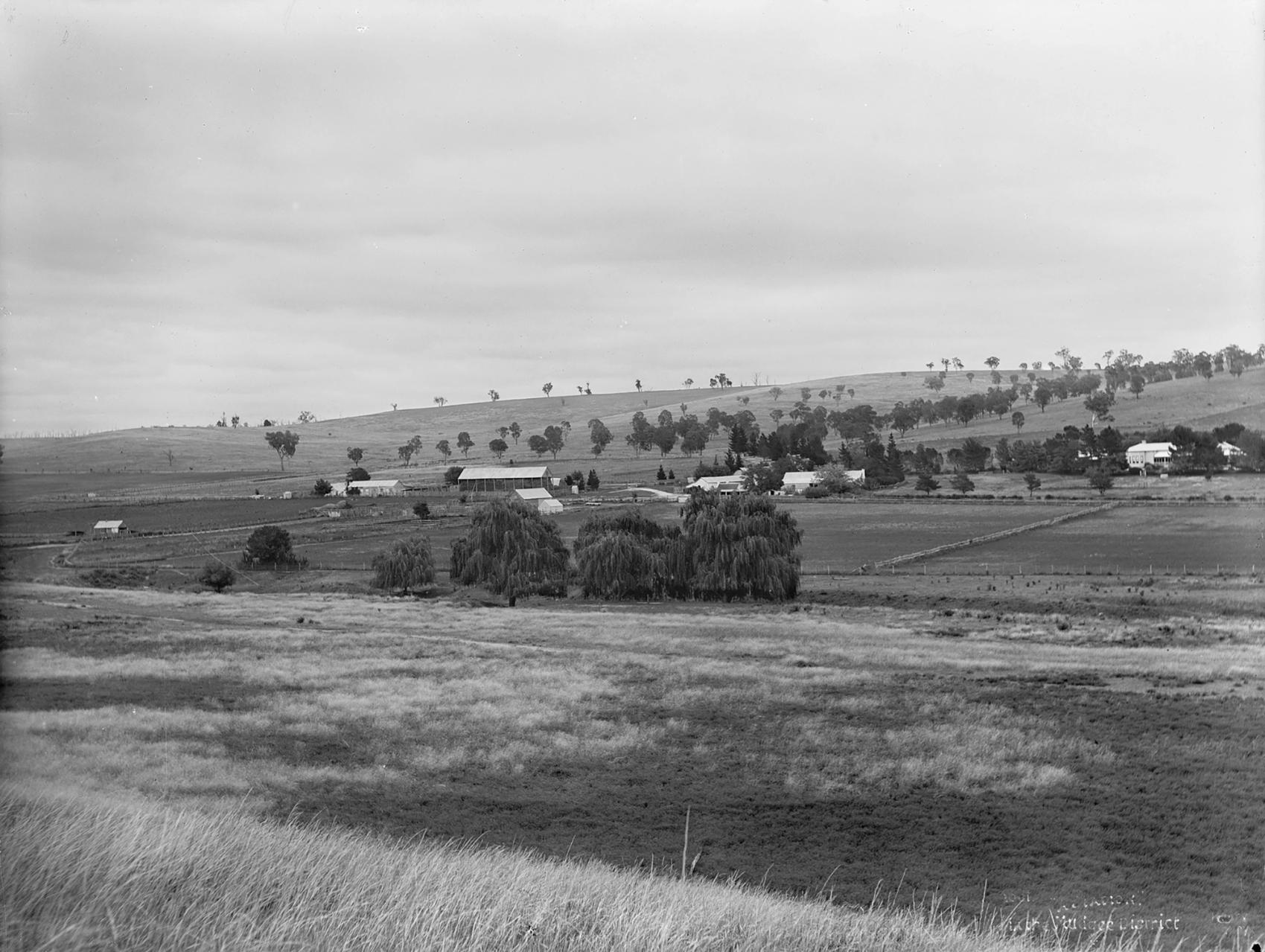
Nathan Mudyi Sentance I'm Nathan Mudyi Sentance. I'm a Wiradjuri man. My family is traditionally from Mudgee, New South Wales, which is about four hours northwest of here. But I grew up on Darkinjung Country on the New South Wales Central coast, which is about an hour and a half north of here along the coastline. I call myself Nathan Mudyi since in Wiradjuri ‘mudyi’ means ‘friend’ or ‘mate’. I call myself this because I'm descended from a woman named Diana Mudgee. The family story goes that her family, my ancestors, were tragically killed in a massacre when she was around between 8 and 10. And because she was orphaned, they sent her to work at a local station and they wouldn't let her work under her traditional name. So, they just gave her a name, Diana Mudgee. And the family legend goes that they called her Diana because it's just a good Anglo name, and Mudgee because that's the town she was in. But speaking with Elders, they hypothesised that the town of Mudgee actually is derived from the word ‘mudyi’. So, I call myself Nathan Mudyi Sentance to reclaim and repurpose a name imposed on my great grandmother. But also, yeah, it means ‘friend’ or ‘mate’ in Wiradjuri and I think I'm a friendly guy. So, I think it fits.
I've actually been working in collections for about 15 years. I'm a librarian archivist by trade. I originally started at the Darkinjung Local Aboriginal Land Council working archiving their business records, and then I went to the State Library of New South Wales here on Gadigal Country in the Indigenous Engagement Branch, under the mentorship of Ronald Briggs and Melissa Jackson, who have been Indigenous librarians there since 1991. Later on, I got to be under the mentorship of Dr Kirsten Thorpe. Since then, I've worked at the Australian Museum, also here on Gadigal Country, under the mentorship of Laura McBride, and later on got to work at the University of Sydney Library, working on their Aboriginal and Torres Strait Islander cultural protocols. And now I'm here at the head of Collections First Nations, at the Powerhouse with my deadly team, which has been great.
But through my years of working in collections, I guess there's been some key tensions that have really informed my practice. The main one is like ngangu gari, which in Wiradjuri means ‘Whose truth?’ And it's a question that I often think about when thinking about collections. Whose truth are you hearing and whose truth is missing from this discussion? And why are you hearing this particular truth? And this was solidified early on in my career at the State Library. We used to get Elders come in all the time. And I remember really early on when I was a junior library assistant at the State Library, we had these Elders come in and they wanted to look at missionary records about themselves. And one aunty was reading a record about herself written by a missionary. And the record said that she broke her arm and she's like, ‘I've never broken my arm. I will get an x-ray today to prove that I've never broken my arm.’ And even though the written record in the State Library and Aunty’s lived experience in that situation, that discrepancy could be considered innocuous, it did really solidify in my mind that Aunty’s lived experience is not in the State Library and that written record was, and that is what people use to write history. Thomas Keneally goes to the State Library to write Schindler's List; it’s what people think of when they think of New South Wales history and Aunty’s story was not in it. So, I've been, throughout my career, trying to figure out ways we can not just add Indigenous perspectives in our collections, but also get audiences to think about, as I say, ngangu gari, whose truth?
At the Australian Museum I used to do this thing before I did tours to get people to think about truth and museums. I used to tell three stories, and the first story was when I first started at the Australian Museum. We had this really cool spiders exhibition on and I was walking through the lobby wearing my museum shirt. Someone stopped me and said, ‘How do you get rid of funnel web spiders?’ And I said, ‘Oh, I don't know. That's not my area of expertise.’ As I was saying this, another member of the general public came over and said, ‘Oh, to get rid of funnel web spiders, you need to –,’ and before he could finish, the lady put her hand up to his face and said, ‘Excuse me, I'm talking to the expert,’ pointing to me. And I was like, ‘No, no, no, no, I'm not an expert. I can't confirm or deny what he's saying because I'm not an expert.’ But to her, I was wearing an Australian Museum shirt, I was an expert; I should know all this information. We're considered an authority.
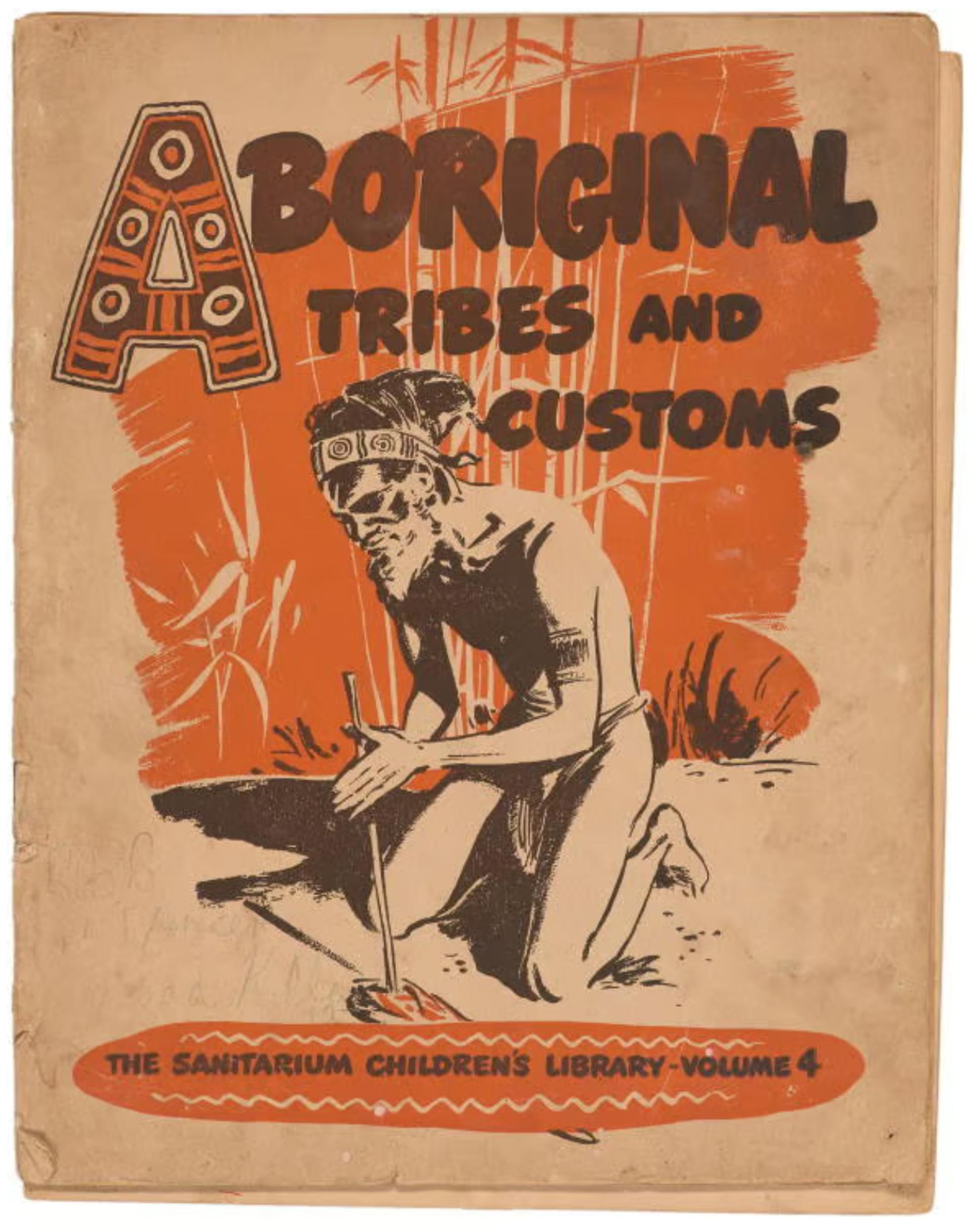
The second story I tell is actually before my time at the Australian Museum. For April Fools’ the Australian Museum thought it would be funny to do a drop bear display, so they did a drop bear display in the lobby, and apparently colleagues of mine saw people on the phone going, ‘I told you, drop bears are real, I seen it, it's at the Australian Museum.’ And again, that sort of speaks to the power of museums. What we write on our walls, people will consider as fact. A less funny example of this is The Australian Museum magazine from 1920 to 1960 was digitised during my time at the Australian Museum, and I was interested to see what they wrote about Aboriginal people, what exhibitions they had previously done. So, I went through it, and it was quite sparse what was written about Aboriginal people. But at the same time what was written was horrific, to the point that I actually started cataloguing it because of the terminology being used.
But one particular article stood out for me. It was from 1921 where the head anthropologist from the University of Sydney was invited to write for The Australian Museum magazine, and in his article he wrote that grown Aboriginal men and women have the minds of small children, which of course is offensive and also completely inaccurate. But if you were a non-Indigenous person in the general public and you were getting a magazine from the Australian Museum, which is considered authority, written by a quote unquote ‘expert’ from the University of Sydney, you might believe that's true. And if you think about 1921, where the protection policies here in Australia were Aboriginal children would be taken away from Aboriginal parents, if you were hearing about Aboriginal children being taken away from their families, at the same time you were hearing that grown Aboriginal men and women have the minds of small children, you might think that's justified. And that's the complicity that some of these cultural institutions have to colonialism, and that's the power that they have and the damage that they can cause. That's why I really think it's important to get audiences to think about whose truth are you hearing? And I think it's something the Vārchive does, as a sort of truth-telling mechanism, really does get people to think about whose truth have they previously heard?
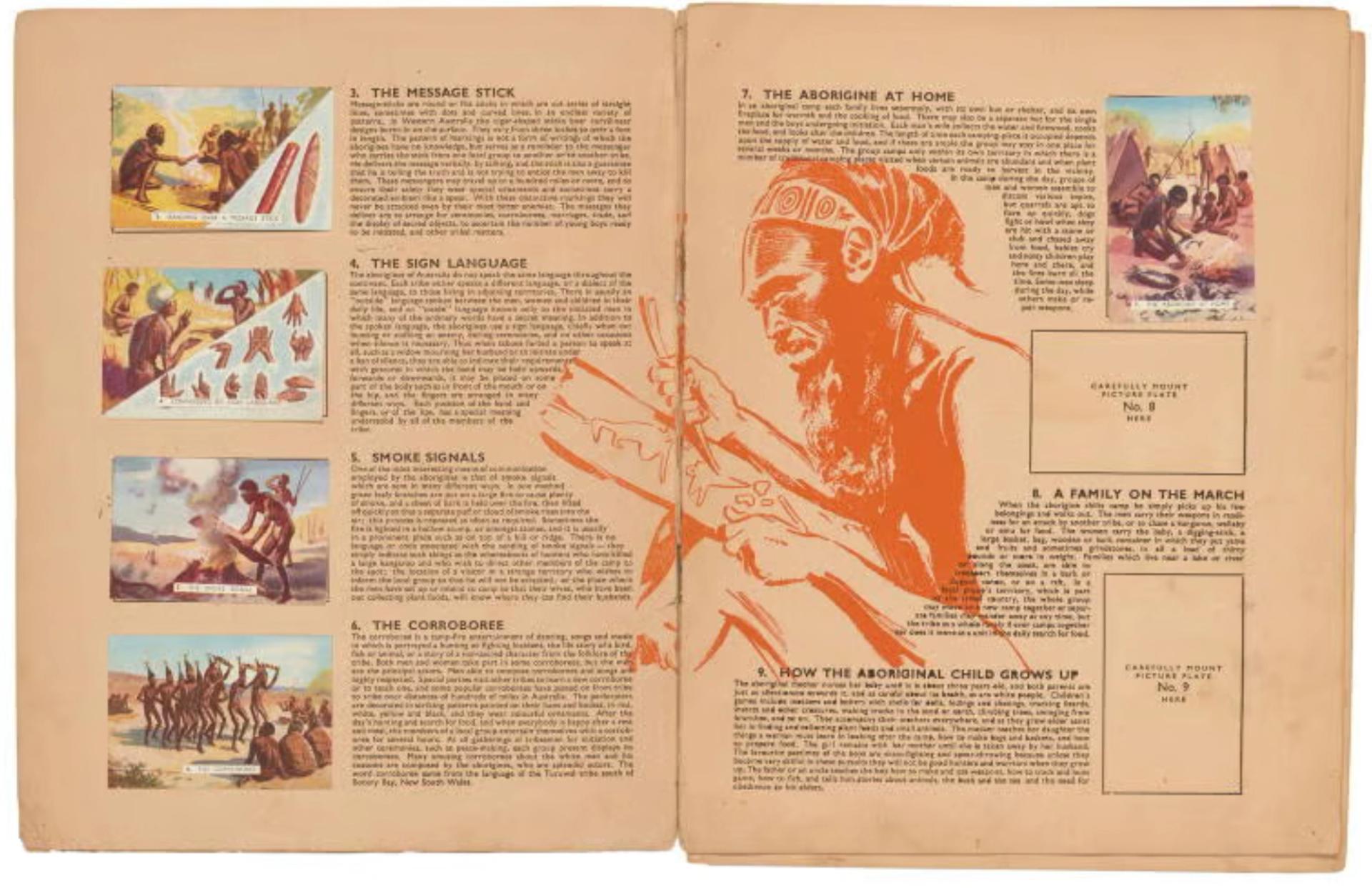
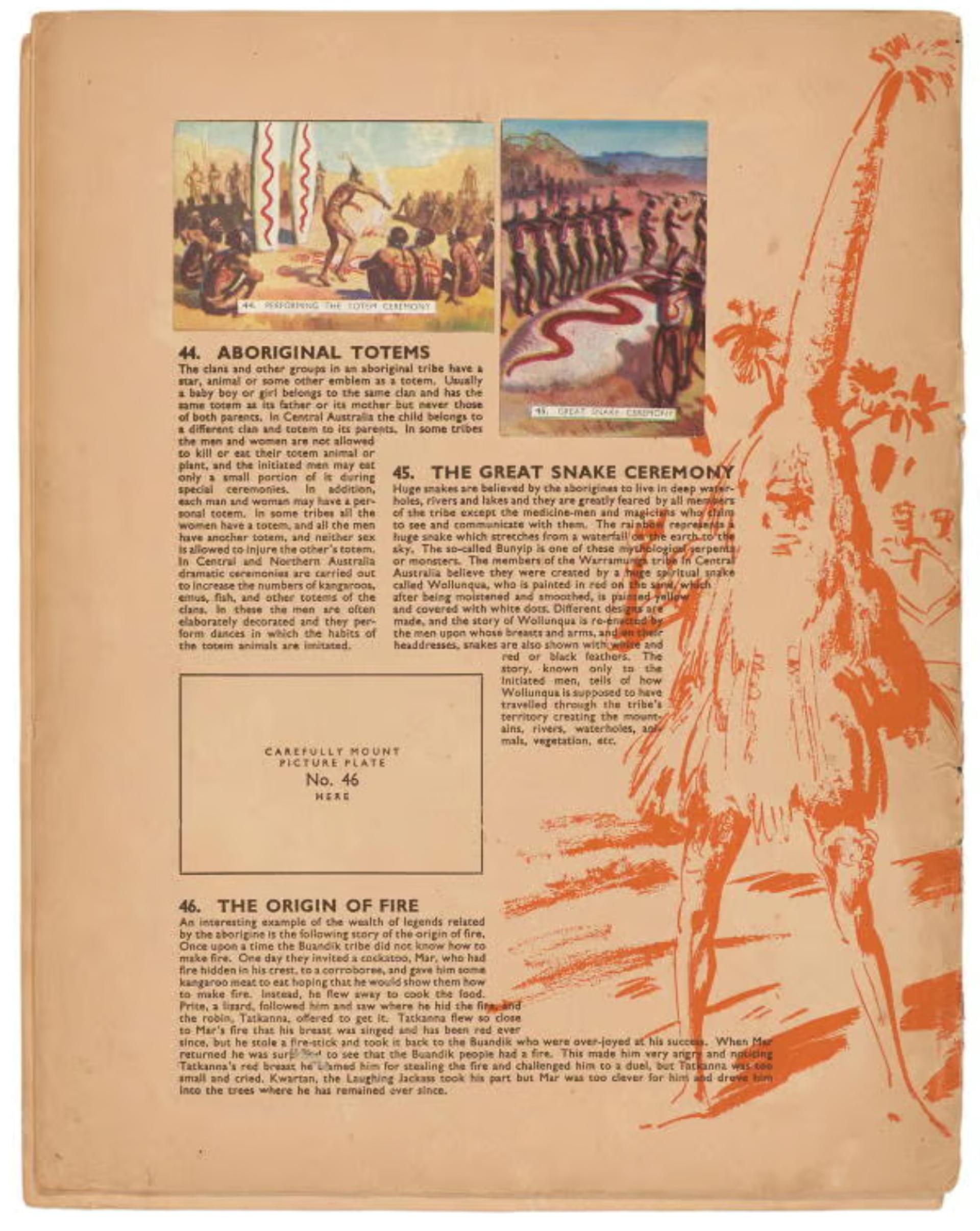
Ownership is another one that I think is a tension between communities, museums. We tend to have possessive nature. What comes into our organisations becomes ours. This doesn't just extend to material objects, but also representations of our knowledges and our peoples. Does Paul Gauguin own Indigenous people just because he paints them? That's a tension that I really want to disrupt and dismantle working in these institutions. The last one is expanding notions of preservation. Again, museums, we seem to have a tendency to focus on physical preservation or preservation of just physical material. We have good databases that do preserve some intangible heritage, but the notions we have about preservation, I feel, are sometimes flawed. And I guess this came to me as well from working at the State Library. We had a languages project that we were working on where we were digitising Indigenous languages, and we were going out to communities to sort of digitally repatriate them. Working with colleagues, mostly non-Indigenous, would say, ‘Isn't it great that the State Library has this material, or this language would be lost forever?’ And I always thought kind of it is good that it's here because it does need to be preserved, but the only reason why it needs to be preserved is because language has been disrupted by colonialism, and the State library exists because of colonialism, as I say, and some of the narratives that come out of these institutions actively assisted colonialism, so we can't sort of give ourselves a pat on the back for, quote unquote, ‘saving’ a language where we probably in some ways were key to disrupting them in the first place.
It annoyed me because we needed community to actually activate those languages in the first place as well, because a lot of those transcriptions done by non-Indigenous people were wrong. They translated the language wrong. So, you actually needed Indigenous people to reactivate that to correct those records. So, I truly believe we can't just preserve things in shelves. Indigenous knowledges need to actually be in people. I remember yarning to this non-Indigenous curator. They worked on this Aboriginal exhibition, and for the launch they actually organised an Indigenous dance troupe to open the exhibition, and she recorded their dance and was going to work with the dancers to donate it to their gallery because she was like, ‘Well, it would be really good because now it'll be preserved forever for future generations.’ Again, I thought it was flawed thinking because I didn't know the context of the dance. It could have been done for decades, but it could also have been done for centuries or thousands of years. And she believed that her recording on the phone would be the key for its future preservation. And I guess that's my sort of thinking when it comes to some of this sort of ideas around preservation.
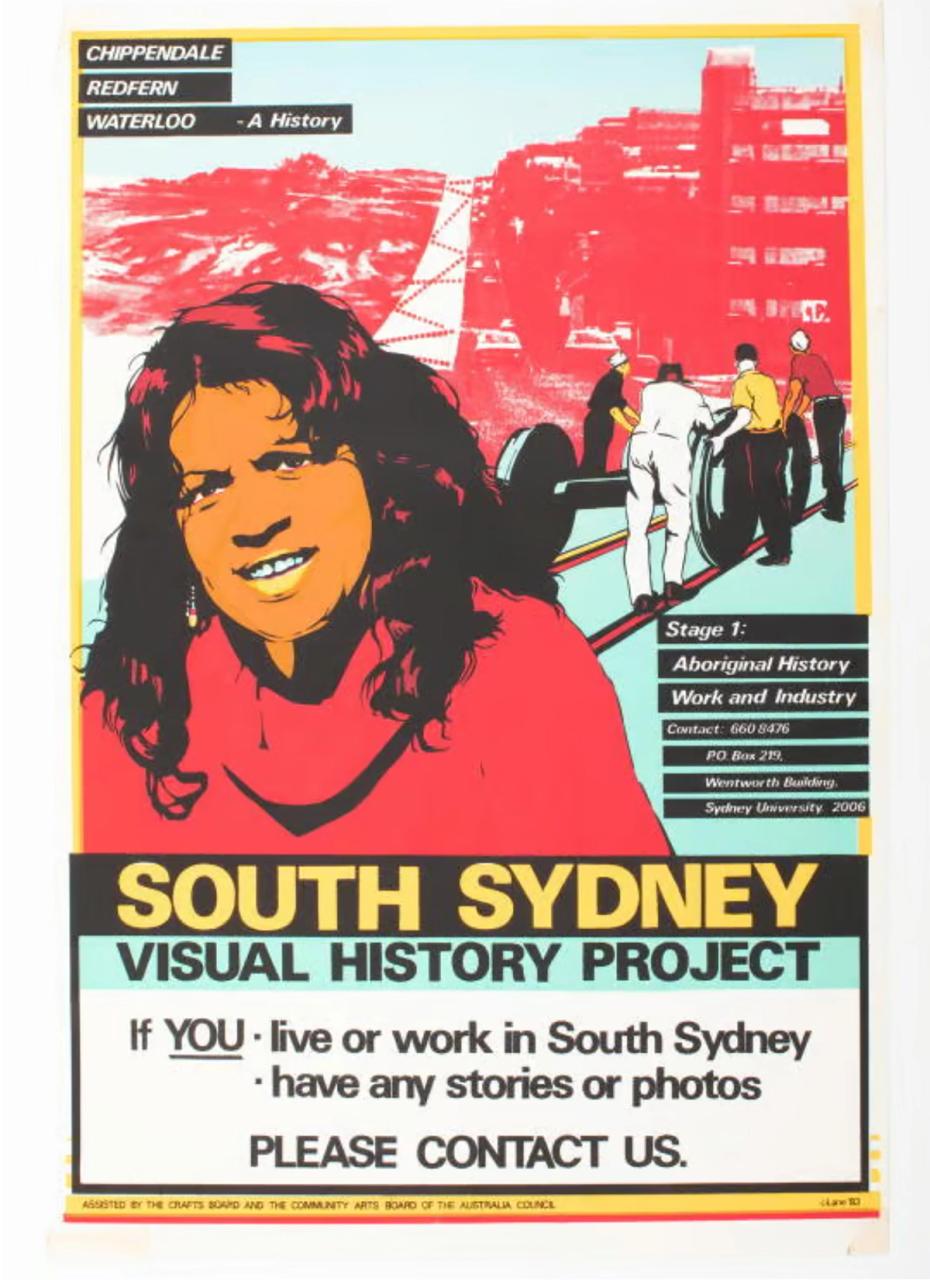
I'm part of a group called the Indigenous Archives Collective that was founded by Dr Kirsten Thorpe and Dr Shannon Faulkhead, and in 2019 we released this statement on what we call the ‘Right of Reply’, which is the fact that as Indigenous people, we have the right to respond, challenge and critique records written about us. Because a lot of records in these cultural institutions are written about us, without us. You may have heard the term ‘right of reply’ before. It's like a journalistic term. So, if you were to write something about someone, you would usually give them a chance to respond in the same avenue that you were writing about them, or it'd be considered slanderous. So, in some ways, our archives, in the ways they’ve misrepresented First Nations people, have been slanderous, and First Nations people should be invited into these spaces to reply to them. And I guess it's a limitation in my own thinking that I used to think about this purely and mostly in metadata, but I guess experiencing the Vārchive, the Vārchive in itself is a right of reply. It's challenging and critiquing the narrative and responding to records through sort of an artistic methodology. The Vārchive can investigate and challenge records better. Art can challenge and investigate records better and get people to engage with it in a different and nuanced way. So, the Vārchive has really inspired me to really need the need for more Indigenous artists to come into our collection and to challenge the narratives that our collection has formed and promotes. The Vārchive really does lay out an Indigenous methodology, mostly through the way it actually shows relationships virtually with Gauguin and his sources, but also the relationships between the people in those images and their homelands and their places. And it acts with empathy that sometimes is missing from the archives. Some Indigenous archivists have talked about this term called ‘repatriating love to the ancestors,’ and I believe the Vārchive does that in its own way, because it rehumanises people that sometimes get their humanity taken away from being snapshotted and frozen within collections, but also all the multi-layered stories that it tells. The Vārchive also is a space for plurality, which is again another challenge for archives.
I don't believe that memory is just paper on shelves. It lives in Indigenous people and places. I’m probably misquoting whoever was the first person to say it, ‘When we lose an Elder, we lose a library.’ And you may have heard of similar things of, ‘When we lose a tree, we lose a museum’. Indigenous people and places will be and have been some of the most affected by colonial made climate change. And I guess the call to action that I feel from the Vārchive is as collection workers, as people who pride themselves on preserving memory. We must advocate for the memory that exists outside these institutions and think about how we can preserve Indigenous people and places that will be very affected by the climate threat and the continuation of colonially-made climate change.
Madeline Poll
‘The Vārchive, as an innovative archival practice, serves as a thought-provoking challenge to Western notions of record keeping and the conventional framing of a person's history.’
Madeline Poll My name is Madeline, and I am an early career curator, and I have a deep passion for preserving and showcasing the rich cultural heritage of First Nations communities. I have Torres Strait Islander and Australian South Sea Islander heritage, so being able to work with these collections means I am able to have that personal connection to the cultures and the histories. This connection is what drives my dedication to research, and I'm hoping to curate exhibitions in the future that can authentically represent the narratives and art and traditions from my communities. As an emerging curator, I look forward to expanding my career within the cultural sector and focusing on First Nations collections. I believe that by sharing our stories through curated exhibitions and educational programs, we can contribute to the preservation of the heritage for the future generations and Yuki has no-doubtedly done this in her exhibition Paradise Camp and the Vārchive.
Understanding Yuki's Vārchive begins with understanding the Sāmoan notion of vā, which in Yuki's words, ‘Is the space that unites separate entities.’ Vā is the bridge between the physical and the metaphysical. It is always present and constant, even when we are not aware. It is not empty space that needs to be filled. Rather, it's the space that connects a person to ceremony, spiritualism, cherished lands and each other. The concept of vā and its interrelatedness and its rigidness of how archival practices attempt to sort all information, including people, into categories and taxonomies. It's also important to understand the history of colonial archives before understanding this redefinition of one. The juxtaposition against Paul Gauguin’s supposedly candid portraits as a source of truth-telling to the unveiling of the truth by Yuki within her own archive, shows that not all archives are historically accurate, and could be seen as legacies that people can create for themselves.
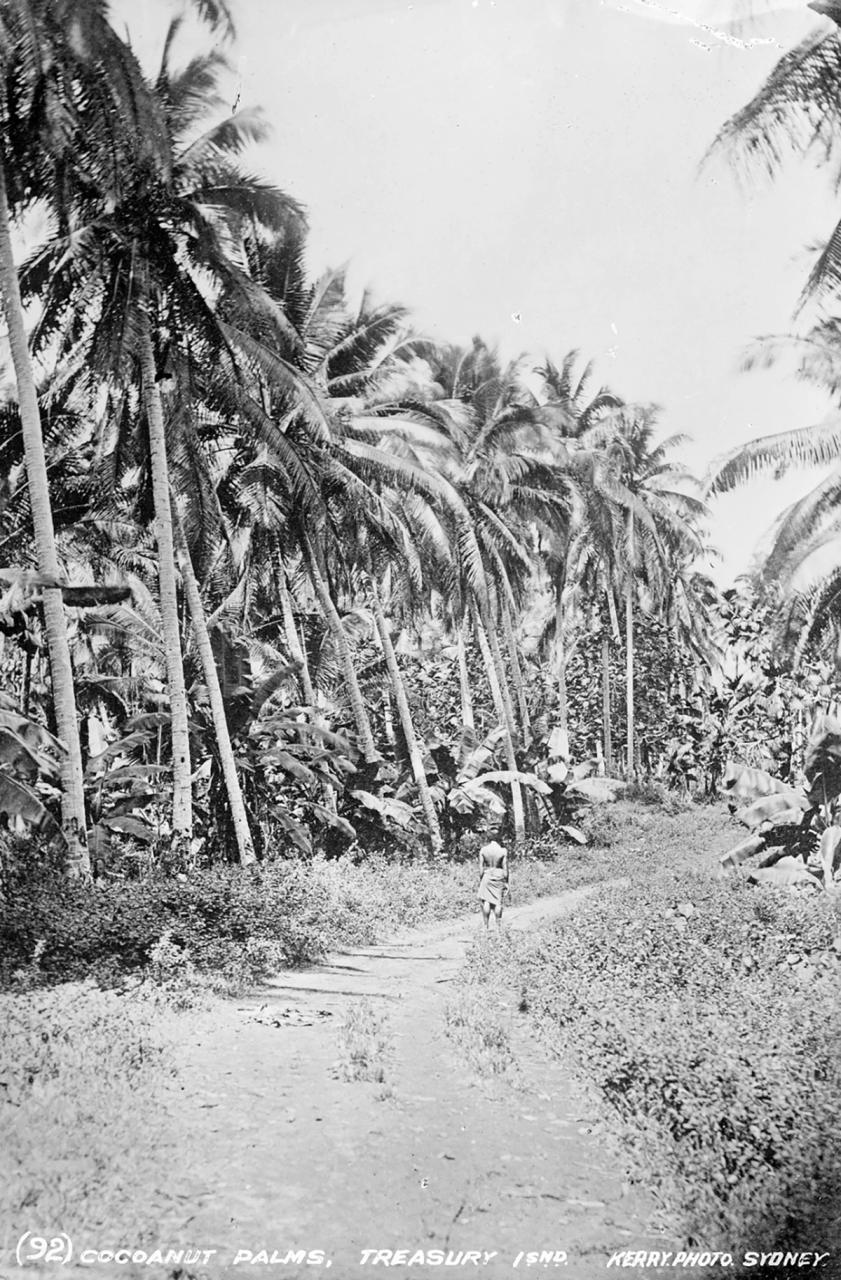
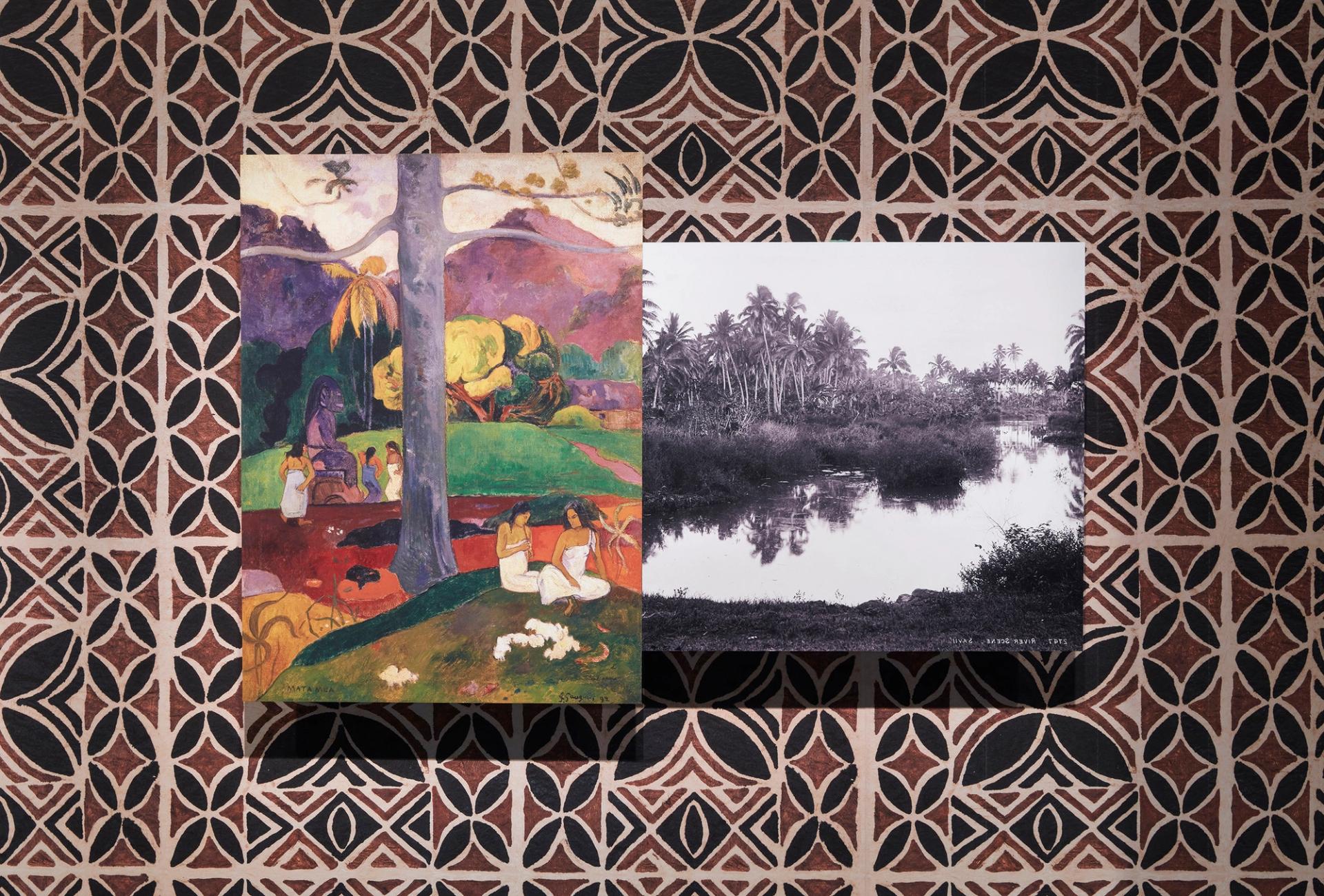
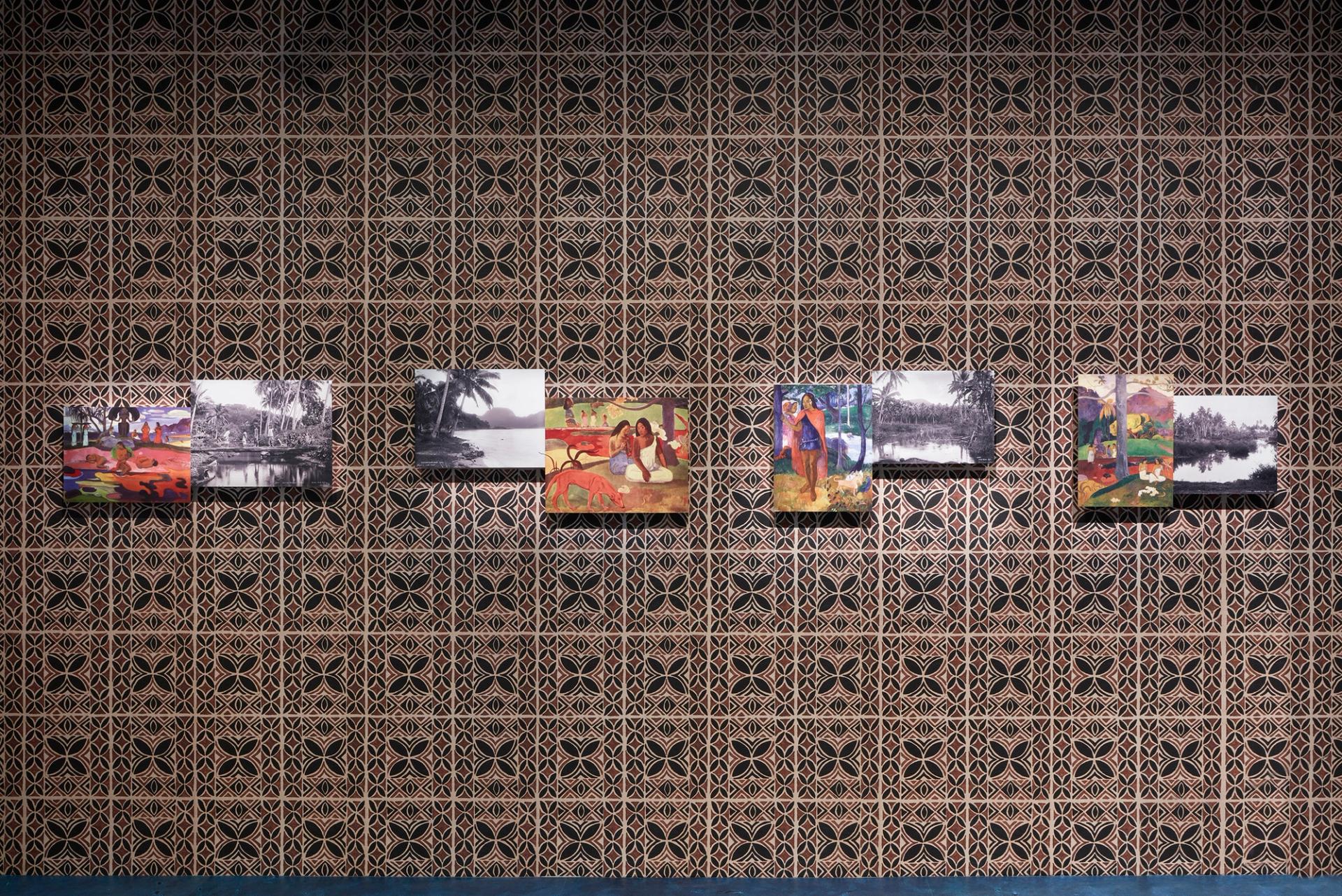
The notable case study that Yuki did on Paul Gauguin, who immersed himself into the Tahitian culture in 1891 and painted the lives of the Tahitian men and women, often sexualizing them and their lifestyles, began with Yuki's exhibition in New York. She noticed the landscapes that were reminiscent of her homeland in Sāmoa and some of Gauguin's paintings, and she questioned the supposed candidness of the subjects against the picturesque backdrops. Her research led to uncover compositions remarkably similar to those depicted in Gauguin's artwork, and they were attributed to the photographic works of Thomas Andrew, a New Zealand photographer who lived in Sāmoa from 1891 to 1939. She even found evidence suggesting that Gauguin had visited the Auckland Art Gallery in 1895, where Andrew's photographs had been stored. Yuki also highlighted the androgynous qualities of some of the subjects, using the term fa'afafine, and contextualized the animosity towards fa'afafine in Sāmoan culture today as a post-colonial ideology linked to the religious beliefs imposed by the white settlers.
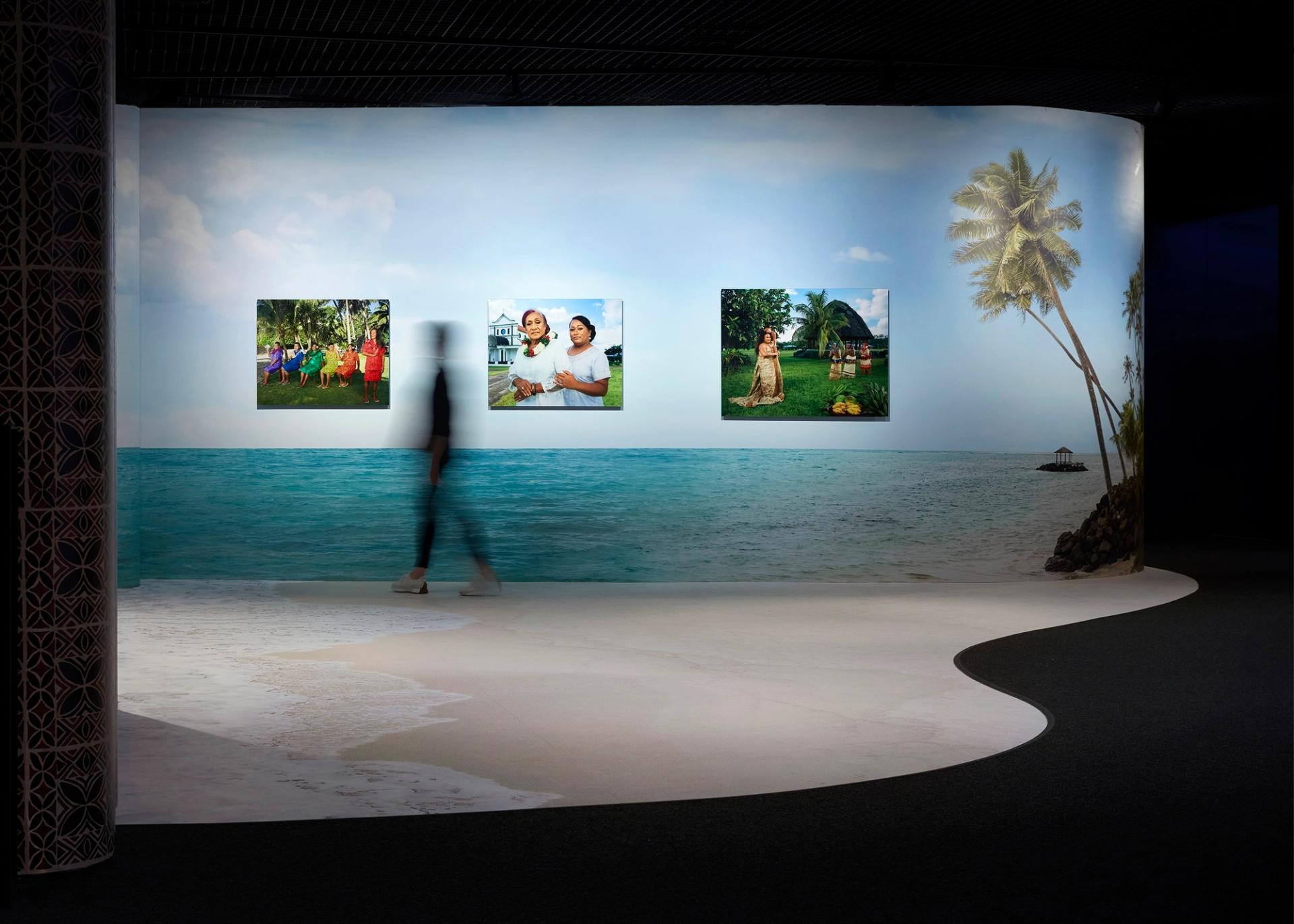
Yuki's archive challenges the notion of paradise, labelling it heteronormative and dismissive of the complexities involving tourism, climate change and the erasure of Pacific cultures due to colonial influence. Calling a place a ‘paradise’ obscures the realities of seemingly idyllic regions, concealing the history of colonial violence and the looming threat of climate disaster. Kihara and King's Paradise Camp is an exploration of identity, culture and the power of art to challenge historical narratives.
Yuki Kihara’s work is a testament to the enduring impact of colonialism and the urgent need to confront the challenges of our time. At its core, the Vārchive embodies the transformative power of archival art. It serves as a powerful testament to how artists can utilise historical information that has been lost or displaced in artworks for public display. The Vārchive also highlights the indispensable role of human interpretation in the archival process. While archives are repositories of historical documents, it is the curator’s and the artist’s lens that provides meaning and context to these materials. As a result, the Vārchive is not just a repository of Pacific cultural heritage. It is an artistic and interpretive journey that offers viewers an opportunity to delve into the depths of history and create an engaging lens. The Vārchive, as an innovative archival practice, serves as a thought-provoking challenge to Western notions of record keeping and the conventional framing of a person's history. In the world of archives, it introduces a paradigm shift that invites us to reconsider the very essence of what archives are and how they shape narratives. Archives, by traditional definition, are comprised of collections of documents carefully selected for permanent preservation due to their significance as evidence of valuable sources for historical and research purposes. However, the Vārchive disrupts this traditional view by foregrounding a more holistic and dynamic approach to archival practice. Instead of being repositories of factual evidence, the Vārchive encapsulates the multifaceted nature of a person's life in history.
It transcends the boundaries of linear, document-based storytelling and invites us to embrace a more inclusive and immersive narrative experience. The significance of archives become all the more important when we consider their role as the future's only living memory of places that will inevitably be destroyed by climate change.
Nations like Tuvalu are already preparing to immortalise their homeland as a digital archive. The Pacific region, home to many island nations and Indigenous communities, is at the forefront of experiencing the severe consequences of climate change.
The work of individuals like Yuki, who advocate for preserving and disseminating crucial information is indispensable. By sharing this information with the Pacific community and the world, Yuki not only raises awareness, but also empowers people to take action and engage in discussions about climate change mitigation and adaptation. Indigenous knowledge, deeply rooted in the land and sea, holds profound significance in addressing the devastating effects of climate change.
Indigenous communities have long maintained a symbiotic relationship with their environment, acquiring invaluable insights into sustainable practices and natural resource management. These insights, often pass down through generations, offer invaluable guidance in reversing the damage inflicted upon our planet in the face of climate change's imminent challenges. Archives not only preserve the past, but also serve as vital repositories of knowledge stories and wisdom. They ensure that the experiences of communities like Tuvalu, who grapple with the harsh realities of climate change, are not forgotten. They remind us of the urgent need to respect and learn from Indigenous knowledge, fostering a more sustainable and harmonious coexistence with our environment. Thank you.
Tammi Gissell
‘Muscle memory, earth memory, blood memory, bone memory and water memory. We hold a lot and we become a lot. And we hold the history of our people in every cell of our being.’
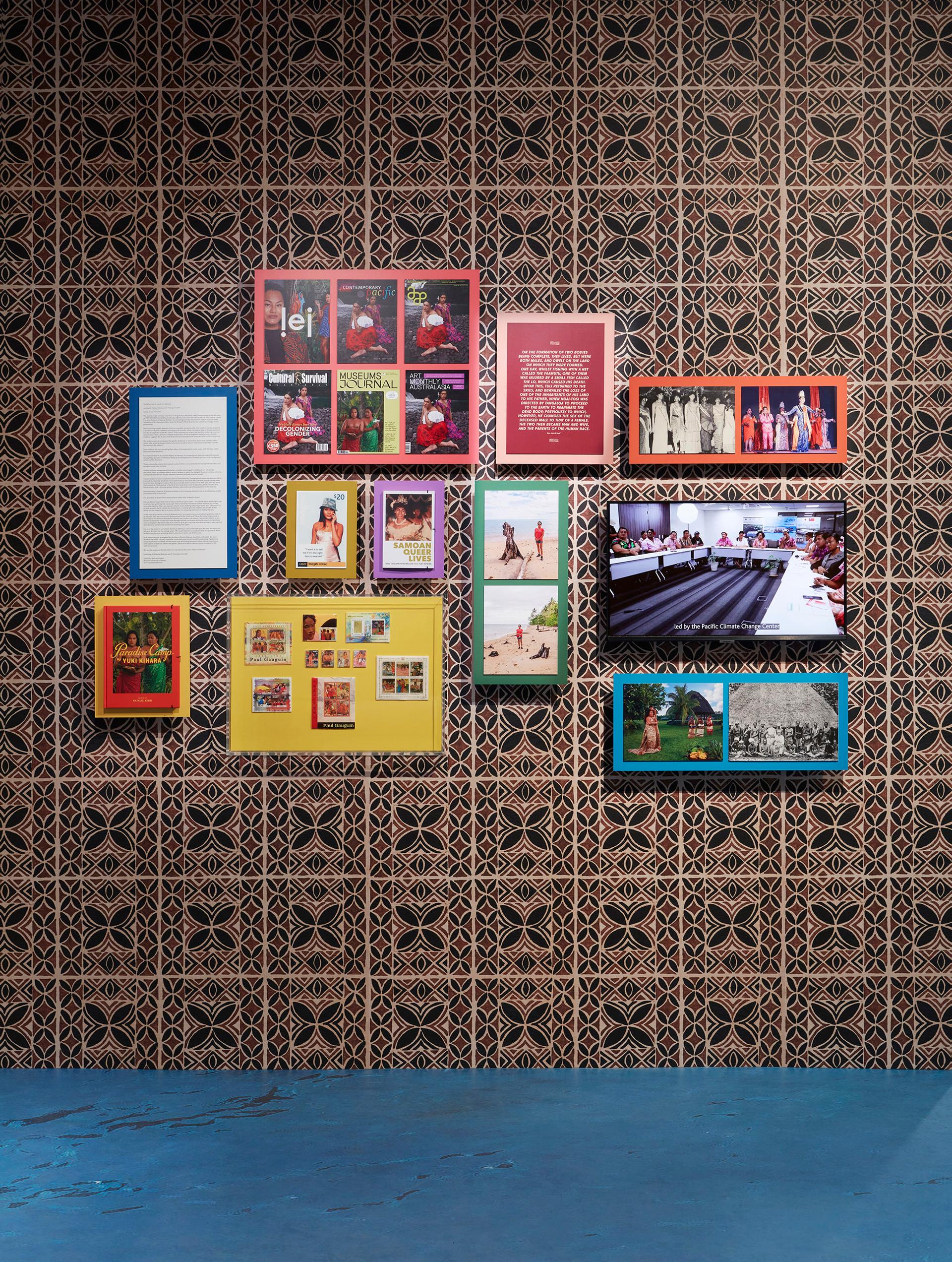
Tammi Gissell Ngarin marang. Good morning. My name is Tammi. I'm a Murrawarri and Wiradjuri woman from out in Bourke, New South Wales. I also have Swiss, German and Celtic settler bloodlines. I'm a dancer and performance theorist by trade, and I'm blessed to be able to bring my experience of being a performing body and of performing bodies, and my appreciation for the subject/object dynamic to my role here as Collections coordinator of First Nations.
Since I was 18, I've worked across the country and around the world as a paid performing Indigenous body. For the last 16 years, I've also been involved with Indigenous education of our next generation of developing performing artists. Indigenous bodies in action are, I suppose, my jam. So, Paradise Camp was a really luscious opportunity as a performance theorist. How we move, why we move, how we hold ourselves in space, and how space holds us in public and in private, along with our ritual and ceremonial behaviours, are what really consume me.
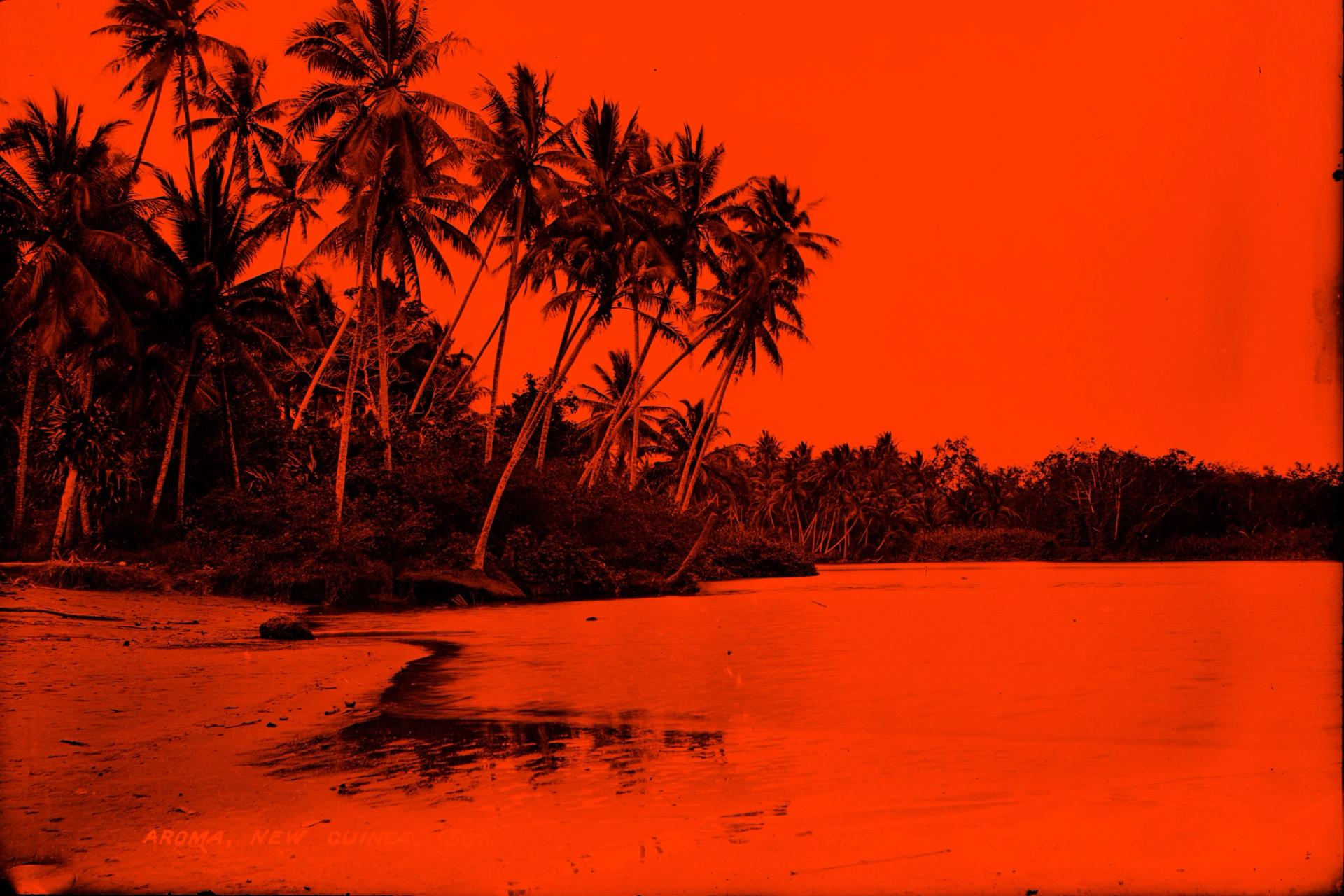
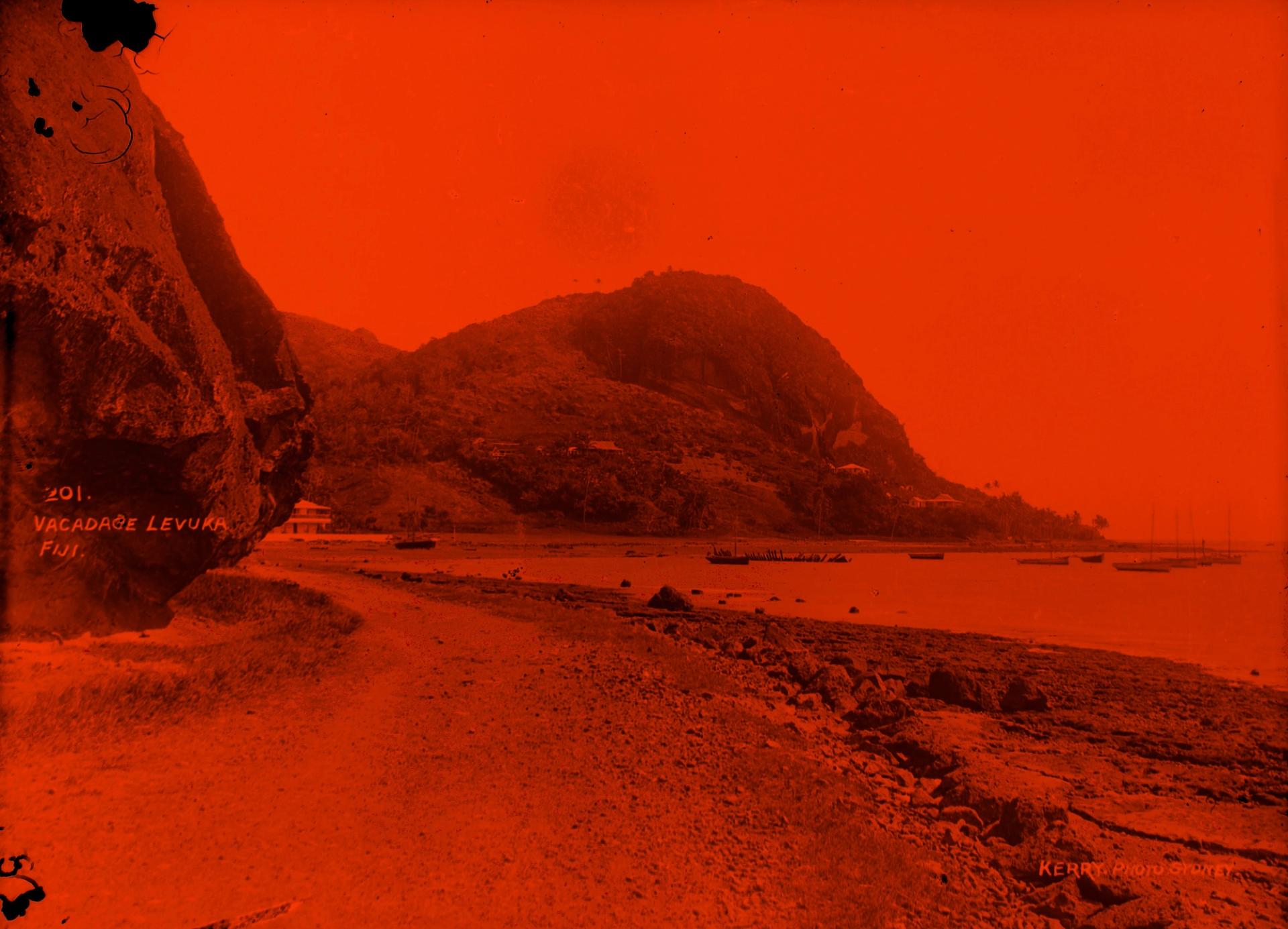
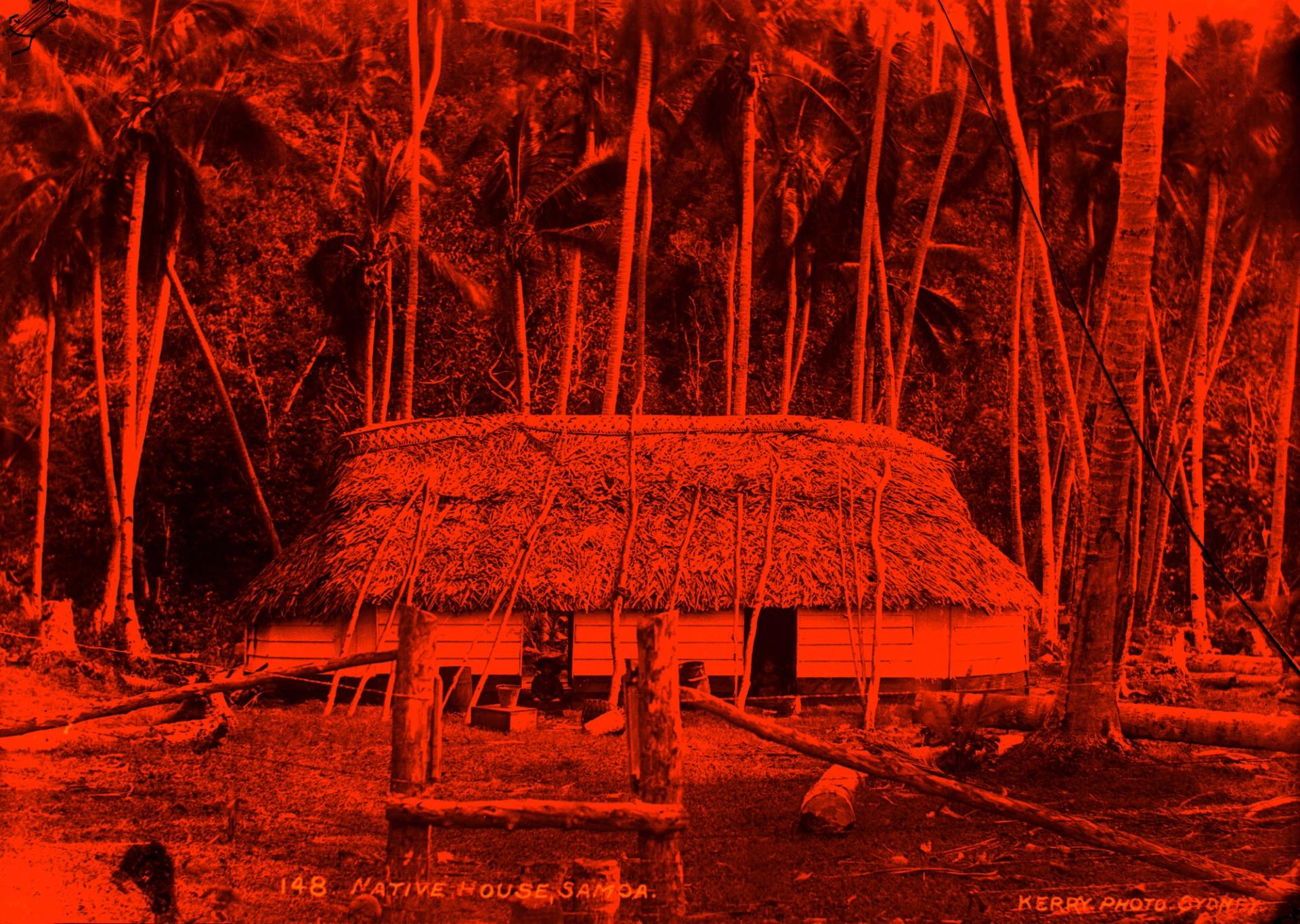
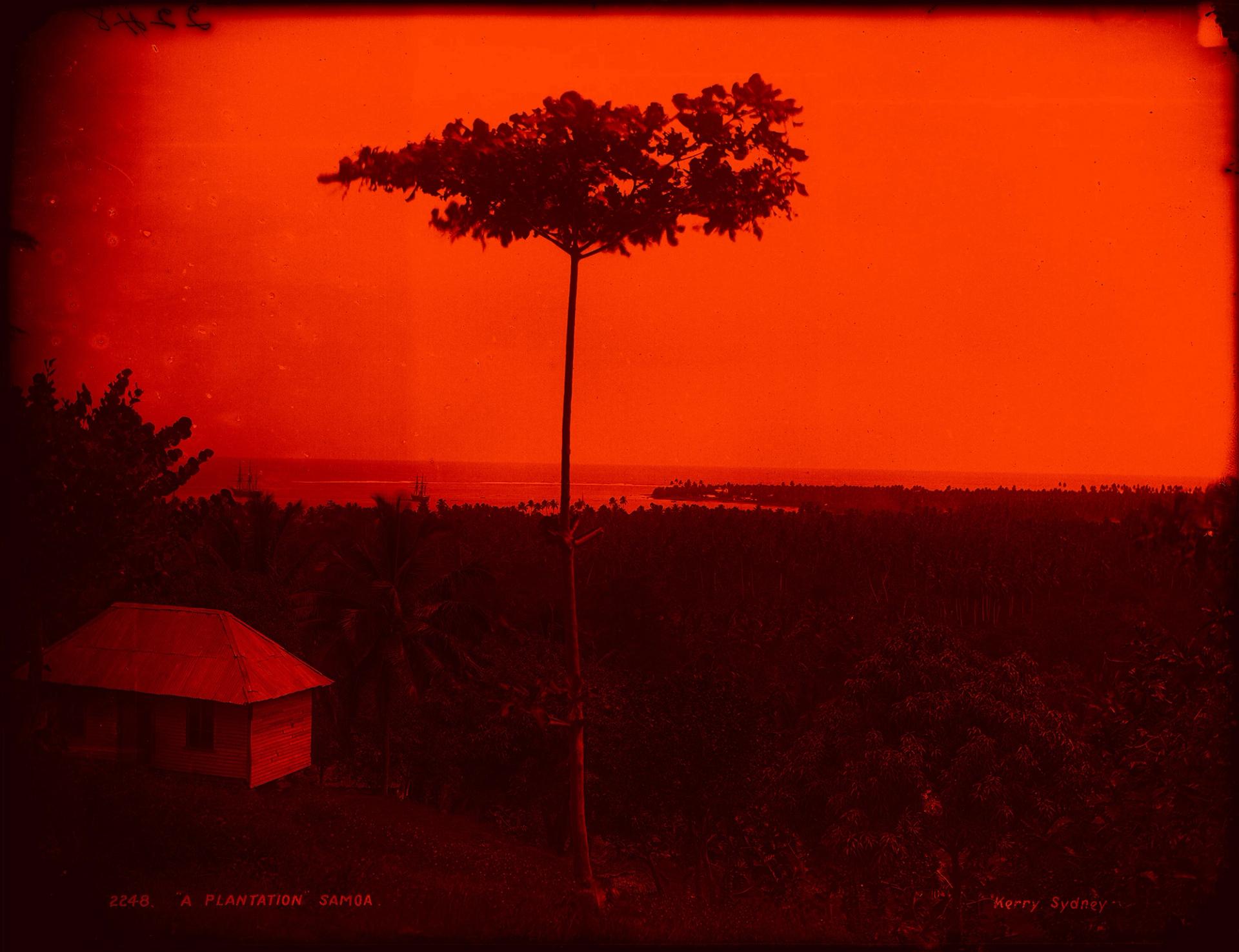
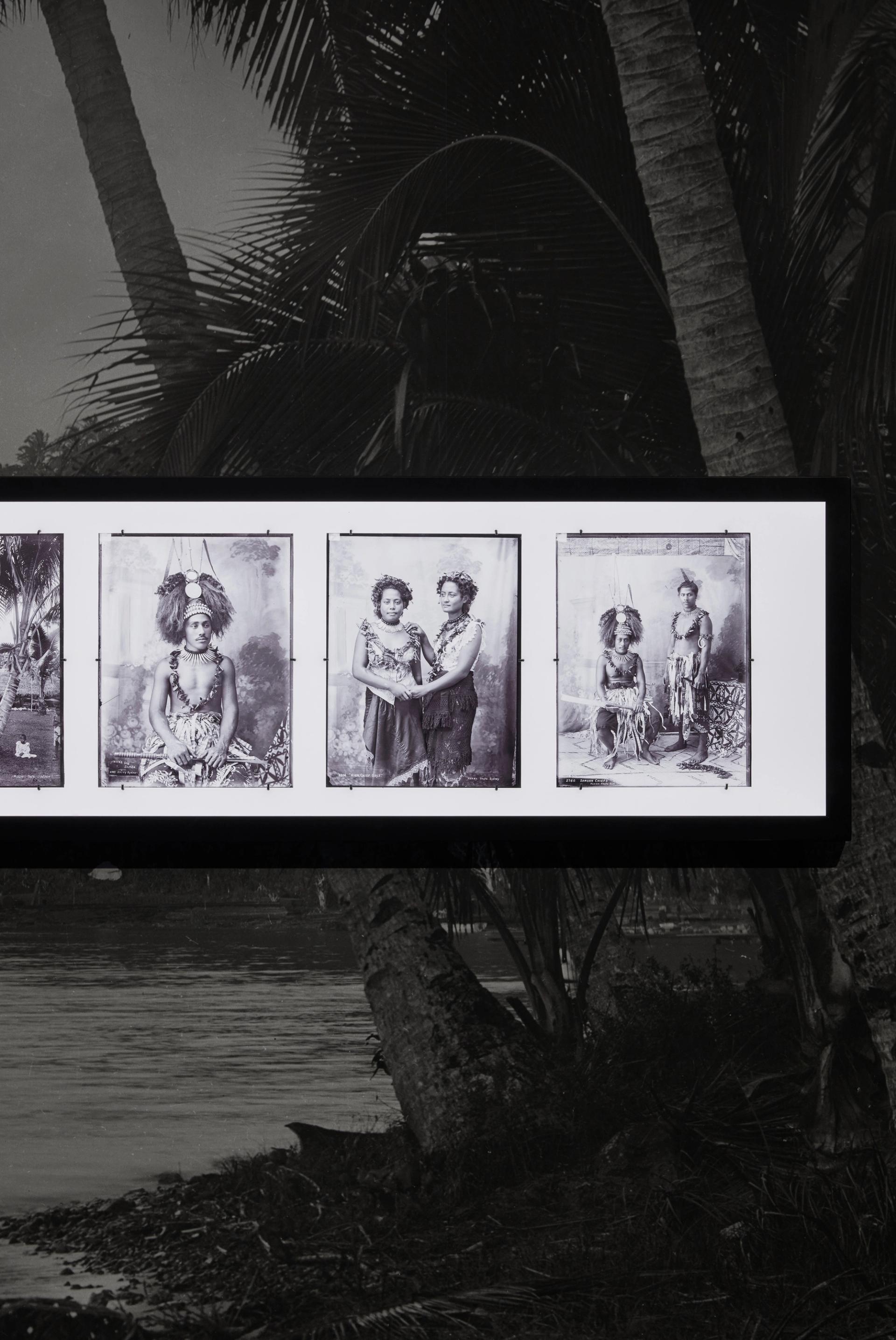
Colonial photography is an area that I've become deeply passionate about since beginning my work here with Collections in 2020, and I began to feel a really profound responsibility for these people who were made to become performing bodies clearly, often without consent or care, or even any concept of how long that image was going to be around for, for all of us to ogle over. What I began to really appreciate through my training as a performer was that these bodies were still performing, sometimes 140 years after the photograph was taken, because of the technology of photography and the place of photography within archival practice. And photography is a most powerful medium, and Yuki has re-commanded it in service of her homelands and her people. And for me, that's the epitome of a right to reply. Grabbing that dagger by the handle that someone threw at you and turning it back on them. So, spending time with the First Nations people captured in the glass plate negatives of the Tyrell Collection held here at the Powerhouse, of which many of these colonial photographs have come from, which feature in the Vārchive, it's a responsibility that I really take seriously.
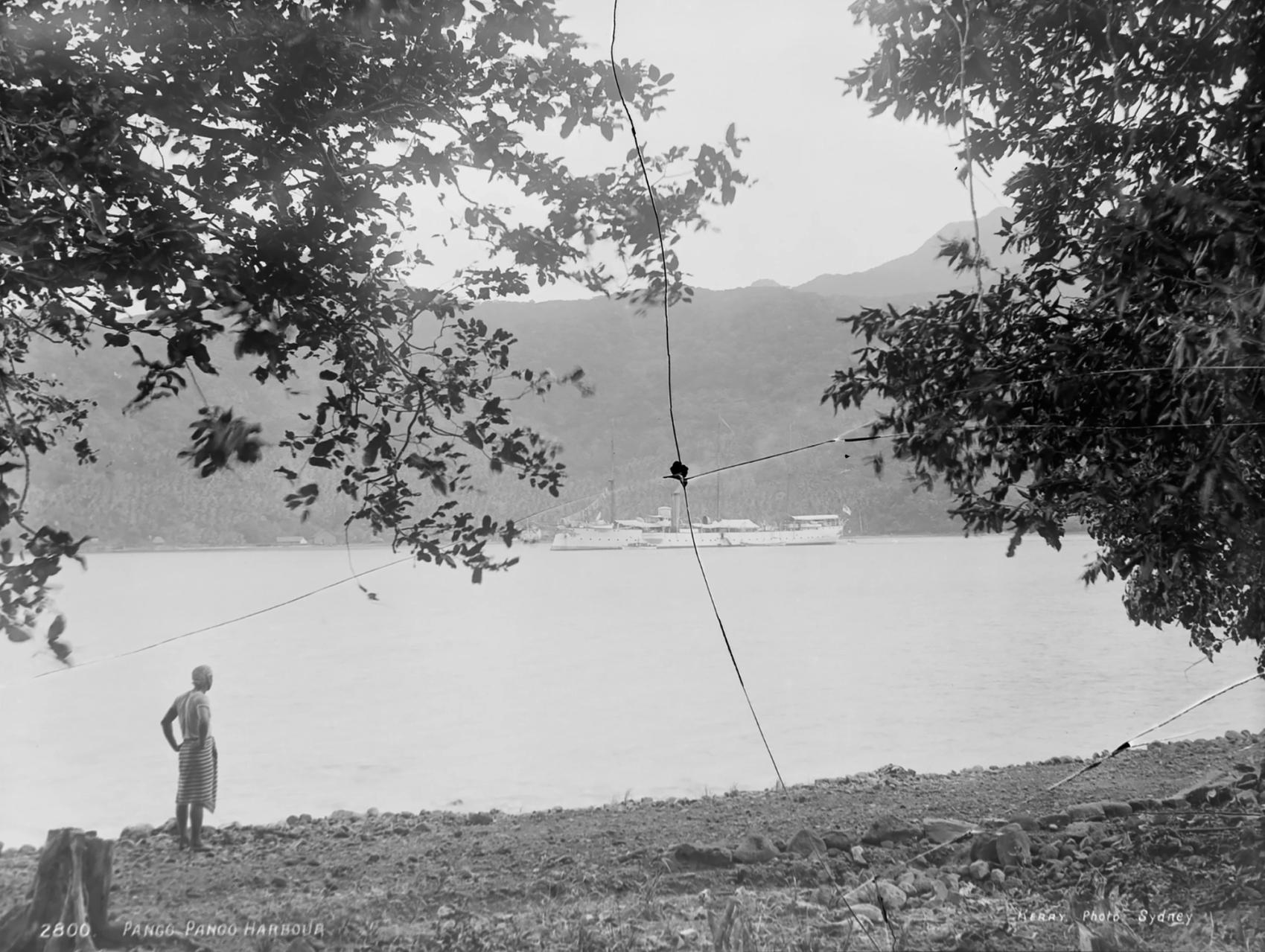
Aboriginal people – all people, really – speak to me through the way that they hold themselves, their gestures, their postures, the gaze. How the lips sit on their teeth. The energetic flow even through stillness. So even when I'm not intimately associated with a culture that's been captured on these glass plate negatives, there's many physical idiosyncrasies, eyelines and gazes that are consistent across time and geography and culture. The human traits of universal experience, in which offer all of us many clues for illuminating the real, full picture beyond the picture. So, you can imagine when Yuki Kihara came along to share her extraordinary revelations about the photography of her homelands and community in Sāmoa, I was just a little bit obsessed, especially with her discoveries about Gauguin. Being a performing artist myself, who works primarily with the body and movement, I was especially provoked by the potent physicality that commanded Paradise Camp overall, and the joyous, celebratory style of Yuki's photography. What glorious ownership on display!
Gauguin’s bodies in action in the Vārchive component are expressive but in more subtle ways. And I wonder if this is because he offers his subjects through like a double filter. Kind of like a second sight, as his paintings are very clearly based on the photography of Thomas Andrew. It was these observations that really drove my own deep dive into the Vārchive, as a space where all possible potentialities exist together. The vā, like the dreaming, the space between the physical and the metaphysical. That wondrous place where memory and prophecy combine. But all that was, is and will be, are one. From a dance point of view, this is choreography. The building blocks of any choreography. Your body, your space, the energy you exert and then how that creates a sense of time. And this is the Vārchive through and through. As dancers, I've remarked before that our realm of storytelling lies between the lines of narrative, and I think this is why works such as Paradise Camp and the Vārchive is so important to archival interrogation, because it is what lies between these, where the story lies, particularly for a performing body whose responsibility is to show you. I can't tell you, I can only show you.
One of my most influential dance teachers, Dr Elizabeth Cameron Dalman, once said to me, ‘Tammi, the body speaks. It does not lie. The more you try and tell a lie with your body, the more it is going to tell the truth on you.’ Elizabeth was warning me about embellishment. And so, Kihara's models, in stark opposition to Gauguin, are empowered. They're holding firm in truth, and Yuki doesn't attempt to deceive her audience about who or where these subjects are. They're not othered or silenced, as Lauren Booker would describe. Instead, they're recognised and claimed and given voices to speak beyond the pigment and pixel in the most luscious, elaborate and unapologetic ways. Yuki is allowing her models to access and to share their embodied archive, and they are speaking their truth. They are proud, they're firm and they are knowing. They're solid and they're popping with fuchsia and truth. By spending time in Yuki's archive, I was reminded of Elizabeth's note to me. To me, the body does not lie. And it was because of that I began to realise, and I started to see through Yuki's lens the truths of the fa’afafine that were hidden in Gauguin’s lies. Their bodies were speaking and Yuki had heard their call. And the same must be said of the bodies of the landscape which Gauguin painted. Yuki's revelations towards his misappropriation – he's trying to tell lies through these models – and these places are a significant example of the body's power to prevail as a source of truth. Yuki knew her own. Yuki knew her home. The body is an archive. Every body is an archive. And every body is fully equipped for memory preservation. This is why Yuki could actually embody and re-enact Gauguin himself. Muscle memory, earth memory, blood memory, bone memory and water memory. We hold a lot and we become a lot. And we hold the history of our people in every cell of our being.
Rosy Simas also actually wrote really beautifully about this just last year. She wrote, ‘I realised how the movements of my childhood of play, dance, ritual and ceremony movements deeply connected to the earth informed the very architecture of my body. As my bones were shaped by gestures, my senses became developed to receive and perceive information in culturally specific ways.’ And this is what I mean about bodies being animate archives. These remarkable examples of Gauguin's paintings alongside the colonial landscape photography exemplify what I mean about bodies speaking: bodies of people, bodies of water, the bodies of the mountains, all speaking their truths. Yuki recognised them because the true archive of her people and her homelands is the source of her knowing. It is their collective embodied knowledge. And Yuki has access to this animate archive because she is a living inheritor and contributor to it. It's really clear that so much of our Indigenous knowing exists outside of colonial archives and exists instead as embodied memory for people and place. Yuki has shown this in the most generous pack-a-punch way. These compositions do more than line up: they fit perfectly, not only in line, but in pace and in tone.
Speakers
Tammi Gissell is the Collections coordinator, First Nations at Powerhouse. She is a Murrawarri and Wiradjuri woman who is also a performer, poet, performance theorist, choreographer, researcher and critic. She has performed, lectured and consulted regionally, nationally and internationally across the spectrum of contemporary and contemporary-Indigenous performance since 1996. Tammi was inducted into the Golden Key International Honour Society for achievements in performance theory at the University of Western Sydney in 2004 and has lectured at various institutions including Queensland University of Technology, Victorian College of the Arts and NAISDA Dance College. Tammi continues to ‘perform the theory’ in 2022 with her solo dance practice as well as through her collaborations and consultancies with various dance and theatre projects.
Madeline Poll is the assistant curator, First Nations at Powerhouse. Previously working within museum Registration, Madeline now leads the establishment of acquisition proposals for all First Nations objects to be considered by Powerhouse. Madeline is passionate about research and writing and has been supporting the acquisition of invaluable objects that represent a range of forms and practices associated with a number of different Indigenous nations. With her Torres Strait Islander and Australian South Sea Islander heritage, Madeline has a personal connection to the cultures and histories that she works with.
Nathan ‘Mudyi’ Sentance is the head of Collections, First Nations at Powerhouse. A Wiradjuri man from the Mowgee clan, he was raised on Darkinjung Country. Nathan works to ensure that First Nations stories being told cultural and memory institutions, such galleries, libraries, archives and museums are being told and controlled by First Nations people.
About
First presented at the 59th Venice Biennale, the Talanoa Forum extends the themes of the Paradise Camp exhibition by bringing together 24 artists, curators, scholars, activists and policymakers from Australia, Aotearoa New Zealand, Sāmoa, Tahiti and Italy. This 3-day interdisciplinary program highlighted urgent issues including small island ecologies, climate justice, decolonial museology, diasporic and Pacific alliances. The Forum’s artistic director is Yuki Kihara, creator of Paradise Camp.