Matte McConnell Thanks, Sarah; thanks, r e a. I’m a Wiradjuri Dabee man. My ancestors and my family have always been connected to what’s now known as Rylstone and Kandos and the Capertee Valley, so I come from a very beautiful part of the world. Very privileged to call that place home and I’m very privileged to be born there, grow up there and still be connected to that place; something that wasn’t afforded to my father and my grandmother for obvious reasons. My great grandmother took my grandmother and her brothers and sisters away in a time that wasn’t safe for them to be there and a life destined for them, and my grandmother returned and we’ve been reclaiming our stories and knowledges and language and practices since then. So I hold a huge responsibility, I think, to heal and relearn and reclaim those.
Where that kind of sits in my practice: I studied architecture at UTS [University of Technology Sydney] and now working in the school as a lecturer. And then I have my own spatial design practice, garigarra. I would say my undergrad, I felt I never really understood the connection between myself as a Wiradjuri man and architecture. I just felt they were quite separate and I held quite a deep guilt, I think, for picking architecture.
You know, first one in the family to go to uni and get that opportunity. I should be a lawyer or a doctor or a teacher and go home and give back. But then I found responsibility of care for Country to reclaim knowledges, to make space for ceremony as hugely spatial and architectural, and I think that’s when my practice transformed and that is why I do what I do today.
SLR We’re going to talk about a couple of different themes: we’re going to talk about time; we’re going to talk about our body and space and what that means to spatialise our body; we’re going to talk about this idea of nourishment and care; and we’re also going to touch on the theme of No Space is Empty and what that means to us in the context of our world views. We’ll start with time.
We had a yarn before the yarn. It reminded me of this story that an aunty told me once when I was learning to weave in Ngunnawal Country, and she was teaching me the way of weaving in that particular area. My first one wasn’t very good and then the next one got a bit better and then over the course of the day I’d woven probably six or seven different small things. And the last one I wove was this basket, which was very wonky, and out of all the ones on the table, that was the one she picked up and asked, ‘Can I keep this one?’ And then she told me this story about how she conceives of time. So, it’s not my story, but she shared it with me with the context that I could then share it on.
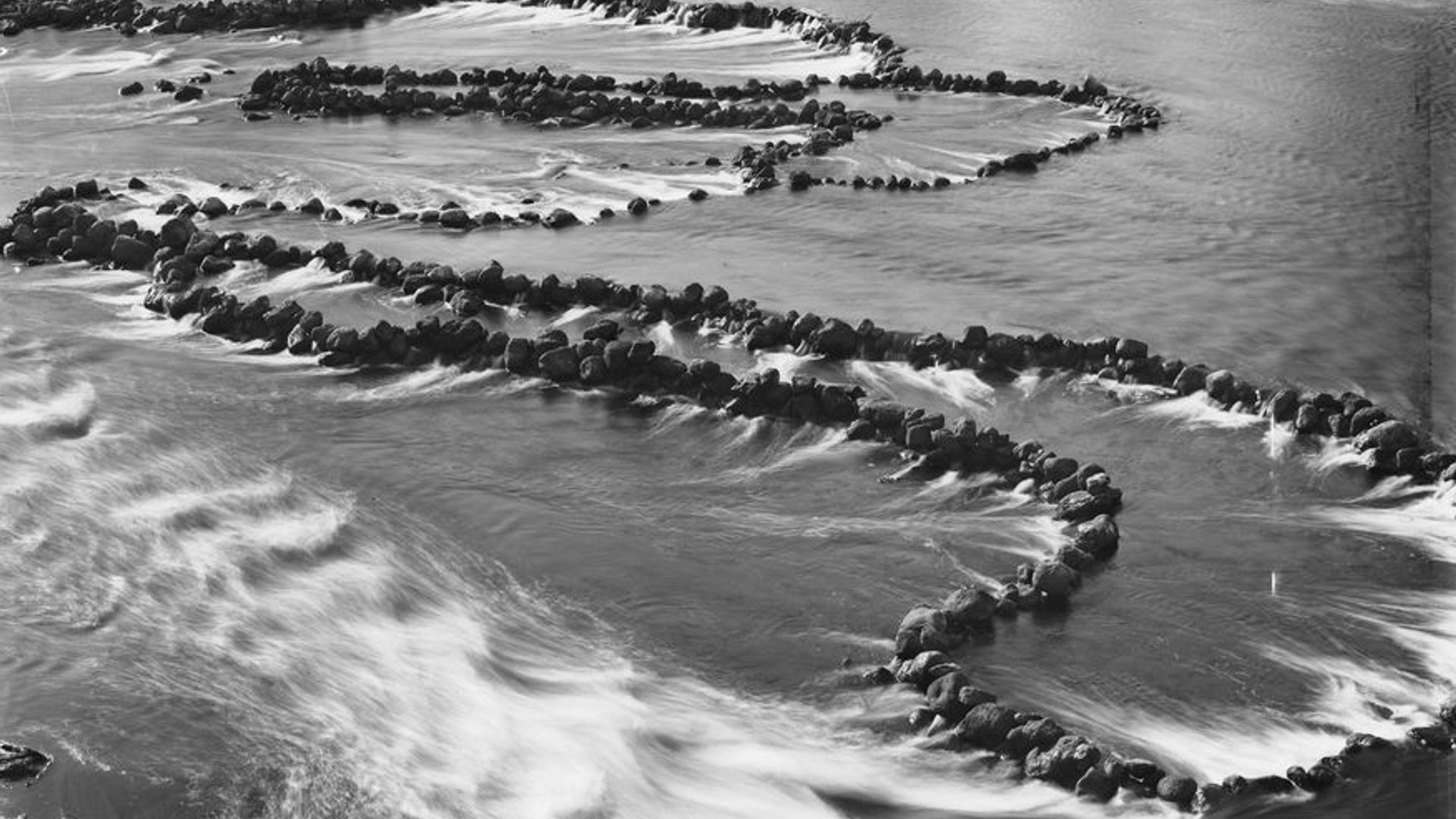
The idea that this basket is woven and it has many holes in it, and she explained that the basket gets lowered into a river or a running waterway or a creek and the water actually moves through it, so the basket might stay still in time and that is our experience of the world, but time is running through us. It was quite a simple story, but it’s one of those stories that I keep coming back to over and over and over again in my life, to the point where now, in my world, the version of the story is: you’re the basket in the river. The physical impact of you being in the river changes the course of the water, so you impact those around you. Those who’ve come before you impact you. The water moving through, in this context of folded time, comes from the creek, goes out into the ocean, gets evaporated up, goes into the sky, gets rained on down the mountain and comes back down again.
And so, it’s this cyclical picture in my mind of what time is and the impact that we have on it when we’re in this space and in this moment. With that comes responsibility to Country, to ourselves and also to the future generations, the past generations. To me, that’s how I see time. The idea that past is present is future. This expression of time that we’re in feels linear, but it’s definitely not. How do you see time, or what does time mean to you?
R I was thinking about this earlier and trying to reflect back on my early practice and early life, and my introduction really, into this colonial society because I’m a child of the assimilation policy. I’m the last generation to be in a mission system and then we were assimilated into town, on the other side of the railway tracks. So, I grew up in White Street, Coonabarabran, with all the Blakfullas and one poor white family.
By the time I left the mission system I was about four, so I started to have more memory of that place. What I realised is that I grew up with this community that protected me, that gave me a sense of safety and the ability to feel like I could do and be anything that I wanted to be. But the public school system began to beat that out of me. And so, there wasn’t really a ‘time’ thing, it was the comfortability and the nurturing of community and Country.
My first realisation that time was going to be interrupted was really when I stepped outside of my community, because you learn as an Indigenous person to live between these different worlds. We’re integrated into a society that’s about individualism and that goes against the grain for most of us because we’re about community and, like you were saying Matte, ‘What is our responsibility?’
My mum always wanted me to be a welfare worker and if you weren’t going to do that, a lawyer or a doctor. And I just saw that they’re all about helping our mob to survive colonisation. I thought there were plenty of mob doing that, so I needed to try and think about what I could do that was different. And I chose something that my family completely don’t understand. For many, many years I’d go home and everybody in the town would go, ‘How’s your painting going, r e a?’, and I didn’t have the heart to tell them I wasn’t a painter but I also didn’t have the language to tell them that I was an artist working in new media arts and experimental digital processes, because I was trying to still understand why that became my medium.