Coming Home: O Tama Carey

O Tama Carey is the chef and owner of Sydney restaurant Lankan Filling Station. In this interview from the Australian Culinary Archive she describes her professional journey from cooking French, Chinese and Italian food to coming home to her Sri Lankan heritage and opening her own restaurant.
Julie Gibbs You returned to Australia and cooked French and Japanese?
O Tama Carey After coming back, I wasn’t burning to be a chef, but it was that money thing. I went for a job at Bistro Moncur [in Sydney]. I can still taste those flavours in my mouth that have stayed with me throughout my career. They’re real comfort … eating chips with the merchant sauce. That was our breakfast snack. It was very formative. It was the first hierarchical kitchen I’d been in and was interesting in terms of grounding.
JG And after that was the Japanese. Then you begged Kylie Kwong for a job?
OTC For ages.
JG What made you want to cook at Billy Kwong?
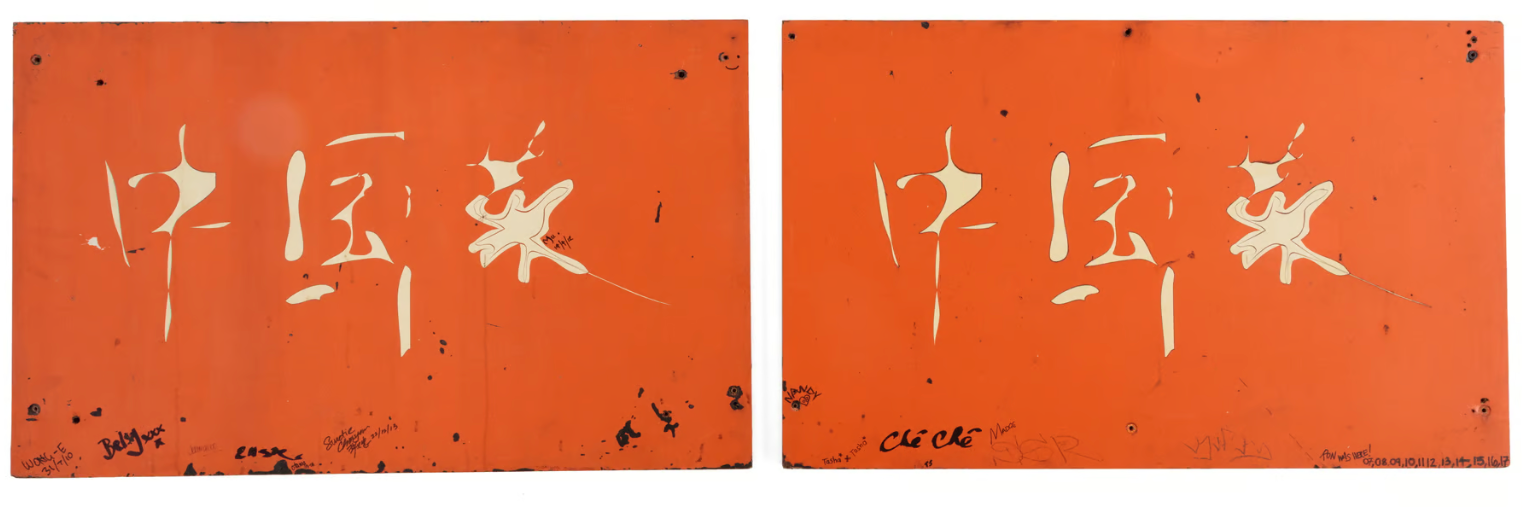
OTC We lived around the corner and I think that place was a bit magical. That tiny room was hot and noisy, it was always really busy, and the food was delicious. It was so different to everything.
JG Are you talking about the ethical attitude, the organic ingredients?
OTC Yes, it was all about getting really good produce. I mean now that whole thing about doing Chinese food with a lighter touch in a modern way we take for granted, but people still get that wrong. It was pretty incredible, what she was doing. And that was the moment where I remember going, “Oh, yep, I want to be a chef.”
JG And you met your partner, Mat Lindsay, there? You are an amazing, talented team. Do you both see the industry the same way?
OTC Yeah. We’re very different humans, but we are quite similar in a lot of respects.
JG If I think of your kitchen at home, there’s a very big, welcoming table. There’s all your kitchen equipment on display. There’s a handsome cookbook collection. Who decides what?
OTC Cookbooks is Mat’s department. He does most of the buying and collecting. For cookbooks, he’s the librarian. For fiction, I’m the librarian. He’s got a methodical way about him. I’m more likely to make something up and he’ll research 17 different versions of the recipe to use as a base. In terms of cooking at home, it’s a constant battle. We go through phases where I’ll cook more or he’ll cook more.
JG What’s the battle about?
OTC Always what to eat. It’s not who’s cooking, more about, What are we actually going to eat? How are you meant to decide? I have strong food cravings, so that helps the situation.
JG After five years at Billy Kwong, you worked for another five-year stint at Berta, and the brief was, “It just had to be Italian.”
OTC Yes. And I got less Italian as time wore on. I felt quite comfortable with Italian food as a concept and I was lucky enough to go to Italy a couple of times. I think if you have a grasp on cooking, you just need to make food taste good. And that authenticity thing, you have to learn as much as you possibly can by eating it, by reading, by paying attention.
JG I’ve read that you felt that it was fine for you to cook French, Italian, Chinese food, but when it came to cooking the food of your heritage that was another matter.
OTC Yeah, that was the trickiest. Because when I opened Lankan Filling Station, I hadn’t really cooked Sri Lankan food, didn’t cook it much at home. I’d ring my mum and she would tell me a recipe and I spent a month with my nan and got the family recipes.
JG Why did you want to open that restaurant?
OTC It started as a very simple idea of having a hopper shop because I loved hoppers. They are a fermented rice flour pancake, bowl shaped, and they’ve got crispy edges and a soft, doughy middle. They’re not very common and they’re not easy to find. I thought it’d be a good business decision as well. It was kind of a gap, and I was qualified in some way to fill that gap. It was meant to be quite simple and franchisable, but ended up being a restaurant because I couldn’t bear not having martinis on the menu.
JG It’s a very proper restaurant.
OTC I couldn’t help myself. I certainly did not feel comfortable cooking Sri Lankan food. I think there’s more judgement from family and other Sri Lankans, more so than anyone else. Also being a minority, not in the mainstream, people feel very protective and they project, “This is what my mum cooked so it should taste like that”, rather than going, “Every family has different versions of these recipes and it’s so complex.” There’s Burgher food, there’s Tamil food, there’s Muslim food, there’s Singhalese food, there’s Chinese influences, there’s Malay. There’s a lot going on. No two families are going to cook it the same.
JG What are you still hungry to learn and to do and to achieve?
OTC So many things. The ideas Mat and I have constantly about what we’re going to do next changes. We’ll see a place and go, “Oh, that’d be nice…” It’s just a matter of time and money. Lankan’s now five years old. We’re going through a bit of a change and adding new things. As tricky as it is, it’s still exciting.
JG That’s an amazing thing to be able to say after five years, particularly these five years.
OTC Yeah, exactly.
‘That authenticity thing, you have to learn as much as you possibly can by eating it, by reading, by paying attention.’
JG Tell me about your family heritage.
OTC My mum’s side is Sri Lankan Burgher. The whole family moved to Australia in the '70s because of the political climate. My favourite story is Nan brought crab curry wrapped in chatti pots on the plane and, of course, couldn’t bring it in. My dad’s side is kind of bitsy: white Australia, English, Scottish and, I think, Irish.
JG Were you interested in food as a child?
OTC Zero interest. I was surrounded by good cooks and people obsessed about food on both sides of the family. And I was completely uninterested in food for a very long time; didn’t really eat at all.
JG How intriguing. What changed that?
OTC Mum got sick of me and said, “What do you want to eat?” And I said, “Chicken breast, long green beans and potatoes.” So she cooked me that for a whole year. I think my tastebuds were so traumatised, just eating one thing, that it cured me a little bit. My first job was in the Central Market in Adelaide at the Providore, which sold fine foods. Mum used to work for the Adelaide Fringe festival and bribed the owner with theatre tickets because she decided I needed a job.
JG I find it very hard to imagine you not loving food. You’ve told me that you just fell into cooking?
OTC The Providore was the start of it, probably. And the people I was around and the influences I had were very food-leaning, both home cooks and also professional cooks. My best mate, Molly, was [restaurateur] Barry Ross’s daughter. We would come to Sydney and stay at Oasis Seros when Phillip Searle and Barry used to live above the restaurant. It was just wild. They would give us money and go, “Off you go.” And Sido Bilson was around at the time as well, so we just roamed the streets.
Christine Manfield was an apprentice there and I remember going into the coolroom and seeing all this food in containers and being able to have spoonfuls of caramel and going, “What is this amazing, magical world?”
Later, after I left high school, I did a bit of work with Phillip when he set up the bakery in Darlinghurst [Infinity]. I did a couple of stints where I baked cakes with him, which was very entertaining. There was one disaster when I nearly killed the 19-year-old sourdough starter by flooding it. I called him in a huge panic. He said, “Don’t worry, darling”, and hopped on the next train down from the Blue Mountains to rescue me and the starter.
JG What’s interesting is that you’ve cooked many different cuisines.
OTC I went to London and ended up in the kitchen with Allegra McEvedy, who was a 27-year-old up-and-coming British chef at the time. I helped as an assistant on a cookbook. She was cooking amazing food and that was when I first, I suppose, really loved food. A lot of it felt really natural, just because of the food knowledge that I’d grown up with.
JG What year are we talking?
OTC Would’ve been '99, 2000s. I remember having a laksa craving and her turning to me and going, “What’s laksa?” How can you not know what laksa is? And that was a moment where I kind of went, “Oh, I actually know stuff about food”.
This interview was first published by The Saturday Paper.
About the Speakers
About the Series
Established by Powerhouse in 2020 and led by Powerhouse Curatorial Advisor Julie Gibbs, the Australian Culinary Archive is a living repository of our food industry: the chefs, producers, vendors, writers, photographers, critics and diners whose hunger for innovation has coalesced over the decades into a vital sphere of cultural production.
Also in the Series
More
Powerhouse Food
Powerhouse Food encompasses programs, partnerships and initiatives celebrating the food industry and community.