Foldee

‘We’ve been very conscious of having a light touch as makers, and really heavily lent into our role as designers to have everything very resolved for assembly. Minimising our hands on fabrication time offers more precision and efficiency through the design and manufacturing process, and ultimately results in a higher quality product being brought to market that can be scaled in a way hand craft can’t offer.’
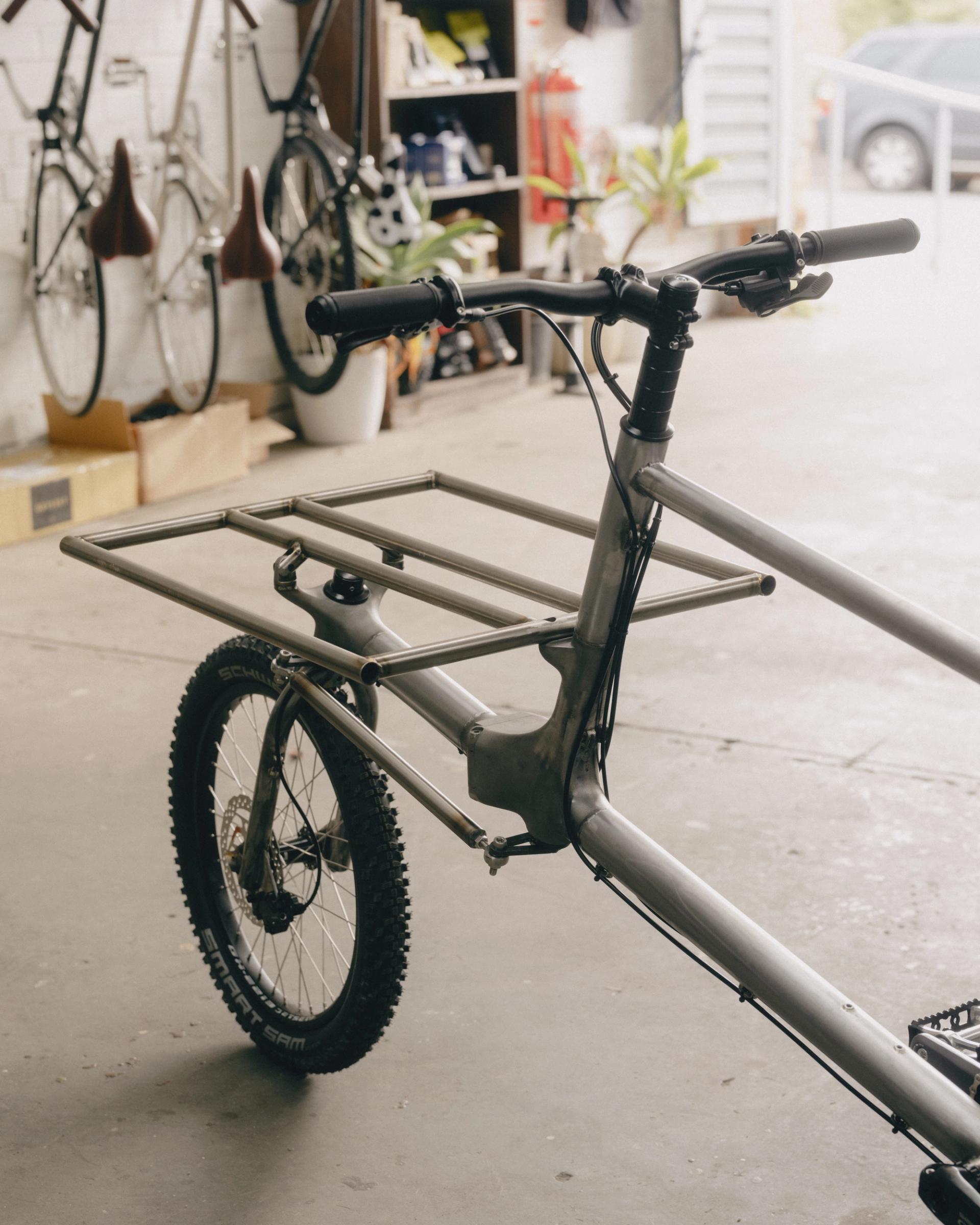
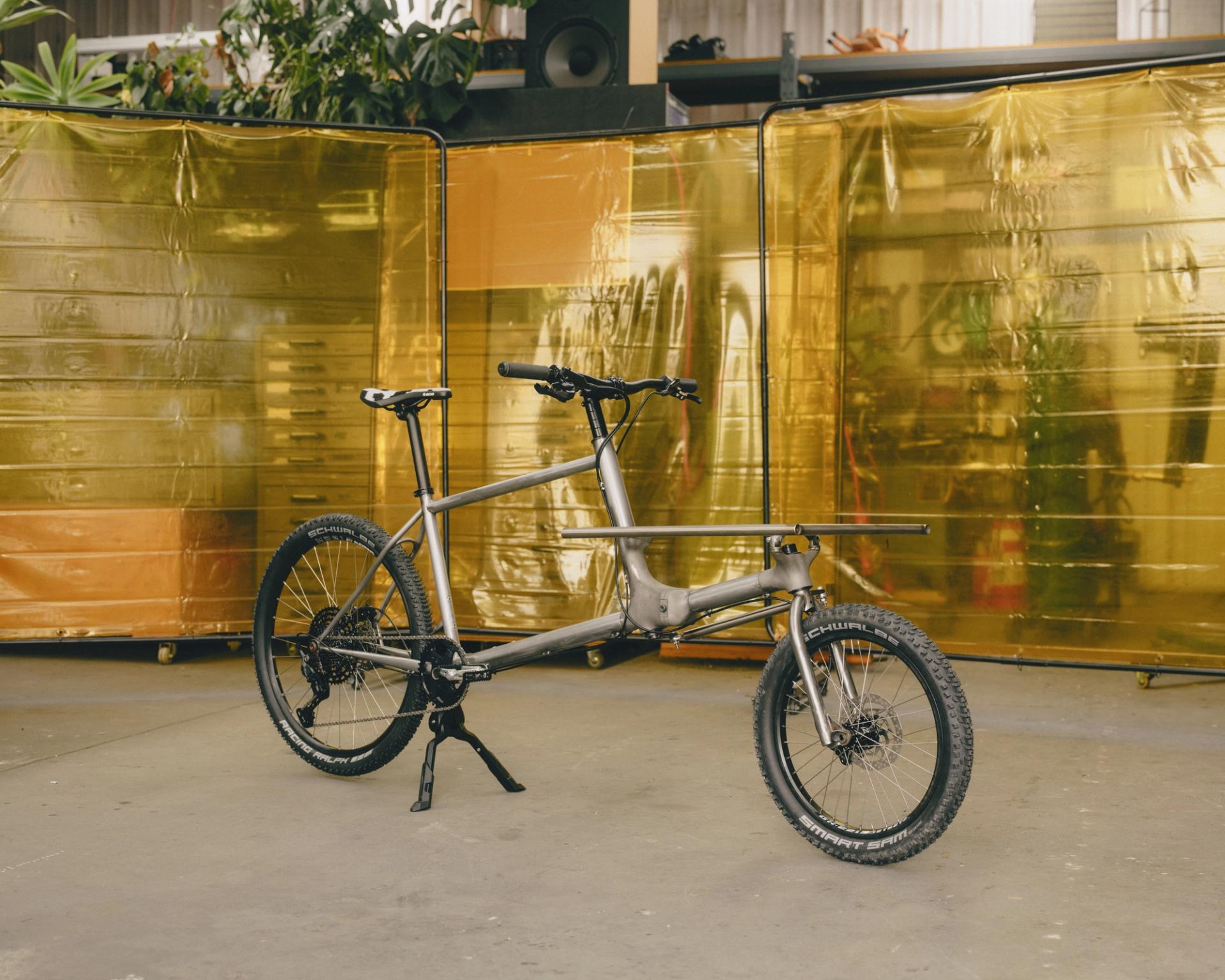
FOLDEE by Olson Hamilton-Smith is a new design for a folding cargo bike that allows the bike to be stored easily in apartments and carried in lifts or on public transport. The bike is designed to be modular, repairable and recyclable. FOLDEE promotes more sustainable futures by enabling car free transport within cities, reducing congestion and climate impact.
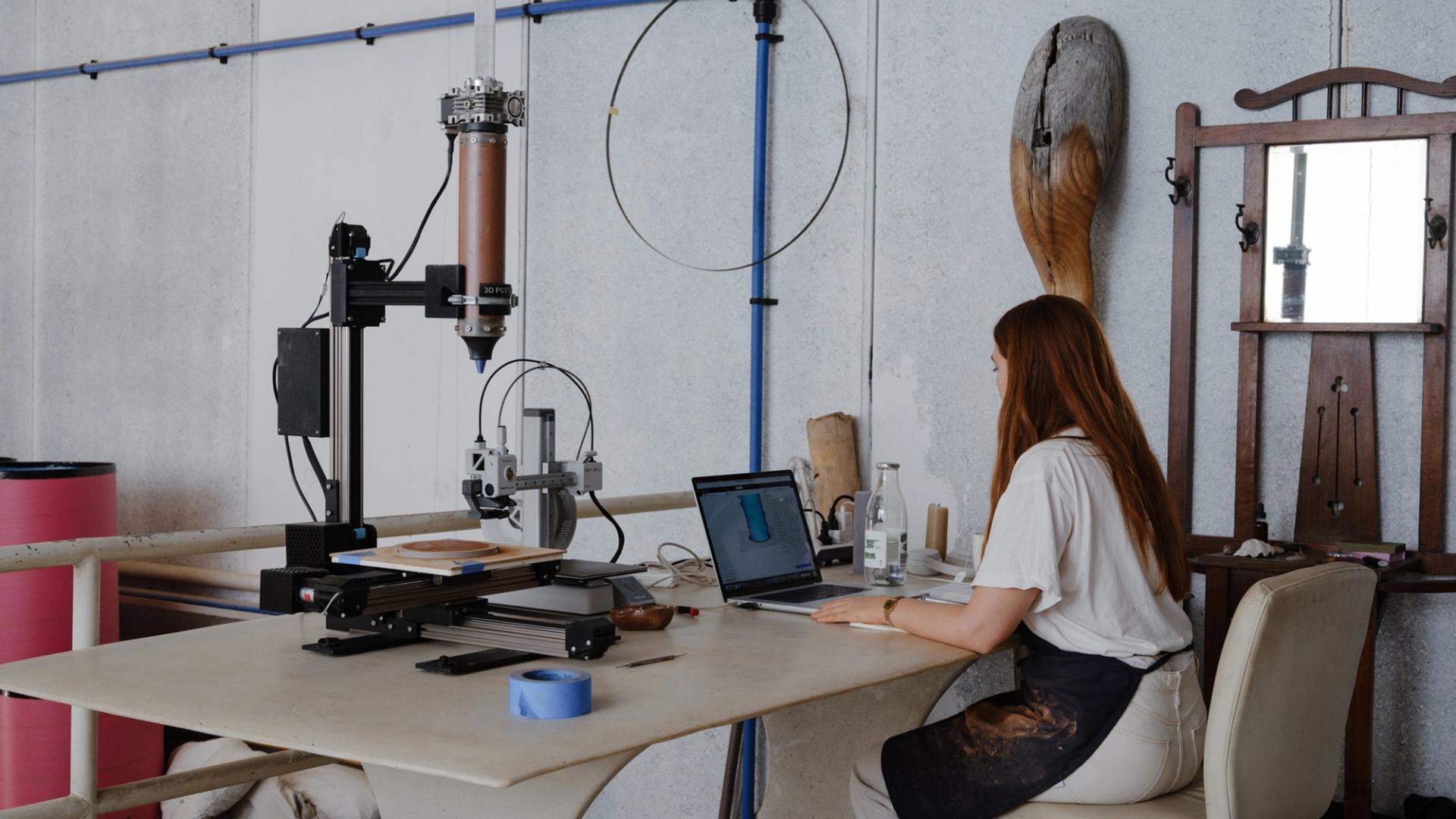
During the 8-month Carl Nielsen Design Accelerator program at Powerhouse, Olson redesigned key elements of the bike to make it more efficient and sustainable to manufacture. Guided by industry mentor Ed Ko, he developed new 3D printed components and built an improved prototype of the FOLDEE cargo bike.
Olson spoke to Collection Curator, Angelique Hutchison about his experience ahead of the public launch of FOLDEE 2.0.
Intention
My vision from the outset was to improve how we can manufacture the bike. That meant dropping the part count, improving the aesthetic, improving the precision, and improving the product's performance and user experience. Using design and technology to make the prototype more efficient complements our skills as designer fabricators and removes innate craft decision making that cannot be efficiently scaled to bring a high-quality product to market at volume.
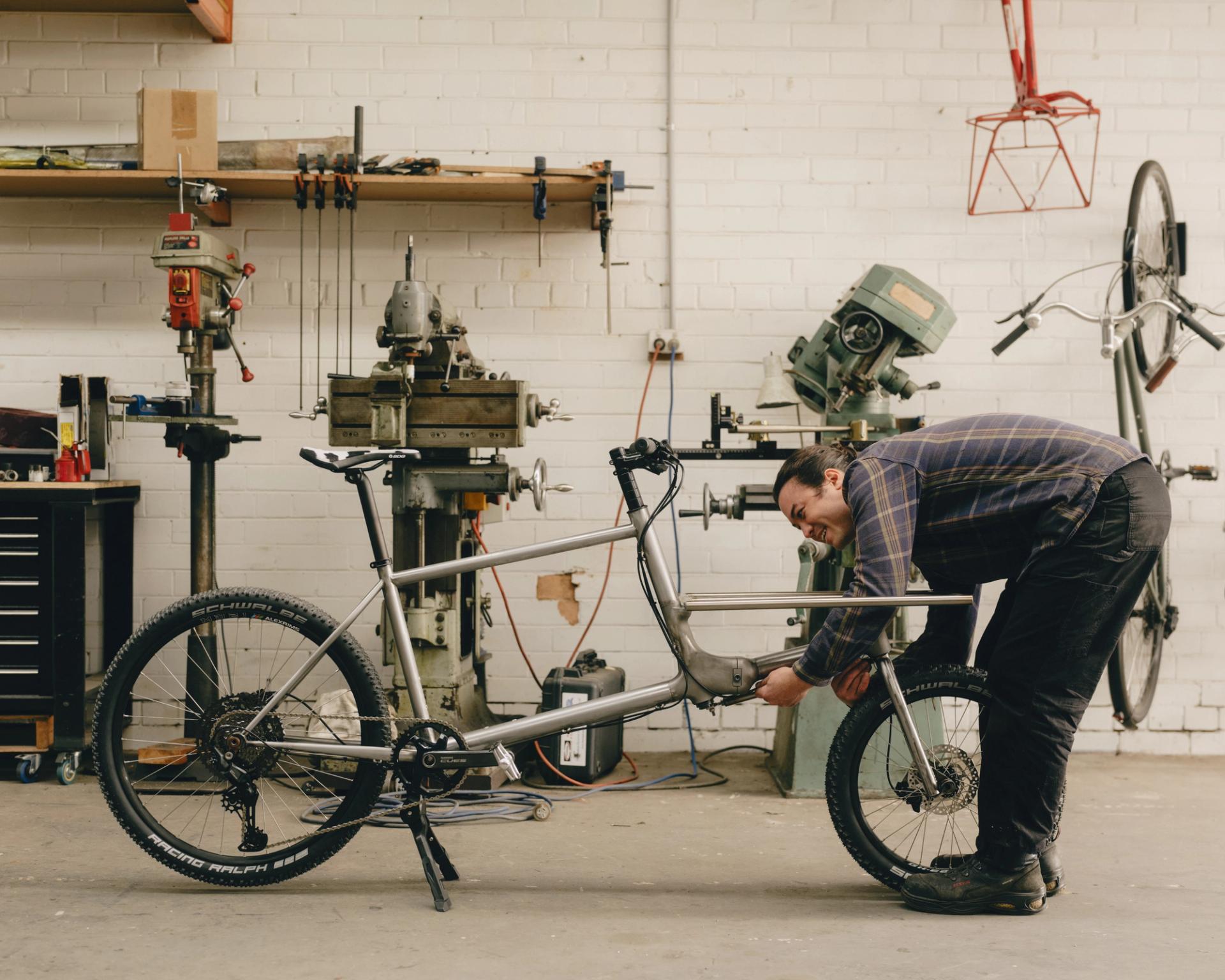
Making the bike foldable increases its appeal for transport or home storage. For example, a parent zipping around town collecting groceries with a child may need to board a train as part of their commute. The folded bike takes up a much smaller parcel on a train carriage or can be packed into a bag if the service demands it.
The large cargo bike not only folds into a small package: it can be disassembled into 3 pieces to ship in a small box. Removing the shoulder bolts from the hinges allows the bike to be packed in a carton smaller than a conventional bike, making international travel possible. Some of our customers that have tested the bike have dreamt up a plan to use it on an international rock-climbing expedition.
Inspiration
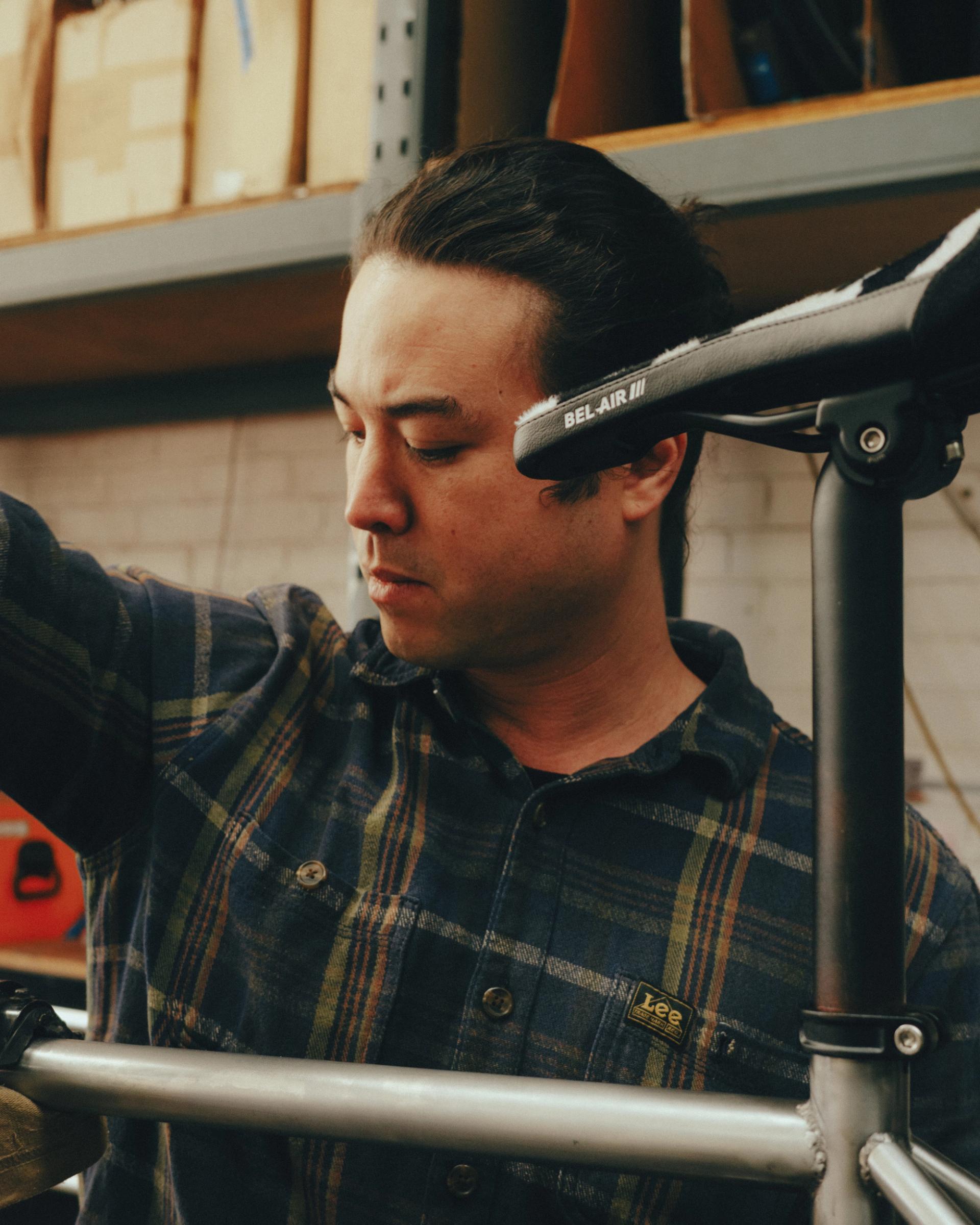
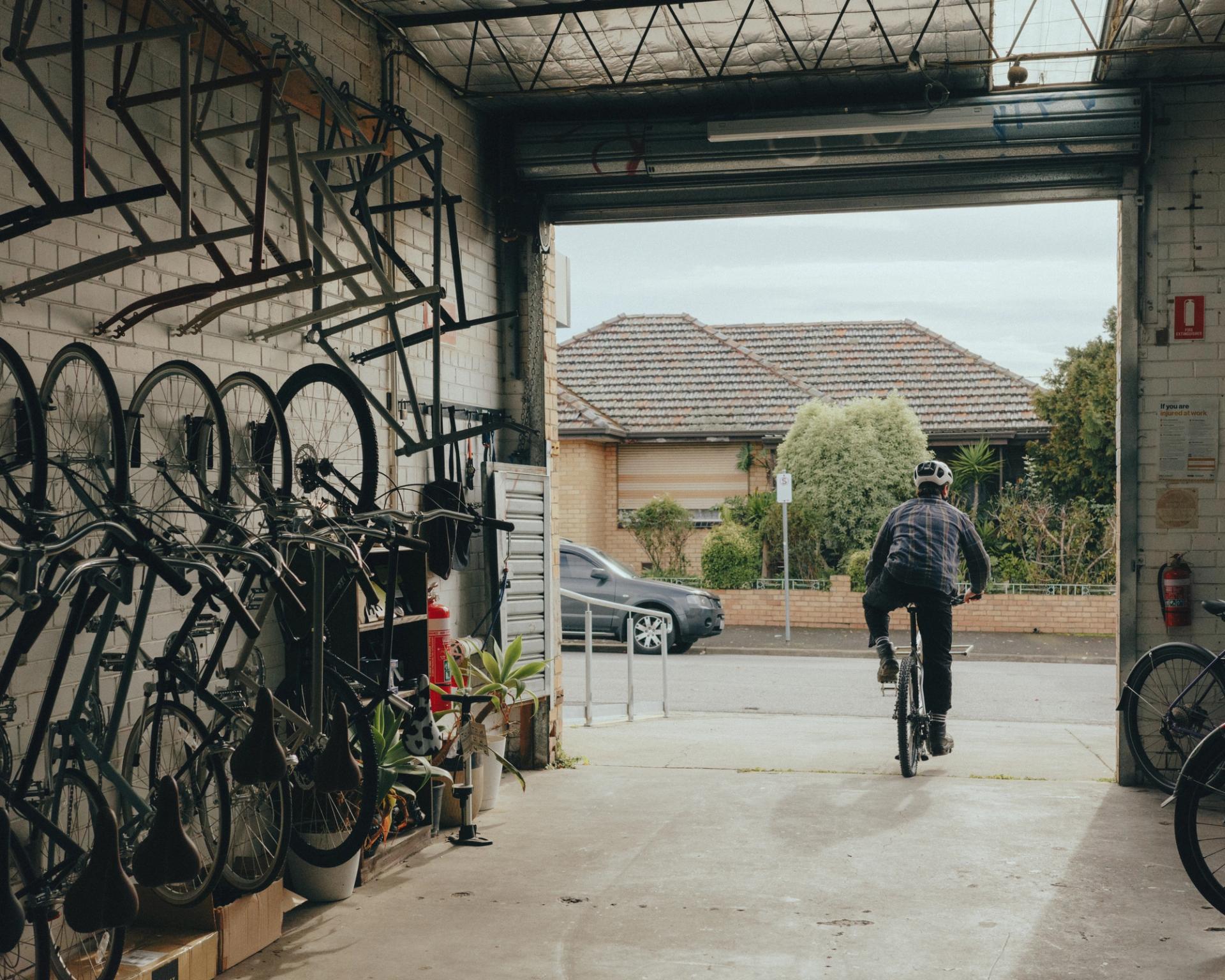
My studio is very public-facing, especially for a business that completes metal fabrication. We have an interest in mobility and sustainability. There's a good supportive community that is excited to see the next iteration of the design brought to fruition.
Bicycle production is interesting: the industry has born several widely applicable engineering innovations such as internal cams, butted variable wall thickness and metal tubing. It’s also been a testing ground for advanced manufacturing processes, particularly composites engineering and now 3D printing.
The 3D modelling and manufacturing techniques in our work reflect what we're seeing in other fields – furniture, lighting and spatial design – along with applications in medical, motorsport and aeronautical industries. We’re excited to apply our design insights to other fields and products.
Innovation
There have been improvements in many facets of the product design. The product was already quite evolved: we had 2 working prototypes before the current model we're looking to launch in the market.
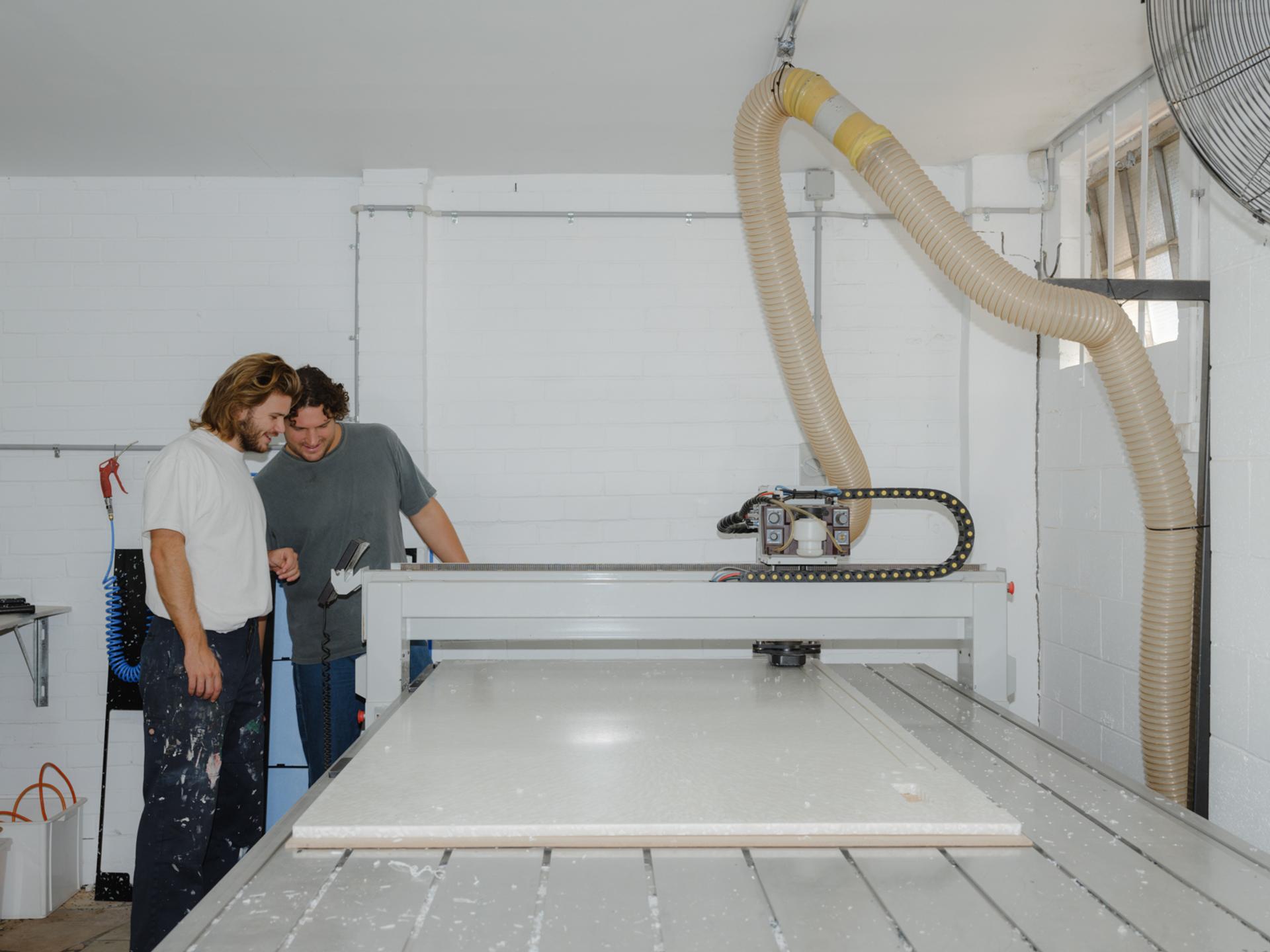
We've gone from a laser cut and fold process and a lot of mitring of parts on machines, to a 3D printed integration of parts. The aim was to dramatically reduce the number of human hours needed to fabricate the product, and significantly improve its aesthetic and precision alongside demonstrating our technical proficiency as designers.
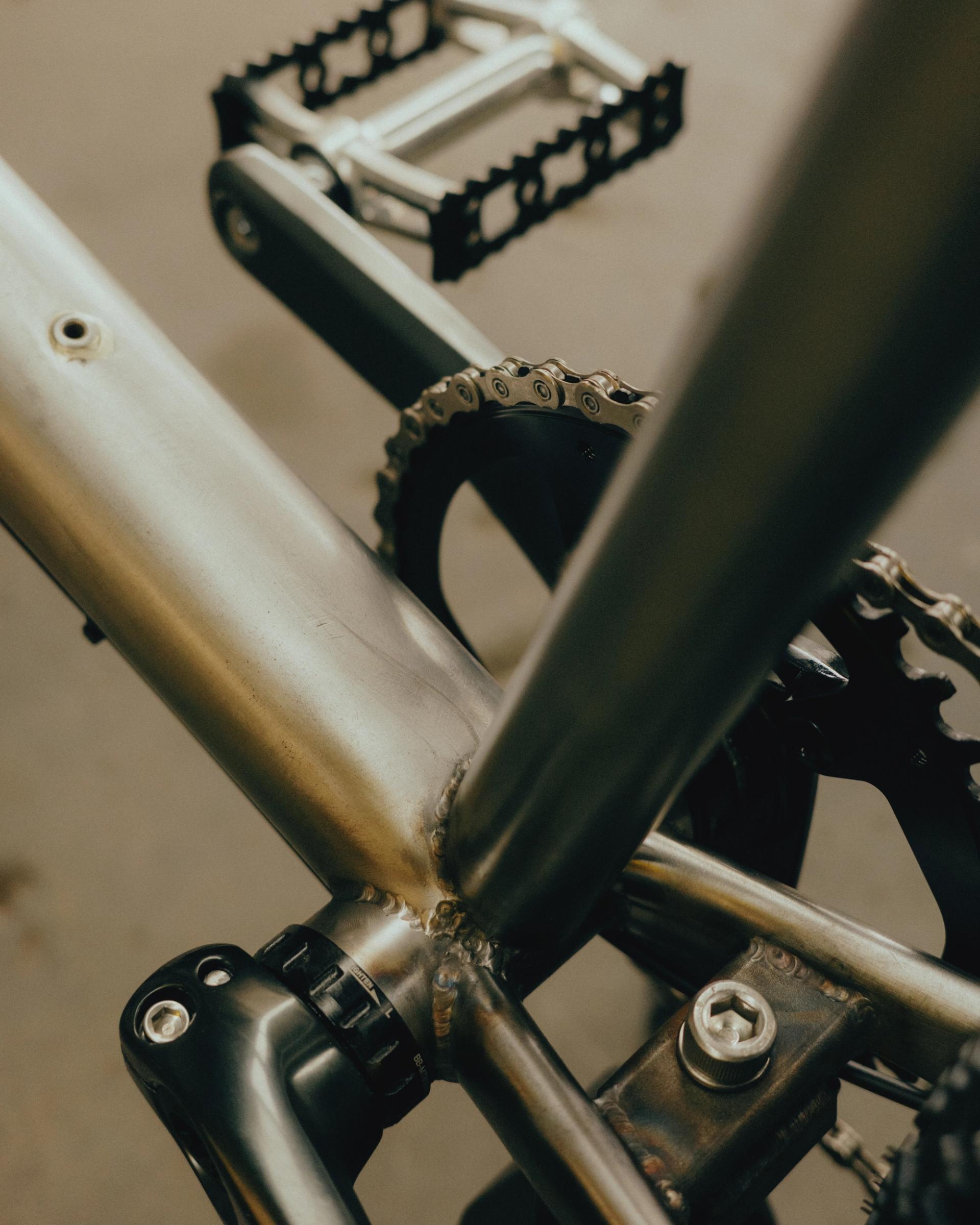
Previously with the laser cut and fold design, our main pivot and gusset to support the front rack and integrate into the frame had 5 pieces and 14 welds. Laser cut and fold was chosen because it’s a cheap process, extremely scalable and matched the volume needed to do a batch to test the idea. The welding was really challenging because the assembly featured parts that tapered from thick to thin, with really poor access for a welding torch. The tube mitring process was onerous, and a mistake would mean expensive tube stock had to be scrapped.
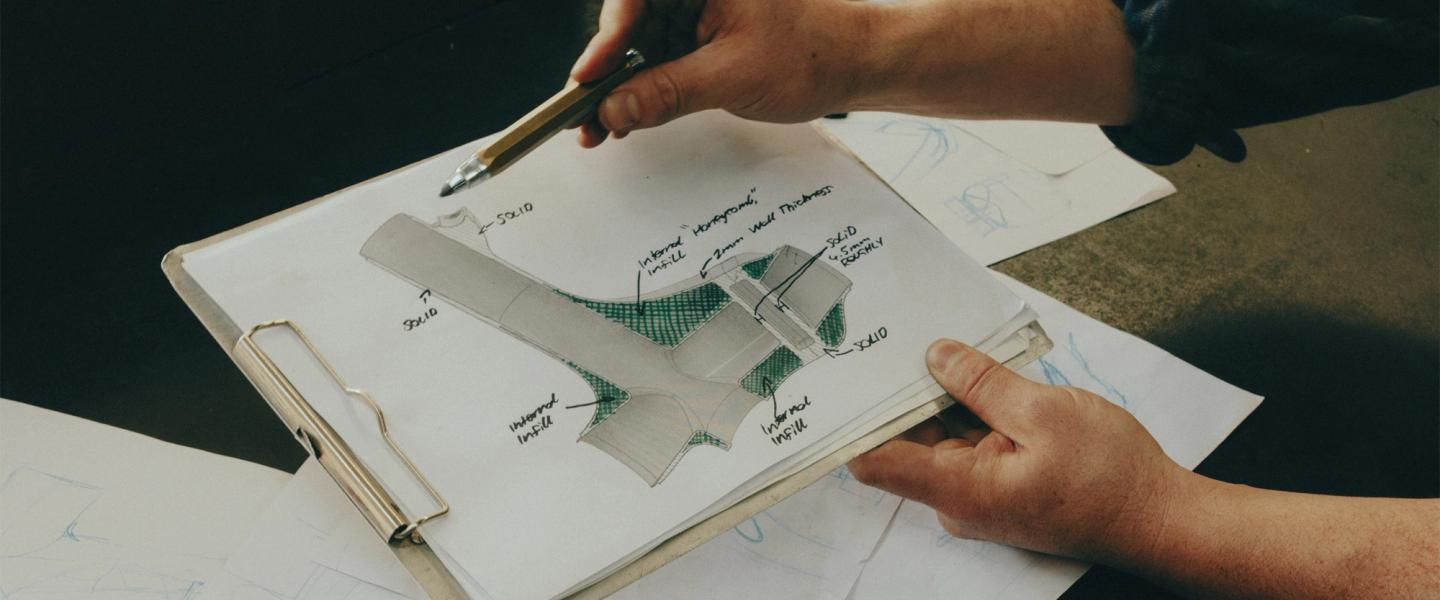
In reducing the part count we're going from 5 parts to one 3D printed part, and we're going from 14 very difficult welds to 3 socket-fit and extremely easy welds. We have some more cost associated with the 3D print parts versus laser cut and fold, but with the time we're going to save, it just seems hugely advantageous for scaling our production volume.
Reducing material waste is very important. With the former process, there were some quite expensive tubes, and if the mitring was out a little bit, they just wouldn't meet our tolerances so we would need to scrap tubes. We now have easier process to fabricate the bike in its entirety, so we’ll see our waste drop.
Process
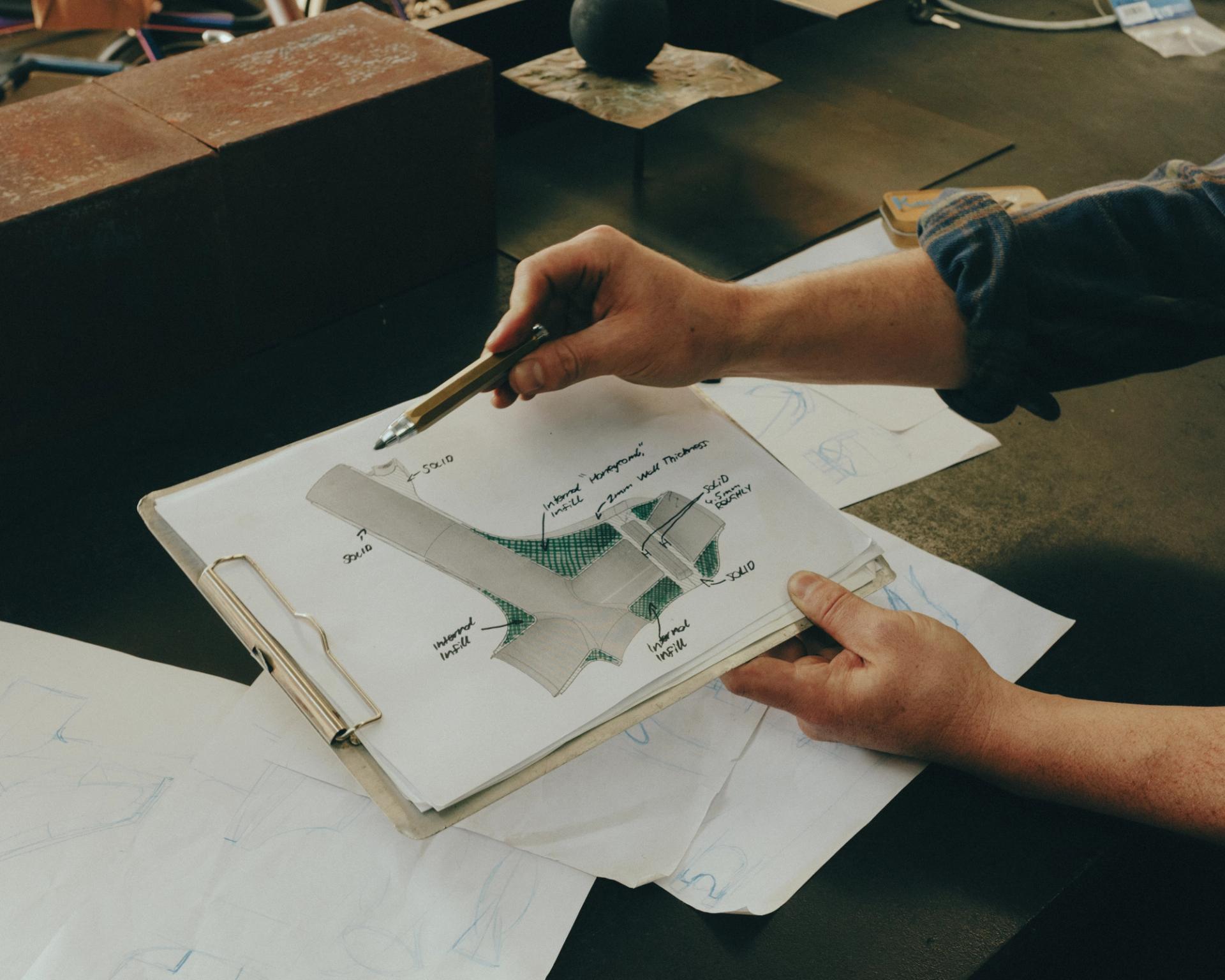
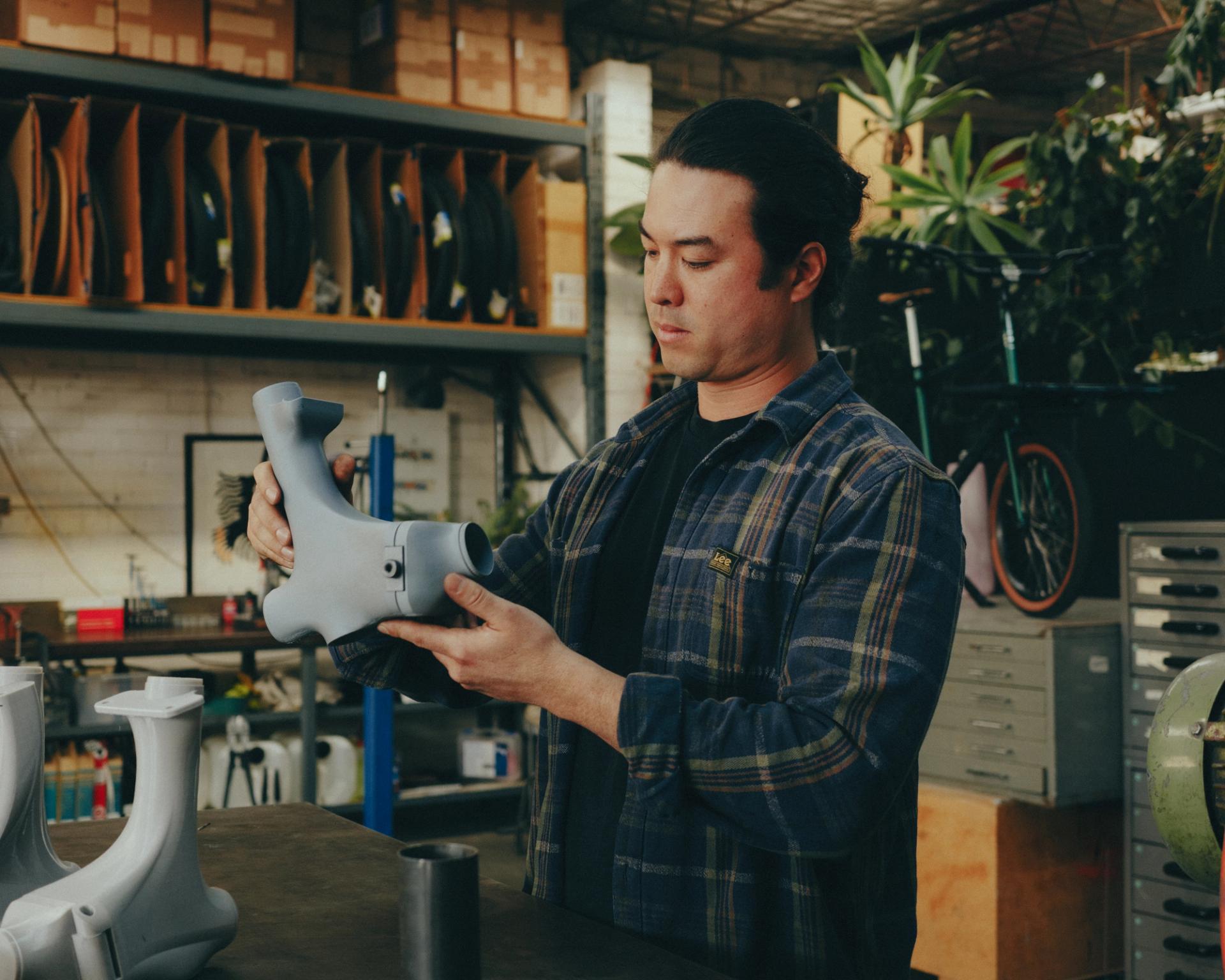
The 3D modelling that’s been achieved is a true application of 3D printing where an impossible geometry is being used – we couldn’t achieve that through any other mode of manufacture. There’s an outer skin that represents the form, an internal skin and some internal supports that have an engineering function. We have constraints that are hardware, internal bearing seats, and then we need the item to be strong in certain orientations. It’s been a good challenge to explore what’s possible with design and test our limits.
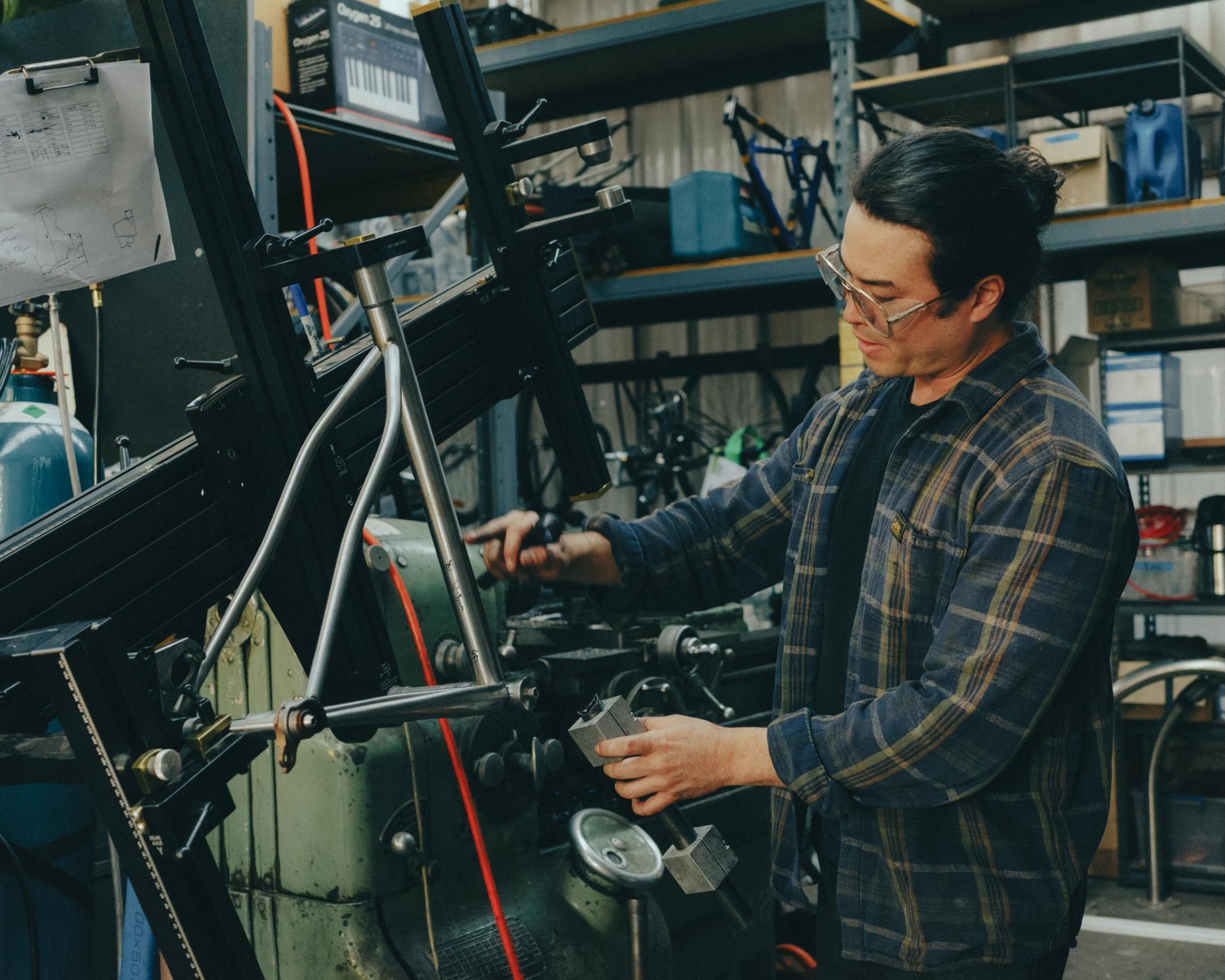
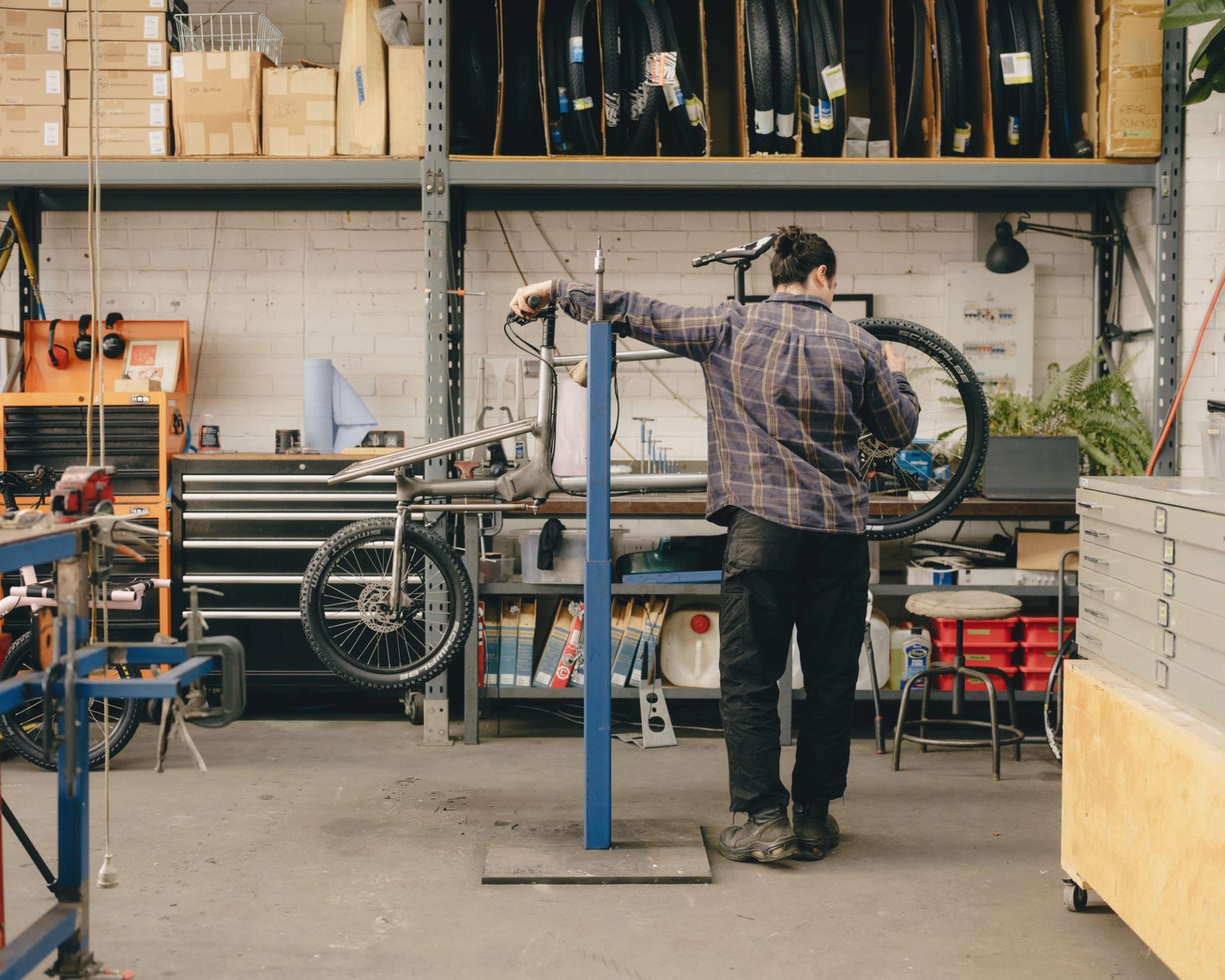
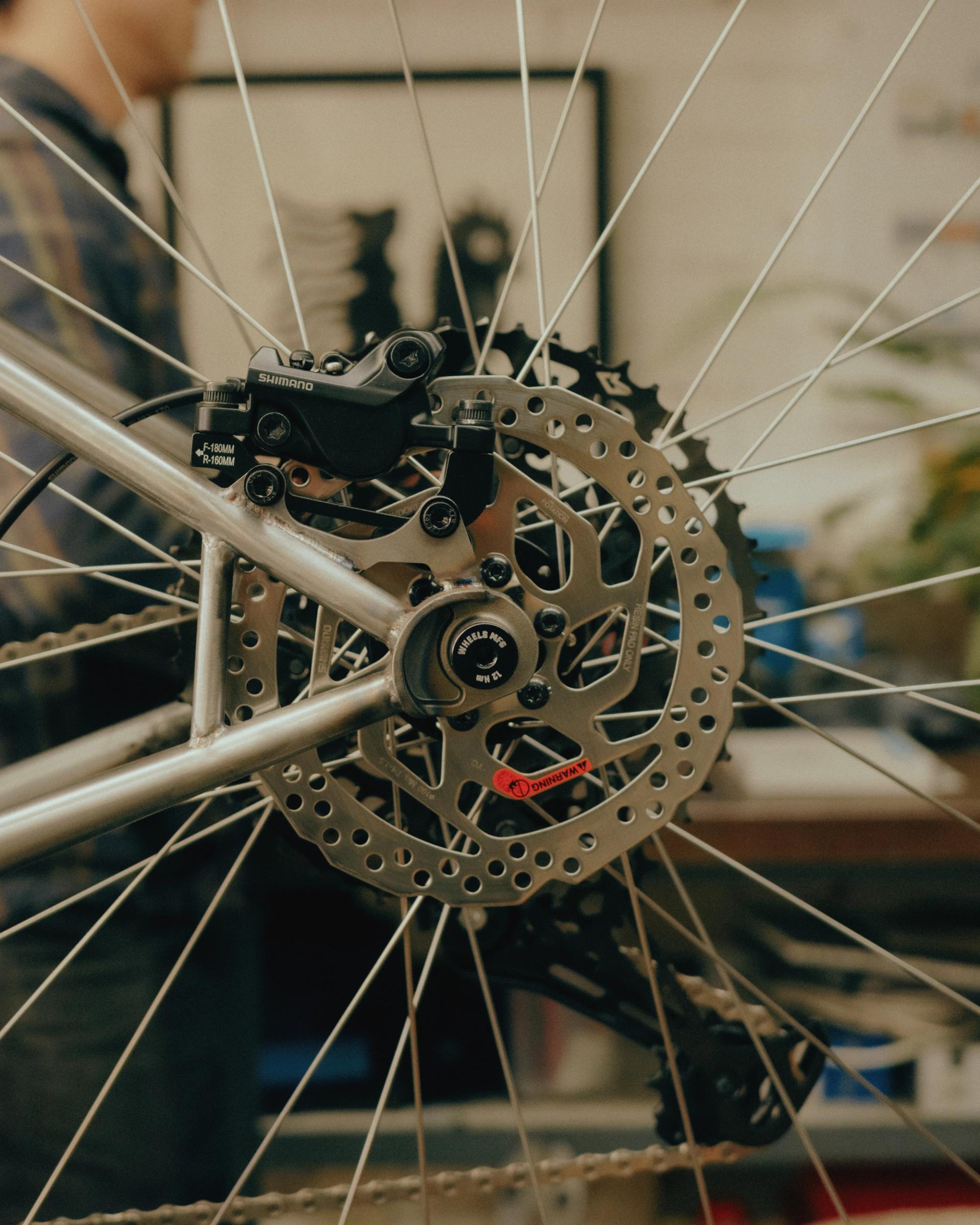
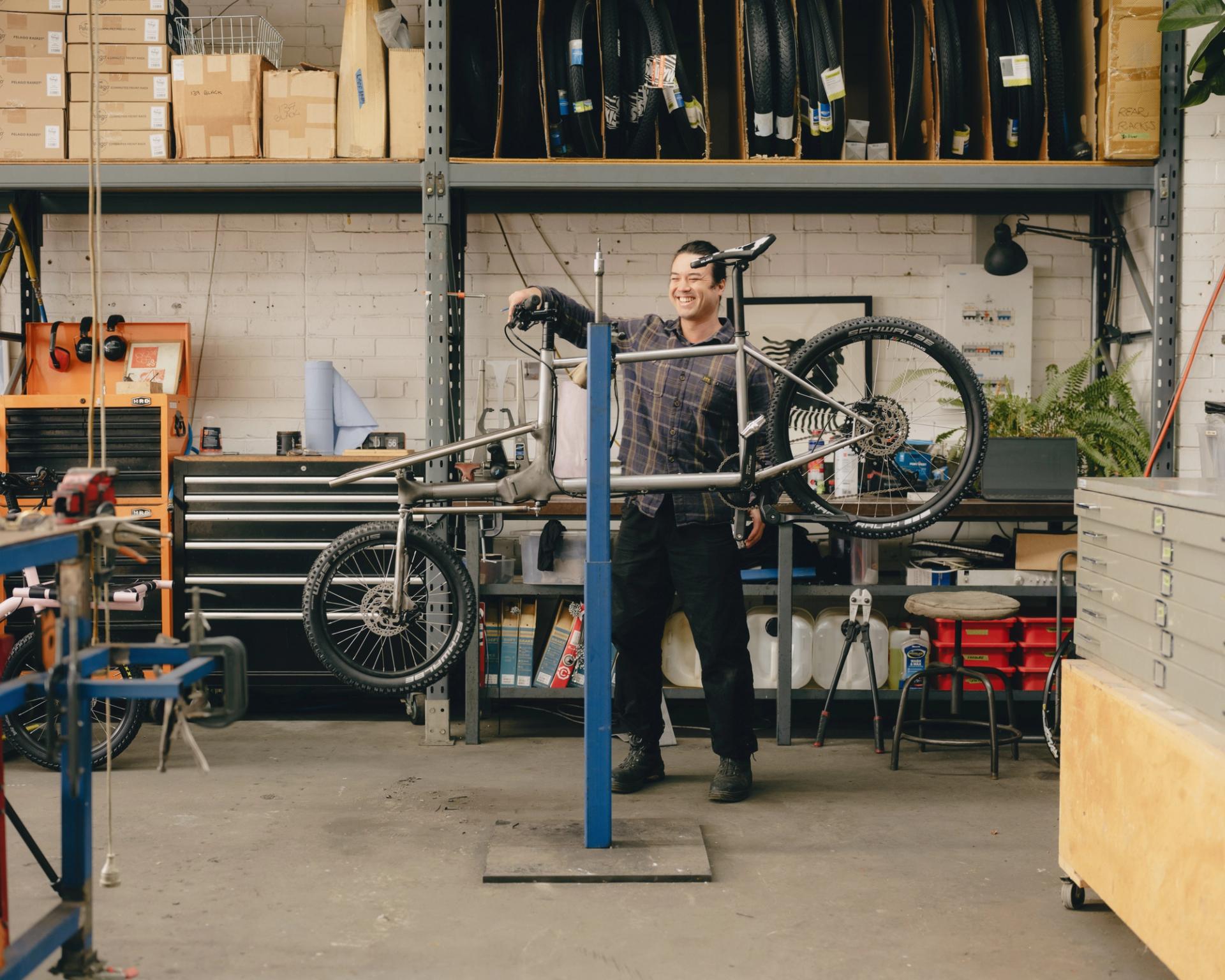
We have a really capable workshop and machine shop with technology and processes that span hundreds of years. We’re brazing with an oxyacetylene flame and an extremely high content silver filler rod at a low melting temperature. The bulk of the bike is then TIG welded and it’s pretty thin for the most part. The welding and fabrication challenge is in cutting all the tubes when they’re so thin and welding them together. It’s nice to bring it all together.
Beyond our tooling, there’s an ordered process the bikes need to be assembled and manufactured in for efficiency. The former design took close to 60 hours per unit to make. Now we’ve evolved the design, we’re shooting to go under 10 hours per unit.
Sustainability
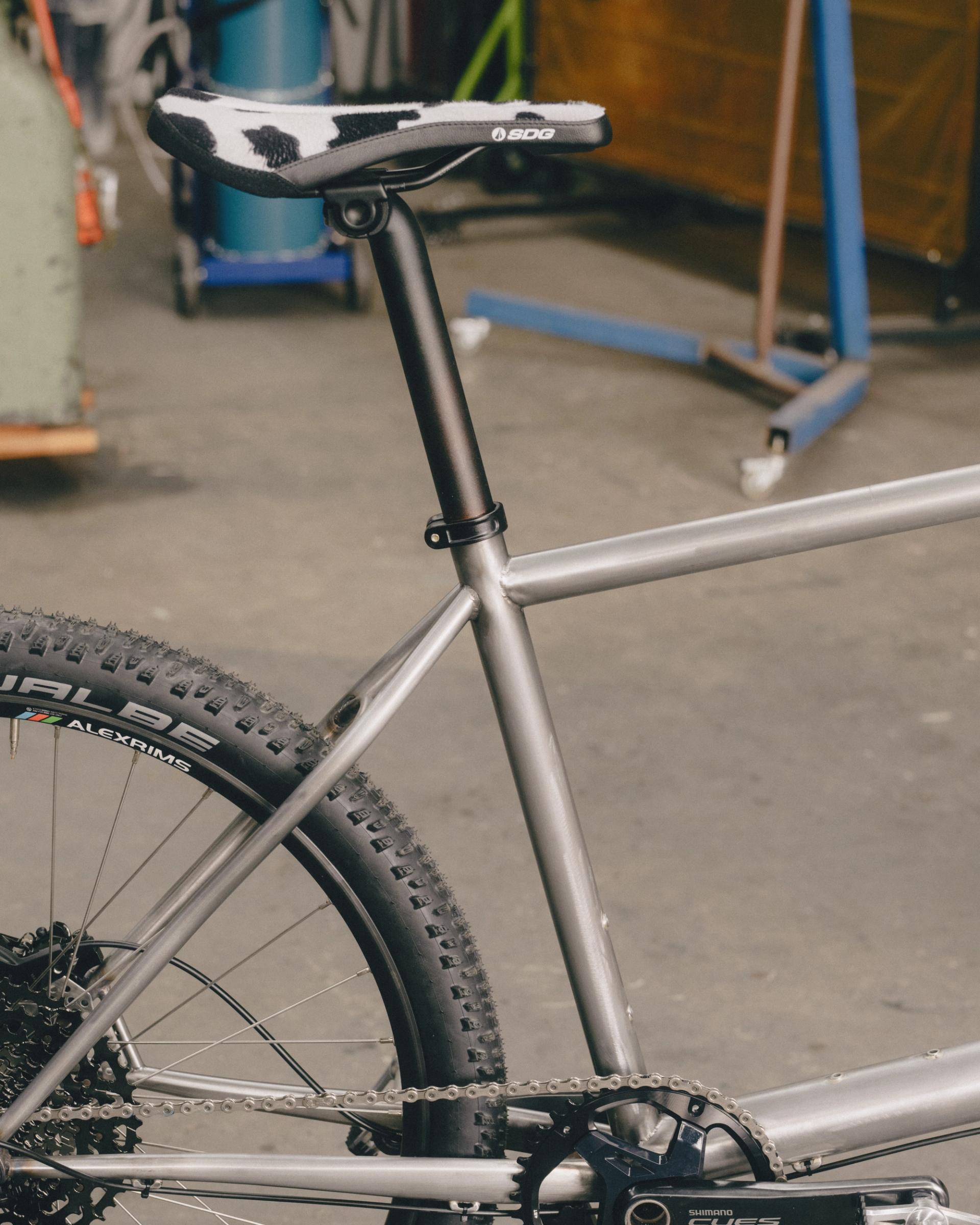
This is a high-performance steel bicycle. Chromoly steel or similar is used for the bulk of the frame set. As a single material it's really easy to recycle and repair. Alternative bicycle materials like carbon fibre, titanium and aluminium have a high energy demand to make and are also harder to repair or recycle.
We try to do things in-house or locally wherever possible, because it allows a lot of control and oversight about timing and quality. It can fortify our relationships with our suppliers and the material. We elected to have our 3D printed parts made overseas for a couple of factors. The first factor is quality: the manufacturer we've selected does so much volume that its ability to refine its outputs is very, very good. That's something we feel can only be achieved through extreme repetition.
The other factor we've been conscious of is vetting our suppliers. The manufacturer we've selected to execute the 3D printing does not take on any weapons manufacturing. If you have an interest in manufacturing, I think it can be good to be critical of not only the materials you use but your work outputs and how they relate to your community or the world.
FOLDEE is a very practical cargo bike. It can be a true car replacement for people in the inner city. It's specifically designed to integrate a baby seat onto the front rack. It's going to be load rated very confidently to around 200 kg system weight. It’s a really great transport mode for any groceries or if you're doing a school run with multiple kids. In a city with increased living density, it presents an efficient solution to alleviate congestion. The health impacts of cycling over driving or even being sedentary on public transport are also attractive.
FOLDEE also has appeal for some adventurous types. Some of the guys who shot our media for the project are avid rock climbers, and when we showed them FOLDEE they conjured this idea to do a bike powered mountain climbing expedition, rather than driving.
Lessons
We had a couple of challenging moments with the design process. We use Fusion to do our CAD modelling and one of the parts needed more than 400 hours of modelling time. It would have been far, far longer without leaning on industry help. We had a couple of roadblocks with our 3D modelling where the model just kept breaking. So we went to see Mark Hester of Prova Cycles. He’s spent many tens of thousands of hours in Fusion and quickly pointed us in the right direction.
I think the Carl Nielsen Design Accelerator program was a really good opportunity for some reflection. I used to be very eager to make a batch in the one shot. Being engaged with the program meant we had a good sounding board for feedback and the opportunity to make one physical prototype, assess it in real life and then we proceed to batch production.
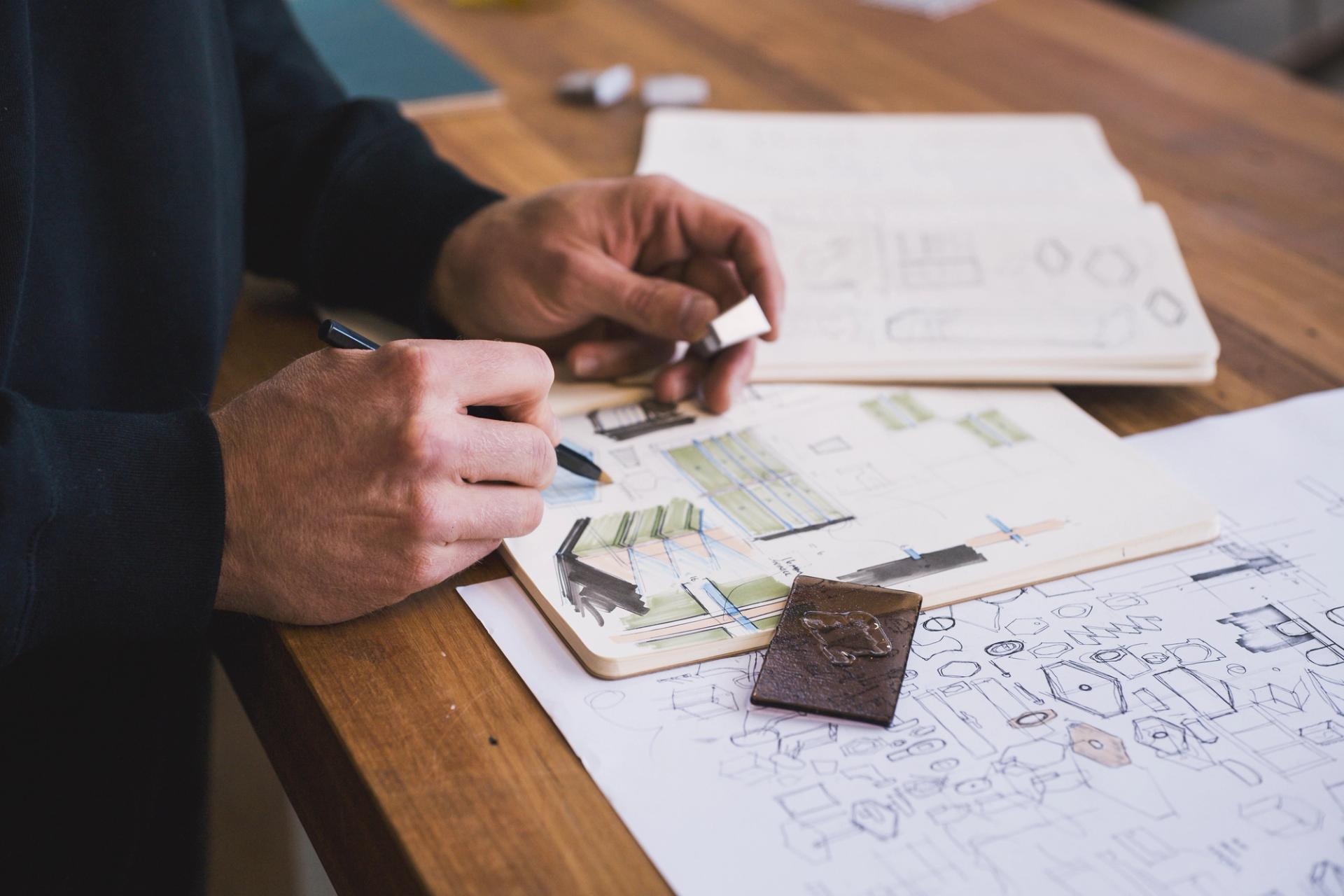
When you see something in the computer, then in real life, or transition from a hand sketch to a CAD model to a physical prototype, you’re always going to learn something along the way. The design has the opportunity to evolve through practice. There’s a tonne of things that I’d never know short of doing them.
The Accelerator program has been absolutely valuable. Powerhouse is a bit of a beacon for people across many disciplines and we were able to meet people with a huge amount of specificity in their fields. To create spaces and opportunities like this where people can meet to talk freely is very valuable.
Future Opportunities
We have some exciting next steps for the FOLDEE 2.0 cargo bike that's been developed as part of the Accelerator program. We plan to launch the new product soon and show all the plastic proofs of the various 3D models at different stages, have a panel discussion and the new bike available for test rides. We’ve also entered the bike for selection in a Eurobike industry show.
More broadly, as a designer, it would be nice to see how some of our ideas and hand skills translate into other applications. I have some plans I’m hoping to execute in the next year that relate to design and craft. As a designer and fabricator, I’ve had some ideas bubbling away that relate to art, furniture and lighting, and the necessity and extreme value of healthy interaction and engagement in a community.
Carl Nielsen Design Accelerator
An 8‑month accelerator program supporting Australian industrial designers to advance a working prototype.
Carl Nielsen Design Accelerator
Supported by a generous bequest from Carl and Judy Nielsen, the Carl Nielsen Design Accelerator is an 8‑month, hands-on program supporting Australian industrial designers to advance a working prototype that demonstrates excellence in sustainability.
About 2025 Recipient
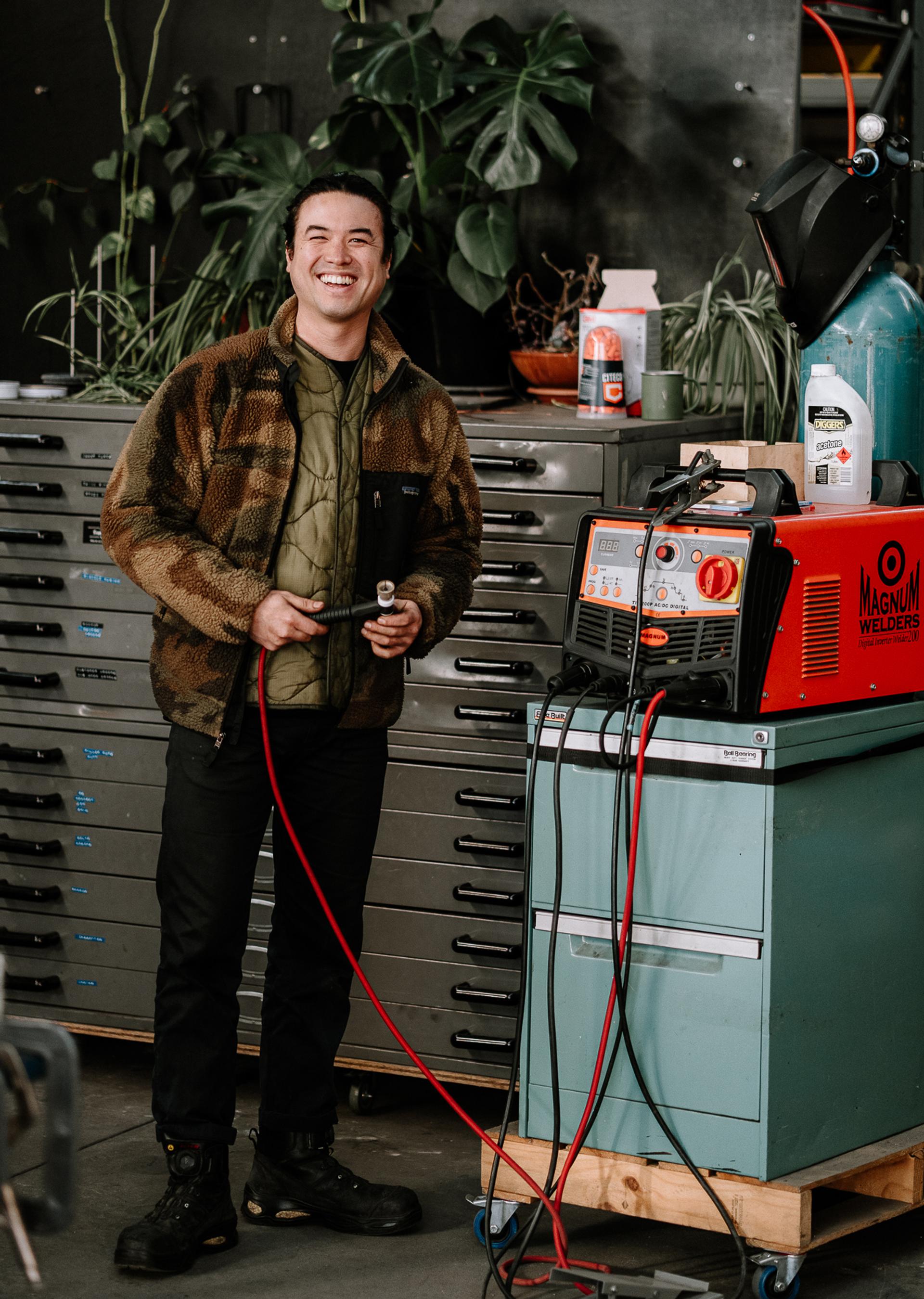
Olson Hamilton-Smith is a Melbourne-based, Northern Territory-raised designer and manufacturer of Taiwanese heritage. Trained at RMIT, Melbourne Polytechnic and the Elisava Barcelona School of Design and Engineering, he has worked across the world of design, including at furniture manufacturer IHS Design, and DCG Design, a leader in public art, lighting and specialised architectural installations. He is also an artist, with recent successes including being a finalist for the Woollahra Small Sculpture Prize in 2023, and is the founder and lead designer at Loop Cycles, a Brunswick-based cycling workshop specialising in custom engineering, design and fabrication.